
From Public Service Malls to Integrity Zones, Minister of PANRB Pushes Public Service Transformation
The government continues to drive the transformation of public services to deliver services that are increasingly easy, fast, high-quality and with integrity for the public.
These efforts are being carried out through various instruments, ranging from strengthening integrated services via Public Service Malls (MPP), the development of innovation, digitalisation and omnichannel services, through to the establishment of Integrity Zones (ZI).
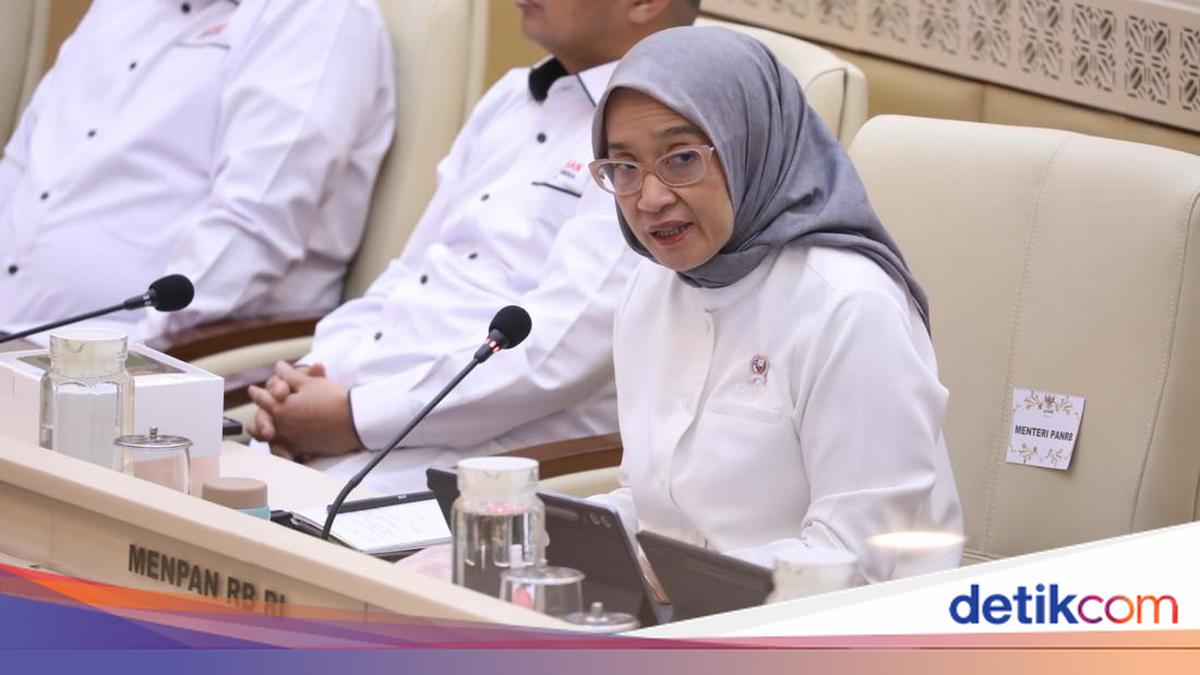
Minister of State Apparatus Utilisation and Bureaucratic Reform (PANRB), Rini Widyantini, affirmed that public service is one of the most direct manifestations of the state’s presence felt by the public. Therefore, service transformation must not be oriented solely towards procedures and administrative achievements, but must respond to the needs of the people.
“Public service is one of the forms of state presence most directly felt by the public. Therefore, improving services is not enough merely by ensuring procedures run, but we must ensure the public receives services that are easy, high-quality, with integrity, and in line with their needs,” Rini said in her statement on Monday (7/9/2026).
She made these remarks at a Working Meeting with Commission II of the House of Representatives (DPR RI) in Jakarta on Monday (7/9).
It should be noted that public service transformation cannot stand on its own. Service quality is influenced by various aspects, ranging from governance, business processes, human resources and integrity, to the systems of government that support it. For this reason, public service transformation must be part of a comprehensive bureaucratic transformation.
In meeting the increasingly diverse needs of the public, the government is also strengthening services through an omnichannel approach. Citizens can access services through various channels, ranging from face-to-face services, mobile or proactive outreach services, self-service options, to digital services.
“In public service, the integration of business processes, data and systems is an important factor so that the public receives the same, fast and consistent service through whatever channel they choose,” she said.
Going forward, the development of MPPs must continue to be directed at broadening reach while ensuring the quality and sustainability of services, especially for communities in areas with limited service access, including the underdeveloped, frontier and outermost regions (3T).
Beyond strengthening MPPs, public service transformation is also being pursued through innovation. As of 2026, nine Indonesian public service innovations have received recognition from the United Nations through the United Nations Public Service Awards (UNPSA).
“Recognition is not the end goal, but innovation serves as proof and has an impact to be replicated and scaled up so its benefits can be felt more widely by the public,” Rini asserted.
Public service transformation must also proceed in step with strengthening integrity. Currently, the PANRB Ministry, the Ombudsman of the Republic of Indonesia and the National Institute of Public Administration (LAN) continue to promote Integrity Zone development among central and regional governments as a miniature of bureaucratic reform in service units that deal directly with the public.
Integrity Zone development is directed particularly at service units exposed to integrity violation risks, such as illegal levies, brokerage practices and conflicts of interest. Through Integrity Zone development, concrete changes are expected in the form of faster services, free from illegal levies and brokers, with clear service standards and increased public satisfaction.
“Integrity Zone development is not an end in itself, but an instrument to produce real change in public services,” Rini affirmed.
It should be noted that in 2025, of 546 regional governments, only 160, or around 29.3 per cent, had work units holding the Integrity Zone designation. Of the 514 work units with the ZI designation, most still fall within the Corruption-Free Area (WBK) category.
This situation warrants continued expansion of Integrity Zone development, particularly in basic services with direct interaction with the public, such as regional public hospitals (RSUD), the Population and Civil Registration Office, investment and one-stop service agencies (DPMPTSP), vehicle registration offices (Samsat), education services and employment services.
Rini also conveyed that public service transformation continues to show positive progress. Public service performance and public satisfaction have improved in recent years. However, index achievements, awards, MPP buildings or ZI designations are not the ultimate aim of transformation.
Strengthening public services requires synergy between central and regional governments, Commission II of the DPR RI, the Ombudsman of the Republic of Indonesia, the National Institute of Public Administration (LAN), and all stakeholders. With strong collaboration, public service transformation is expected to continue delivering ease, certainty, fairness and integrity as a tangible manifestation of the state’s presence for the people.
“Ultimately, all public service transformation is not merely about applications, MPP buildings, indices, designations or various bureaucratic instruments, but cross-agency collaboration also needs to be strengthened,” she concluded.
Source: jawawa.id (https://jawawa.id/newsitem/from-public-service-malls-to-integrity-zones-minister-of-panrb-pushes-public-service-transformation-1788799920)
Originally published by detikcom (https://news.detik.com/berita/d-8653028/dari-mpp-zona-integritas-menpan-rb-dorong-transformasi-pelayanan-publik), translated from Indonesian