
From Production to Irrigation: Food-Sector Achievements in Prabowo-Gibran’s Two Years
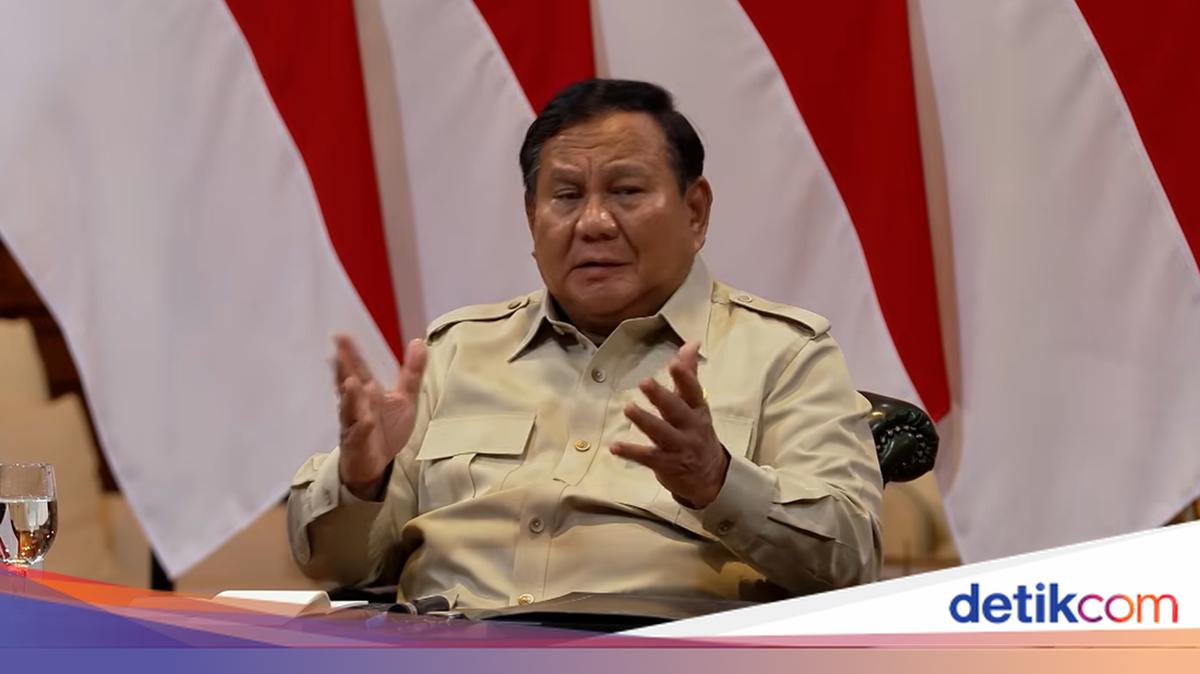
At the two-year mark of President Prabowo Subianto and Vice-President Gibran Rakabuming Raka’s administration, efforts to strengthen national food security have shown results through increased rice and maize production in 2025, domestic rice procurement exceeding its target in 2026, and stronger government food reserves. These measures have been supported by grain-price policies, irrigation development, production assistance and agricultural innovation across Indonesia.
Statistics Indonesia (BPS) recorded national paddy production of 60.21 million tonnes of dry milled grain (GKG) in 2025, a 13.29% increase from 53.14 million tonnes in 2024. Converted into rice for public consumption, production reached 34.69 million tonnes, up 4.07 million tonnes on the previous year. The harvested paddy area also rose by 12.69% to 11.32 million hectares.
Positive results were also seen in maize. BPS said dry shelled maize production at 14% moisture content reached 16.16 million tonnes in 2025, up 6.74% from 15.14 million tonnes in 2024. This contributed to supplies for food and animal feed, while highlighting the importance of diversifying production beyond rice.
For President Prabowo, food security is part of the nation’s resilience in the face of global uncertainty and climate change. He has also stressed the government’s preparedness to anticipate El Niño risks and drought.
“Alhamdulillah, we have achieved food self-sufficiency and our food reserves are sufficient,” Prabowo said at Pondok Modern Darussalam Gontor in East Java some time ago.
On the procurement side, state-owned logistics company Perum BULOG reported that domestic procurement of paddy and rice had reached 4,131,492 tonnes in rice equivalent by 11 October 2026. This was 103.29% of the government’s four-million-tonne target and the highest procurement total in BULOG’s history. It also exceeded the 2025 total of 3,191,969 tonnes in rice equivalent.
BULOG president director Ahmad Rizal Ramdhani said surpassing the target was the result of joint efforts by various parties in production centres.
“Exceeding the target shows that, by working together, we can carry out the Government’s mandate optimally,” Ahmad Rizal said some time ago.
Efforts to strengthen procurement have been accompanied by measures to maintain reserves and food affordability. The National Food Agency (Bapanas) reported that Government Rice Reserves (CBP) stood at around 4.6 million tonnes as of 18 September 2026. The government is also continuing its Food Supply and Price Stabilisation programme (SPHP) and has prepared rice assistance for 33.24 million recipients for October-December 2026, with each recipient allocated 10 kilograms a month. Distribution to eligible households is to take place in stages, in line with regulations.
Agriculture Minister and Bapanas head Andi Amran Sulaiman stressed the importance of rice reserves in safeguarding public access to food.
“Our stock at BULOG today still stands at 4.6 million tonnes,” he said while inspecting food assistance distribution in Pekanbaru, Riau, on 17 September 2026.
To protect farmers’ interests, the government has also maintained the Government Purchase Price for harvested dry paddy at Rp6,500 per kilogram through its domestic procurement policy.
National food-sector achievements reflect contributions from the regions. In Sumatra, South Sumatra produced 3.63 million tonnes of GKG in 2025, a 24.67% increase on 2024. Aceh, North Sumatra and Lampung continue to serve as food-production bases as well as areas for infrastructure development and agricultural land recovery. In Java, East Java produced 10.44 million tonnes of GKG and West Java 10.23 million tonnes in 2025, making both provinces major pillars of national rice supplies.
Outside Java, South Kalimantan recorded paddy production of around 1.18 million tonnes of GKG in 2025, up 14.55% from 2024. South Sulawesi produced 5.47 million tonnes, an increase of 13.45%.
West Nusa Tenggara reached 1.71 million tonnes of GKG, up 17.56%. South Papua produced 362,540 tonnes in 2025, demonstrating the contribution of eastern regions to strengthening the national production base.
Agriculture in the east is also being strengthened through land expansion and optimisation. The Agriculture Ministry reported that, up to 2026, 83,030 hectares in Papua had been developed for new rice-field creation, while 54,399 hectares had undergone land optimisation.
The programme’s implementation needs to be accompanied by support for farmers, reliable water supplies, clear land governance and protection of local communities’ interests, so that higher production delivers sustainable benefits.
To support productivity, the Ministry of Public Works completed irrigation network construction and rehabilitation serving around 589,606 hectares in 2025, and has set a target of 750,000 hectares for 2026.
“All these achievements reflect the Public Works Ministry’s commitment to ensuring infrastructure supports food security, education and regional economic growth,” Public Works Minister Dody Hanggodo said some time ago.
Agricultural modernisation is also being reinforced through digital technology. The Ministry of Communication and Digital Affairs (Kemkomdigi) is promoting the use of the Internet of Things (IoT) and artificial intelligence to help farmers measure land conditions and manage fertiliser application more precisely.
In one example in Sragen, Central Java, soil sensors were reported to have reduced fertiliser use from around 1,600 kilograms to 750 kilograms per hectare, a reduction of about 53%. In Sukabumi, West Java, tilapia farmers are also using IoT technology to monitor water conditions and support production.
Communications and Digital Affairs Minister Meutya Hafid said technology must address the needs of people in production centres.
“Digital technology should not be enjoyed only in cities; it must reach villages to support the President’s food self-sufficiency programme,” Meutya said in a written statement on Tuesday (20 October 2026).
Kemkomdigi also helps strengthen public access to information about government programmes and policies, and encourages farmers and food-sector businesses to adopt relevant technology.
The government recognises that stronger reserves and production must be accompanied by consumer price controls, smooth inter-regional distribution, protection of farmers’ incomes and preparation for extreme weather. BPS data showed that rice production in August 2026 was still down year on year, making sustained production, stronger irrigation and reserve management priorities through the end of the year.
As the administration enters its third year, the government is continuing cross-ministry and regional efforts to ensure that increased output is properly procured, adequately stored and accessible to the public at affordable prices.
“With contributions from food-producing centres from Sumatra to Papua, national food security is intended to become a foundation for economic self-reliance and public protection amid global challenges,” the article concluded.
Source: jawawa.id (https://jawawa.id/newsitem/from-production-to-irrigation-food-sector-achievements-in-prabowo-gibrans-two-years-1792493595)
Originally published by detikcom (https://news.detik.com/berita/d-8715888/dari-produksi-hingga-irigasi-ini-capaian-pangan-2-tahun-prabowo-gibran), translated from Indonesian