
From Prison Nurse to Head of Work Activities: The Transformation of Garut Prison
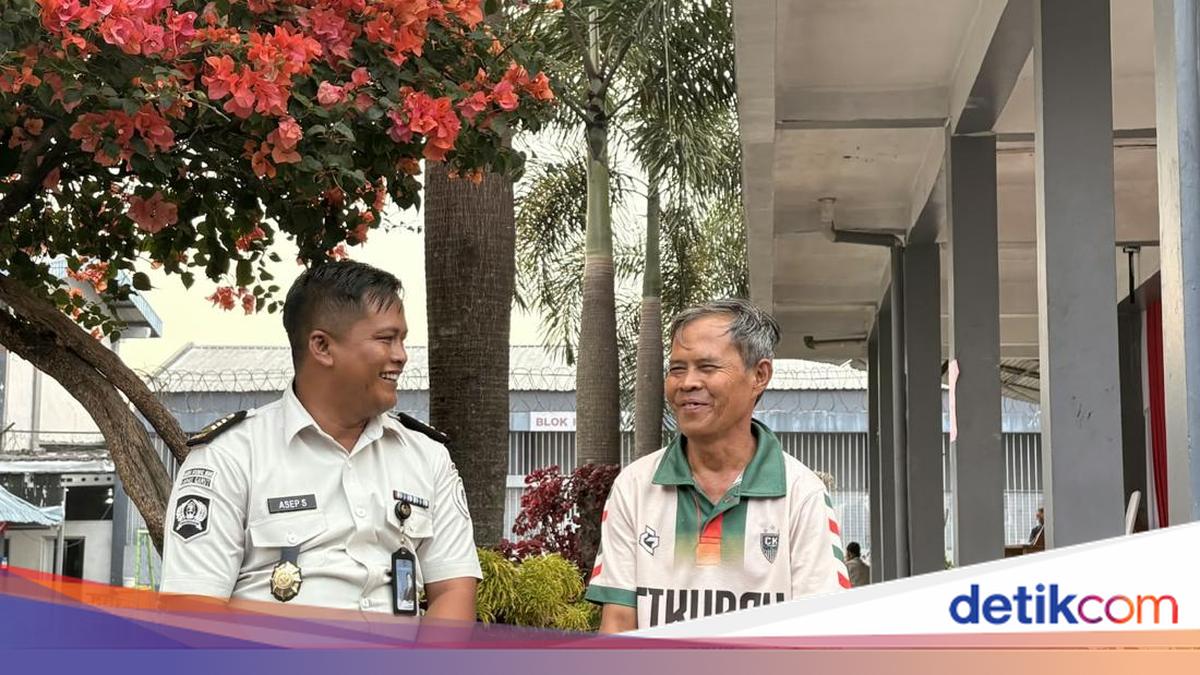
Asep Supriatna has worked at the Class IIA Garut Prison for 21 years. He joined as a staff member in 2005 with a nursing background, and his first job was caring for inmates. Two decades later, Asep now serves as Head of the Work Activities Section at Garut Prison. He describes various changes within the prison, from healthcare services and rehabilitation patterns to the mindset of prison officers in dealing with inmates.
Asep says that in his early years, the correctional system focused more on security. Rehabilitation existed, but it was more prominent in personality development. “What I knew about corrections at that time was that it only focused on securing inmates. Although there was a rehabilitation aspect, it was more prominent in personality development. The independence aspect like today was not very prominent,” Asep said when met by detikcom at Garut Prison, West Java, on Wednesday (19/8/2026).
Asep began to notice changes around 2010, when he was still working in the health sector. According to Asep, a memorandum of understanding between the Ministry of Health, the Ministry of Law and Human Rights, and the Ministry of Social Affairs regarding healthcare services in prisons made health services for inmates much better. “Before 2010, there was a shortage of human resources and infrastructure, so healthcare services in the institution were, in my opinion, very lacking. At that time, our speed of action was also somewhat delayed because the doctor was only provided by the community health centre,” he said.
After the cooperation took effect, Asep says, permanent nurses became available. Inmates requiring further treatment also found it easier to access hospital services, including in terms of administrative financing. “If there is a patient who needs further treatment at a hospital, in terms of administration, thank God, all services can be free,” Asep said. Garut Prison then had its own doctor around 2022.
Asep spent about 15 years of his career at Garut Prison as a nurse for inmates. In 2018, Asep says he was proposed by the then prison governor to take part in an open bidding process as part of a promotion to Head of the Work Activities Subsection. Asep briefly returned to the health sector after being proposed as Head of the Nursing Subsection. About a year later, the upgrading of Garut Prison to Class IIA brought him another promotion to his current position.
The change in ministry structure also changed the field he handles. Asep says the President’s Asta Cita policy and the 15 Action Programmes of the Minister of Immigration and Corrections place work activities, food security, and MSMEs as priority programmes. The change is felt by Asep because he experienced a time when work activities for inmates were still limited. “Previously, work activities in prison were only focused on training. Other activities were not as significant as they are now,” Asep explained.
Third-party involvement in independence activities at Garut Prison began to appear in 2019. According to Asep, at that time the prison cooperated with a private party to employ inmates in a broiler chicken farm with a capacity of about 14,000 birds. However, the number of inmates who could be involved was still small. “In the past, the chicken coop only absorbed a fraction of a per cent of inmate labour because we only had three workers, at most five. Meanwhile, the number of inmates was around 500,” Asep said.
Other independence activities also did not yet have a sustainable market. For handicraft products, for example, production depended heavily on orders. Until before Minister of Immigration and Corrections Agus Andrianto was inaugurated, according to Asep, there had been no significant addition of independence empowerment activities at Garut Prison. But the situation is now said to have changed.
Asep says more than 30 per cent of inmates are now absorbed in work activities. Meanwhile, other inmates participate in various activities, from cleaning, personality development, scouting, to Islamic boarding school. Garut Prison currently has 24 independence activities. Asep says almost all of these activities now generate economic benefits for inmates. “With the transition from the Ministry of Law and Human Rights to the Ministry of Immigration and Corrections, what I really feel is the improvement in work activity rehabilitation. Because what is currently programmed is very influential,” he said.
Asep and the Head of Class IIA Garut Prison, Rusdedy, then used a different strategy to encourage more inmates to participate in work activities because it is believed to be useful as a ‘provision’ after completing their sentences. Mapping of interests and talents is carried out from the moment inmates first enter. “My strategy with the prison governor to make inmates interested in work guidance is that on the first day they enter, we already screen their interests and talents,” he said.
For inmates who do not yet have specific skills, they can be directed to jobs that are relatively easy to learn and can accommodate many people, one of which is the production of coir sheet made from coconut fibre. This activity has even been introduced when inmates undergo the environmental orientation period. “They are even required to learn it during orientation, so the hope is that when they go down to the block they are ready to work and already capable,” he said.
Asep says the approach is also intended to introduce that work activities are not merely a way to fill time while serving a sentence. There is an economic aspect that inmates can obtain. All independence activities, Asep says, provide premiums. He even found inmates who used their earnings from these activities to help cover their families’ travel costs when visiting.