
From Price Stability to SMEs Breaking into Global Markets
As President Prabowo Subianto and Vice-President Gibran Rakabuming Raka enter the third year of their administration, the Trade Ministry’s main challenge is to ensure that these positive gains continue consistently.
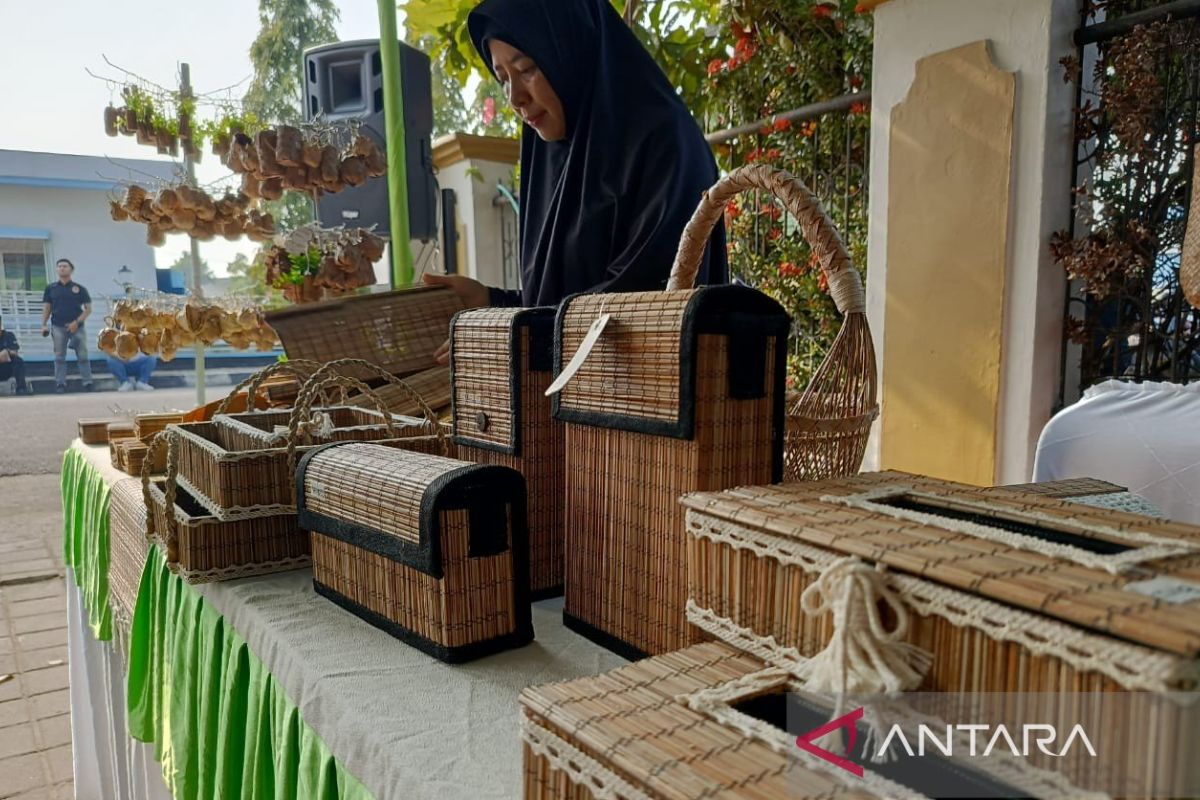
Jakarta (ANTARA) – Products from villages are now targeting international markets. Micro, small and medium-sized enterprises (MSMEs) are no longer relying solely on the domestic market, but are expanding overseas through a range of export facilitation programmes.
This momentum is one indication of the direction of Indonesia’s trade policy during the first two years of President Prabowo Subianto and Vice-President Gibran Rakabuming Raka’s administration.
Amid economic uncertainty and shifting global geopolitics, the government is continuing its efforts to sustain export growth while broadening local businesses’ access to world markets.
Trade Minister Budi Santoso said Indonesia’s trade sector continued to show positive trends, both in the stability of prices for essential goods and in export performance.
“Although global challenges are considerable, the trade sector’s performance continues to grow positively,” Budi told ANTARA in Jakarta on Friday.
Budi stressed that managing trade is not solely about increasing exports. The government must also ensure the availability of essential goods at affordable prices, while widening access for local products to compete in global markets.
Despite various challenges in global trade, Indonesia’s exports continued to grow. Statistics Indonesia (BPS) data show that national exports reached US$282.91 billion in 2025, up 6.15 per cent from US$266.51 billion in 2024.
The positive trend continued in January–August 2026, when exports reached US$193.64 billion, an increase of 4.74 per cent. Over the same period, Indonesia again recorded a trade surplus, of US$7.25 billion.
Budi said these results were a strong indication that Indonesian trade remained resilient amid global uncertainty.
Even so, the key challenge ahead is to sustain this growth without relying on particular commodities or markets. Expanding export destinations and increasing the added value of products are crucial to strengthening national competitiveness.
Trade agreements play a strategic role in this effort. Deals with partner countries can open market access, reduce tariff barriers and give Indonesian products greater scope to compete.
Indonesia has implemented 25 trade agreements, while 13 others remain under negotiation. The government is also seeking to conclude talks with the Gulf Cooperation Council (GCC) in the Middle East and exploring cooperation with Mercosur, the South American trade and regional integration bloc.
According to Budi, opening market access does not always have to wait for regional agreements, which can take a long time. Bilateral discussions can provide an effective first step towards broader cooperation.
He cited Indonesia’s bilateral cooperation with the United Arab Emirates (UAE), which was concluded as the country sought to expand its presence in the Middle East.
“The task ahead is really to increase the number of trade agreements and open up market access, while also improving the competitiveness of domestic products,” he said.