
From Poliran to ‘Gesit Gambut’, National Police Drive to Transform Their Social Role
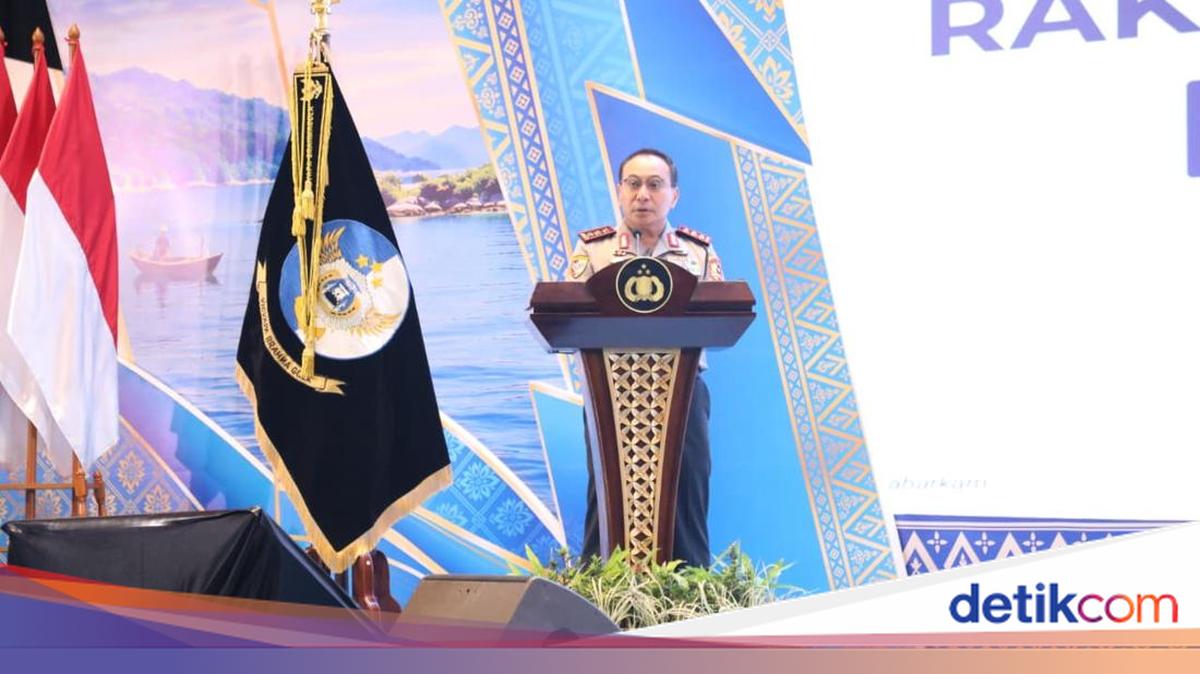
The National Police (Polri) is strengthening its transformation into the “social face of the police” by prioritising programmes tailored to community needs and risks, such as Poliran and Gesit Gambut. The policy is designed to expand public services while strengthening social and environmental resilience.
The Chief of Police Security Maintenance Agency (Kabaharkam), Commissioner General Herry Heryawan, said this at the 2026 Baharkam Polri Technical Working Meeting in Batam, Riau Islands, on Thursday (26 November 2026). He said the transformation was part of implementing the National Police Chief’s vision of “Police with the Community”, while also supporting the national development agenda set out in the President of Indonesia’s Asta Cita priorities.
“Next year, God willing, Baharkam will become the social face of the police,” Herry said.
Through Baharkam, Polri is continuing to promote a change in policing philosophy through programmes including Police Care for the Unemployed (Poliran), Police Care for Education (Polidik), Green Policing, Blue Policing and Ngariung Kamtibmas, as well as a range of partnership activities. These initiatives are building a model of policing oriented towards community needs. They are intended to strengthen social resilience, widen access to services, build public trust and prevent problems from developing into security disturbances.
“Within this framework, Polri personnel need to develop their capacity as social workers, facilitators, mediators and problem-solvers in the community, while remaining within their authority and adhering to professional standards and applicable laws,” he said.
Herry outlined five directions for Baharkam’s transformation: moving from reactive to anticipatory management; from an incident-based to a risk-based approach; from sectoral work to cross-functional collaboration; from an internal police focus to one centred on community needs; and from measuring activity to measuring outcomes and impact.
“This transformation requires leadership that is adaptive, innovative and collaborative, and has the courage to renew the organisation,” he said.
One element of the transformation is strengthening science-, data- and technology-based prevention of forest and land fires through Green Policing and the Spatio-Temporal Peatland Movement (Gesit Gambut). The approach focuses on assessing fire risk according to local characteristics and changing conditions over time, with collaboration between the police, government, academics, businesses and communities.
The three-star general also stressed the importance of the police being open to criticism, advances in knowledge and social change as part of organisational renewal.
“An institution’s ability to remain relevant to the community is determined to a great extent by its willingness to learn and improve,” he said.
Herry said he hoped the technical working meeting would give all Baharkam units a shared vision and enable them to formulate concrete policies with clear targets, success indicators and evaluation mechanisms. He stressed that all police work should ultimately deliver tangible benefits for the public.
“Being present in the community, understanding its problems, working alongside it and delivering benefits to it: that is where the relevance of the police institution is built. That is where public trust finds its foundation. And that is where a Bhayangkara officer’s service finds its meaning,” Herry concluded.
Source: jawawa.id (https://jawawa.id/newsitem/from-poliran-to-gesit-gambut-national-police-drive-to-transform-their-social-role-1795672326)
Originally published by detikcom (https://news.detik.com/berita/d-8770733/poliran-hingga-gesit-gambut-polri-dorong-transformasi-wajah-sosial-polisi), translated from Indonesian