
From Plastic Waste to Energy: Village Innovation Builds a Sustainable Future
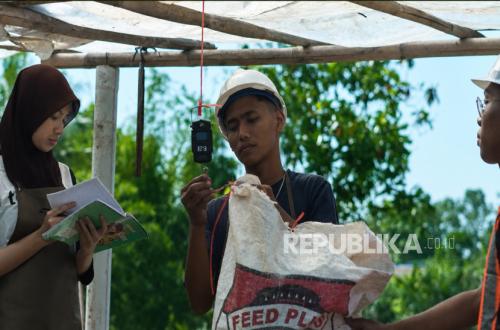
Waste remains a difficult problem to solve in many parts of Indonesia. Every day, households produce various types of waste, from food scraps and paper to single-use plastics. Most of this waste ends up in landfills, while some accumulates in the environment due to poor handling. This situation has become more acute following the closure of the Piyungan Final Disposal Site (TPA) in the Special Region of Yogyakarta. The build-up of waste in various areas has pushed communities to seek solutions that can be implemented independently at the village and neighbourhood level. People need to start managing waste from its source, namely the household. Triharjo Village in Sleman Regency is one of the areas facing this problem. Ever-increasing household waste, limited disposal sites, and low public awareness of waste sorting are challenges that must be addressed immediately. Yet amidst these problems, the community saw an opportunity to turn waste into something more useful. Through the Desa Binaan Empowerment Programme from the Ministry of Higher Education, Science, and Technology, the community, together with higher education institutions, began building an integrated waste management system involving the ATRAS Waste Bank and the AMOR waste management group. The approach taken not only focuses on transporting waste but also on changing the community’s mindset so that waste is viewed as a resource with economic value. The biggest change actually lies not in technology, but in the shift in community behaviour. Waste previously considered worthless is now seen as a resource that can provide economic benefits. The ATRAS Waste Bank has become the spearhead of this behavioural change. Residents are encouraged to sort waste from home and deposit waste that still has saleable value. This activity not only reduces the amount of waste discarded but also fosters awareness that waste management is a shared responsibility. This concept aligns with various community-based waste management practices proven to increase resident participation while reducing the volume of waste sent to final disposal sites. The change in community behaviour is then reinforced through the use of technology. One innovation developed is the ATRAS Waste Bank Management Information System (SIMBATRAS), a website-based system that helps administrators record transactions, manage customer data, and compile reports digitally. This digitalisation has had a significant impact. Previously manual record-keeping has become faster, neater, and more transparent. Administrators can now see transaction volumes, customer balances, and bank activities in real time, making organisational management more professional. However, the biggest challenge remains plastic waste. Plastic bags, food packaging, and various types of single-use plastics still dominate household waste streams. Plastic is very difficult to decompose naturally and is often simply burned in the open or discarded into the environment. Seeing this condition, the AMOR waste management group, together with the community service team, developed a pyrolysis machine as a solution for processing plastic waste. This technology is one of the most interesting innovations because it can convert plastic waste into alternative fuel oil. The working principle of the pyrolysis machine is quite simple. Plastic waste is heated to high temperatures in a closed chamber without oxygen. Under these conditions, the polymer chains in the plastic decompose into hydrocarbon vapour, which is then cooled through a condensation system until it turns into a liquid fuel. This technology offers new hope for the community. Plastic, previously considered worthless and a source of environmental pollution, can now be reused to produce alternative energy products. Accumulated plastic waste in the environment can be reduced, while the community gains economic benefits from the processing results. For the AMOR group, the pyrolysis machine is not just a waste processing tool. It serves as a means for the community to learn about technology, alternative energy, and sustainable environmental management. Group administrators and members are trained to understand the production process, operate the equipment, observe occupational safety, and maintain the machine independently. The successful implementation of the pyrolysis machine demonstrates that technology does not always have to be complex and expensive. Technology designed according to community needs is actually more easily accepted and utilised in the long term. This approach forms the basis of the programme’s development in Triharjo Village. In the following year, activities will focus on improving the quality of the alternative fuel produced by the pyrolysis machine. Refinements to the condensation system, operating temperature settings, and production process control are being carried out to produce fuel that is more stable and of better quality. Beyond energy production, the community is also being introduced to the concept of a circular economy. Products from waste processing, such as eco-enzymes, organic fertiliser, and alternative fuel, are being directed to have economic value through better packaging and marketing. The use of social media and digital technology is the next step. Educational content on waste sorting, the plastic processing cycle, and community activities is being published through various digital platforms. The aim is not only promotion but also to invite more people to participate in building a cleaner and more sustainable environment.