
From Philanthropy to the Economic Transformation of the Muslim Community
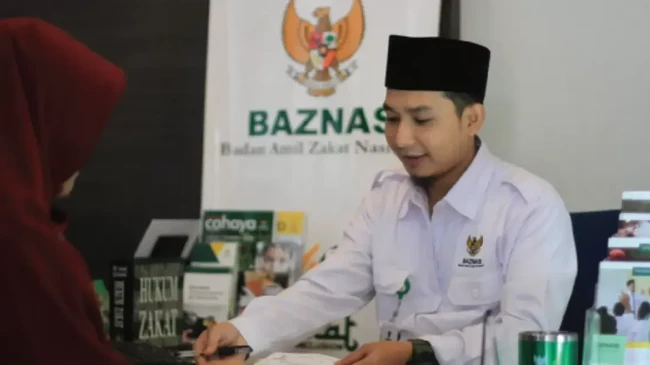
Islamic philanthropy has often been understood simply as charitable activity to help people in need. Zakat is distributed to the poor, infak and sedekah support social activities, while waqf is associated with building mosques, prayer rooms, schools and religious facilities.
These practices undoubtedly have significant spiritual value and social benefits. However, amid increasingly complex economic challenges facing the Muslim community, this approach is no longer sufficient if it stops at collecting and distributing funds.
The fundamental problems in the community’s economy are not merely a shortage of social assistance. They also include limited access to financing, low productivity, weak business capacity, limited ownership of productive assets and inequality in control of economic resources.
Many people remain trapped in poverty not because they have never received assistance, but because they lack the opportunity to escape economic dependence.
This is why the paradigm of Islamic philanthropy needs to shift. Philanthropy must not merely be an instrument for easing the burden of poverty; it should develop into a means of empowerment, creating economic opportunities and transforming the community’s welfare. In other words, it is time to move from charitable philanthropy towards an approach that is more productive and transformative.
This transformation does not mean reducing support for people who need direct assistance. The poor, vulnerable groups, disaster victims and people facing hardship must continue to receive protection. But for those with the potential to progress, philanthropy should serve as a bridge to economic independence.
Indonesia has considerable social and religious capital for developing an economy based on Islamic philanthropy. The potential of zakat, infak, sedekah and waqf (ZISWAF) is one economic resource that can be mobilised to address a range of development challenges.
The national zakat potential is estimated to reach hundreds of trillions of rupiah each year. Waqf, meanwhile, has a more strategic character because its assets can be preserved and developed to generate lasting economic benefits.
Waqf land, for example, need not remain an asset used only for places of worship. It can also be developed into productive farmland, commercial centres, hospitals, educational facilities and business areas for micro and small enterprises.
The issue, however, is not simply the size of Indonesia’s philanthropic resources, but how effectively they can be collected, managed and converted into productive economic strength.
The gap between zakat’s potential and actual collection remains a challenge. Waqf management also faces institutional and legal issues, a lack of professional management and limited innovation in asset development. As a result, much of the potential of philanthropy has yet to make its full contribution to strengthening the community’s economy.
Yet, if managed professionally, transparently and productively, Islamic philanthropic funds can become an alternative source of financing that complements government funding and the commercial financial sector. This is a major opportunity that must be seized.
The 2025 National Zakat Management Report issued by BAZNAS offers an interesting picture. National ZIS-DSKL collections reached Rp44.698 trillion, up 9.54 per cent on the previous year. Distribution and utilisation totalled Rp44.268 trillion. These figures show that Islamic philanthropy has developed into a social-economic activity on an increasingly large scale.
More notably, BAZNAS reported that zakat management in 2025 helped lift 302,994 people out of poverty, including 113,134 people out of extreme poverty. This shows that zakat is not merely an instrument for redistributing wealth; it can also support social and economic development interventions.
However, we should not be satisfied with the increase in collections and distributions. The success of philanthropy should not be measured only by the amount raised or the number of people receiving assistance. Much more important is the extent to which the funds can change people’s welfare, raise productivity, create jobs and reduce economic dependence.
Optimising waqf is another important issue. Waqf is often understood primarily as a means of building religious facilities. It is therefore unsurprising that waqf assets are still used mainly for mosques, prayer rooms and educational facilities.
Yet waqf has highly strategic characteristics for economic development. Unlike zakat, which must be distributed to eight categories of eligible recipients (asnaf), waqf can be managed as a productive asset whose benefits continue over the long term. It should therefore be a source of sustainable development financing.
The Indonesian Waqf Board (BWI) recorded around 435,768 waqf land sites covering 277,203 hectares in 2025. However, 65.2 per cent is used for mosques and prayer rooms, 18.7 per cent for education and 8.9 per cent for social purposes, while only around 4.8 per cent is used for economic activities.
These figures point to a gap between the large amount of waqf property and the ability to maximise its economic value. Imagine if some waqf assets, where their location and characteristics make it feasible, were developed into agricultural hubs, commercial areas, centres for micro, small and medium-sized enterprises (MSMEs), warehouses, production facilities or community economic centres. Waqf would then be not merely an asset to preserve, but also a source of added value.
The same applies to cash waqf. Its potential in Indonesia is estimated at Rp180 trillion a year. Meanwhile, reports citing BWI data say cash waqf collections reached Rp4.72 trillion in 2025, with a target of Rp4.79 trillion for 2026. There is therefore considerable scope to increase the mobilisation of cash waqf.
The challenge is to invest cash waqf productively without neglecting prudence or safeguarding the principal. The answer lies in developing a sharia social-investment ecosystem, strengthening the capacity of waqf managers (nazhir), diversifying investment instruments and collaborating with Islamic financial institutions.
Cash waqf can be developed through sukuk, financing for productive social projects and the development of assets that generate sustainable cash flow. The returns can then fund scholarships, healthcare, MSME empowerment and poverty-alleviation programmes.
In this way, waqf would no longer be seen solely as an individual religious act, but also as a social-investment instrument that benefits successive generations.
Transforming philanthropy into an engine for the community’s economy requires a more fundamental change in approach. One weakness in current philanthropic management is the limited connection between Islamic social funds and productive sectors of the economy.
Yet the community’s economic challenges are closely linked to low MSME productivity, limited access to financing, unequal ownership of assets and weak links between small businesses and industrial supply chains.
In this context, philanthropic funds should not be distributed merely as capital assistance. They should be integrated with programmes to build business capacity, provide management support and financial literacy, enable digitalisation and halal certification, and open up access to markets.
For example, a beneficiary (mustahik) who runs a home-based food business needs more than a grant of Rp2 million or Rp5 million. They need support to improve product quality and packaging, obtain halal certification, use digital marketing and reach wider distribution networks.
Capital assistance without stronger business capacity risks creating only temporary economic activity. By contrast, assistance combined with productivity support and access to markets can help build sustainable enterprises.
This approach is also relevant to agriculture and food security. Productive zakat, for example, could support smallholder farmers by providing production inputs and agricultural equipment, helping process harvests, strengthening farmer organisations and developing businesses based on local commodities.
Productive waqf, meanwhile, could be used to build agricultural economic infrastructure, including storage warehouses, drying facilities, production centres and food-distribution hubs. Through this model, Islamic philanthropy could strengthen agricultural value chains while improving farmers’ welfare.
Moreover, combining zakat, waqf and commercial Islamic finance could create an effective financing model. Zakat could empower poor groups who qualify under the asnaf rules; waqf could provide productive assets and facilities; and Islamic banks and microfinance institutions could provide business financing suited to the needs and capacity of economic actors.
This can be described as the integration of Islamic social and commercial finance. Under this model, Islamic social funds would not operate in isolation, but would form part of an economic development ecosystem for the Muslim community.
Despite its considerable potential, the transformation of Islamic philanthropy will not succeed without institutional governance reforms. Professional standards for zakat administrators (amil) and waqf managers, transparency, accountability in distribution and managerial capacity remain challenges that need to be addressed.
Philanthropy requires not only sincerity but also professionalism. Managing large amounts of community funds cannot rely solely on trust and emotional appeals. It requires systems based on expertise, risk management, transparency and impact measurement.
A nazhir, for example, needs to understand more than the jurisprudence of waqf. They must also be able to manage assets, assess investment viability, understand risk management and develop sustainable business models. Similarly, zakat administrators need to identify beneficiaries’ needs, design empowerment programmes, measure economic impact and ensure that funds reach the right people.
Another challenge is fragmentation of data and institutions. Zakat, infak, sedekah and waqf are managed by various institutions whose information systems and databases are not yet fully integrated. This can lead to overlapping programmes, inaccurate targeting and inefficient use of resources.
For this reason, Bappenas’s move in April 2026 to promote the integration of ZISWAF data within the One Data Indonesia framework is highly relevant. The forum heard that national zakat collections stood at only around Rp30 trillion, against estimated potential of Rp300 trillion to Rp400 trillion. Data integration is expected to improve institutional coordination and make poverty-alleviation interventions more effective.
Digitalisation must also be part of this transformation. Digital technology, artificial intelligence and big-data analytics can be used to expand fundraising, map potential zakat payers (muzaki), identify beneficiaries’ needs and monitor the progress of empowerment programmes more systematically.
But digitalisation is about more than providing an app to pay zakat or make waqf contributions. It must build an integrated philanthropic management ecosystem covering fundraising, management, distribution and impact measurement. Public trust is philanthropy’s most important asset. Without good governance, even the largest pool of community funds will be difficult to turn into economic strength.
At least five strategic priorities deserve attention if philanthropy is to become an instrument for the community’s economic transformation.
First, shift the focus from consumptive assistance to productive empowerment. Aid should be distributed according to an assessment of beneficiaries’ circumstances. Those who need social protection should continue to receive consumptive assistance, while those with business potential should receive productive support. Philanthropic programmes should not apply a one-size-fits-all approach.
Second, build an entrepreneurship ecosystem based on philanthropy. Empowerment programmes must go beyond providing business capital. Financing should be integrated with training, mentoring, product certification, digitalisation and access to markets. Zakat and waqf institutions can work with universities, Islamic boarding schools (pesantren), cooperatives, Islamic banks and businesses to build an entrepreneurial ecosystem for the community.
Third, develop productive waqf and social investment. Waqf assets should be mapped according to their economic potential. Land that can feasibly be developed should be directed towards productive economic activity, without disregarding the terms of the waqf dedication or sharia principles. Cash waqf should also be expanded through safe, transparent investment instruments that deliver sustainable social benefits.
Fourth, strengthen the integration of Islamic social and commercial finance. Zakat, infak, sedekah, waqf, Islamic banks, sharia cooperatives and Islamic microfinance institutions should be developed as a single ecosystem. Such collaboration can widen access to financing for groups that have so far been underserved by formal financial institutions.
Fifth, shift the measures of philanthropic success from outputs to outcomes and impact. Success cannot be assessed solely by the amount raised, the number of aid packages distributed or the number of beneficiaries. More meaningful indicators include increases in household income, MSME turnover, job creation and productivity, as well as beneficiaries moving from mustahik to muzaki.
Ideally, every empowerment programme should have a clear roadmap, from receiving assistance and building capacity to developing a business and achieving economic independence. With this approach, philanthropic institutions can become not only aid distributors but also catalysts for economic mobility.
Ultimately, transforming Islamic philanthropy should serve one overarching goal: building the economic independence and dignity of the Muslim community. The success of zakat should be measured not only by how many poor people receive assistance, but by how many manage to escape poverty and are then able to help others.
The aspiration of turning mustahik into muzaki must be translated into measurable programme designs. This cannot happen overnight. It requires medium- and long-term interventions, consistent support and the backing of an ecosystem.
Source: jawawa.id (https://jawawa.id/newsitem/from-philanthropy-to-the-economic-transformation-of-the-muslim-community-1794527498)
Originally published by CNBC Indonesia (https://www.cnbcindonesia.com/opini/20261113055632-14-784836/dari-filantropi-menuju-transformasi-ekonomi-umat), translated from Indonesian