
From Office Colleagues to Neighbours, Antam Gold Proxy Shopping Business Grows from Trust
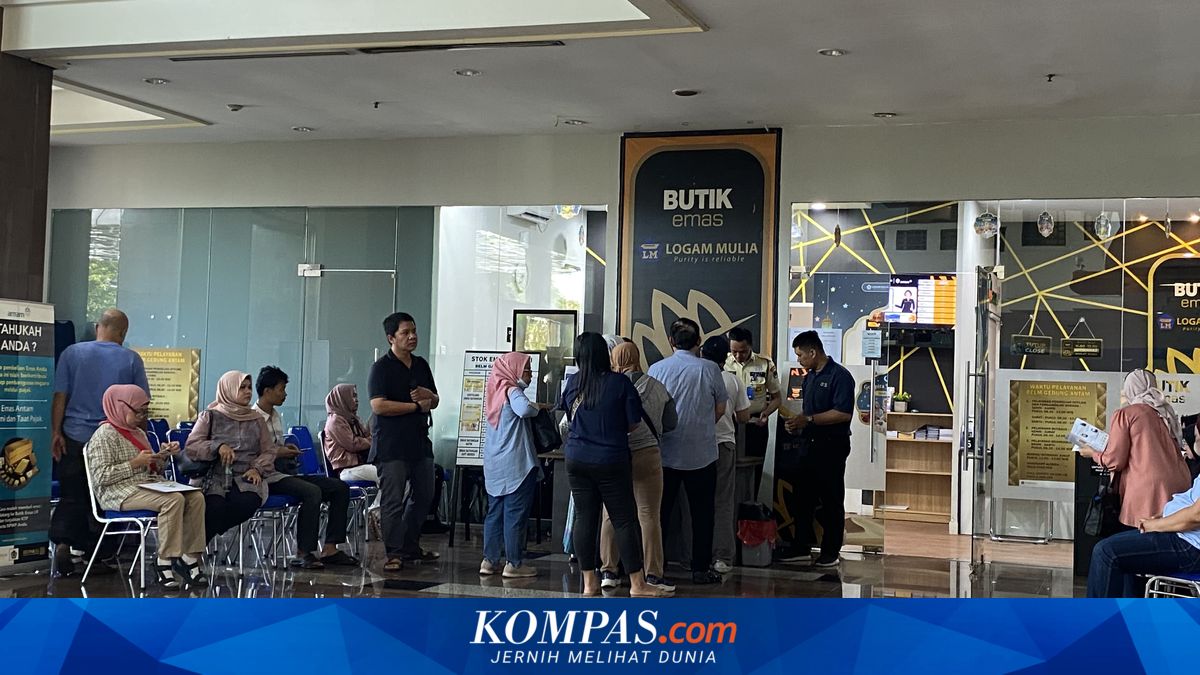
The phenomenon of proxy shopping (jastip) services for gold is no longer just an alternative buying and selling practice but has developed into a small economic chain that grows from circles of trust.
It began with assistance between office colleagues and has expanded to neighbours and surrounding communities, forming a market based on personal relationships amid long queues at gold boutiques.
Kiki (25), a resident of East Jakarta, is one of the jastip operators who has experienced how this business grows from her closest circles.
She started offering the proxy service in early 2025 after seeing many people around her struggling to obtain Antam gold at the Antam TB Simatupang Boutique in South Jakarta.
“Many people want to buy official Antam gold, but they don’t have time to queue. In the end, they look for jastip,” said Kiki when contacted by Kompas.com on Monday (20/4/2026).
The network that forms relies on trust, not large-scale promotions on social media.
Kiki said queues at the boutique often swell from the morning, especially when stocks of small-gram gold are available.
If arriving late, the chance of getting the items becomes very small.
“If it’s busy, we have to arrive very early in the morning. If in the afternoon, it’s usually already sold out, especially small grams,” she said.
Small grams like 1 gram and 2 grams are the most sought-after products because their prices are more affordable and suitable for gradual investment.
This situation requires proxy shoppers to be quick to read the field conditions.
To keep orders manageable, Kiki applies a slot system. She limits the number of orders to match her ability to obtain stock.
“I usually open slots. For example, I only accept 10 orders first. If too many, then if I can’t get the stock, it becomes a problem,” she said.
An experience of being left by a buyer after obtaining the goods has made her more selective in accepting orders.
“Minimum Rp300,000 to Rp500,000. That’s for commitment, because I once had the goods, but the customer disappeared,” Kiki explained.
The service fee charged by Kiki ranges from Rp50,000 to Rp100,000 per piece, and can increase to Rp150,000 when stock is very scarce.
Nevertheless, she emphasised that the profits from this business are not large and heavily depend on the availability of goods.
“If it’s smooth, it can be Rp3 million to Rp4 million a month. But if stock is hard to get, it can be just around a million,” she said.
The most important thing to maintain, according to Kiki, is reputation. She realises that the jastip business very much depends on customer trust.