
From Negative Peace to Positive Peace: The Long Journey of Indonesia Raya
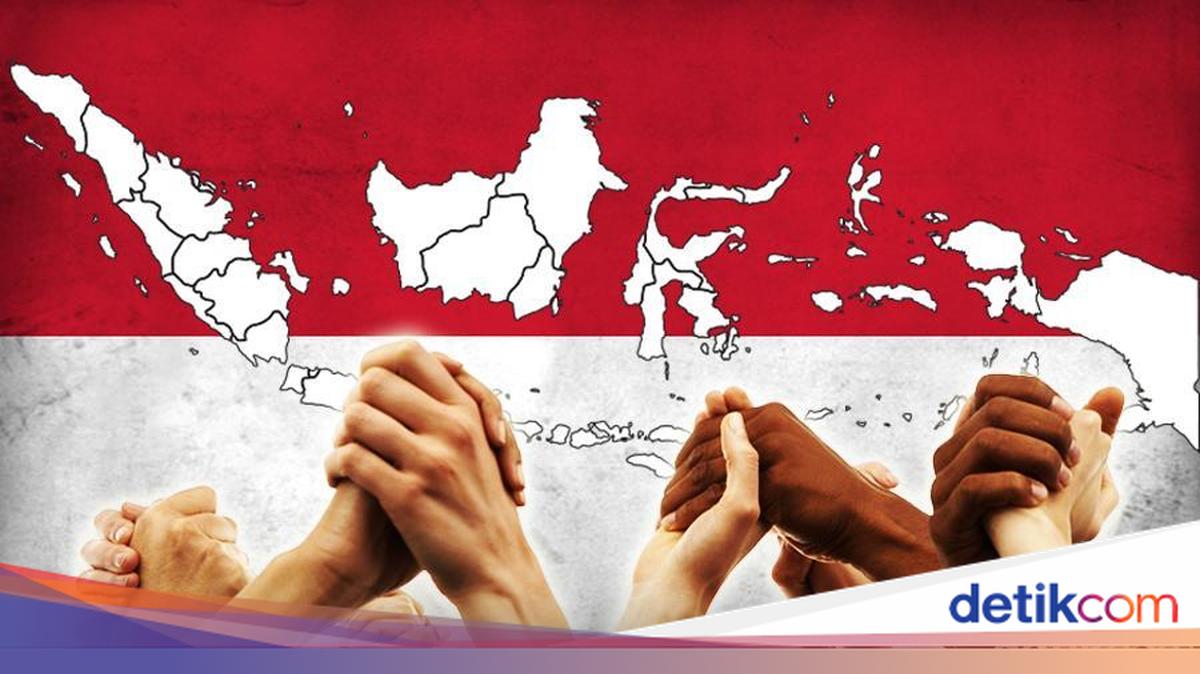
Not being involved in war does not mean a nation is fully at peace. Indonesia, as a country with over 280 million inhabitants and immense complexity in its diversity, must not stop at what is termed ‘negative peace’—the mere absence of conflict or overt violence. We must go further towards ‘positive peace’, a state where society does not just live without war, but also possesses access to justice, prosperity, equal opportunity, and respect for differences.
This idea stems from the thoughts of Johan Galtung, a key figure in peace studies. Galtung distinguishes negative peace as a situation without direct violence or war. Meanwhile, positive peace is a situation where conditions exist that allow humans to live more justly and prosperously. For Galtung, violence does not always take the form of war or physical force. There is also ‘structural violence’, where social, economic, or political structures prevent parts of society from having equal opportunities to live decently.
In reality, the challenges towards achieving positive peace in Indonesia manifest in many forms close to daily life, especially at the grassroots level. For instance, when children from poor families lack access to proper education, when individuals lose job opportunities due to their background, when minority groups feel unsafe practising their beliefs, or when development is not felt fairly by communities in remote regions.
Therefore, building peace requires concrete policies that touch various layers of society, starting with fundamental issues such as expanding educational access, ensuring protection and equal opportunity, strengthening public services, and ensuring no group is marginalised.
Policies from the central government need to be connected to the realities and needs of the regions. What is designed at the national level cannot always be applied in the same way in every territory, as every community has different contexts, needs, and challenges. Thus, we need a bottom-up approach, where the community is not merely a recipient of policy, but also part of the process of identifying problems, formulating solutions, and determining development priorities.
Sustainable peace requires a two-way relationship between top-down and bottom-up approaches, ensuring national policies have a clear direction while local communities have the opportunity and involvement to determine how peace and justice are realised in their daily lives.
In the Indonesian context, this perspective is vital. We may not be at war, but we are still struggling to resolve inequality, discrimination, or marginalisation. Therefore, the measure of peace should not only be seen in how safe a country is, but also in how just the lives of its people are.
We can also learn from the journey of Martin Luther King Jr. regarding the relationship between peace and justice. In his struggle against racial discrimination in the United States, King rejected the idea that social tranquillity in itself meant peace. As long as injustice persists, peace is not fully realised.
King’s idea is crucial for Indonesia. Harmony cannot be understood merely as a state where no one is fighting. A harmonious society is one capable of managing differences peacefully while building just and equal relationships. Therefore, in a pluralistic society, tolerance should not be the end goal, but rather the first step towards dialogue, cooperation, and social cohesion.
So, how does Indonesia move towards positive peace?
John Paul Lederach, another important thinker in peace studies, reminds us that peacebuilding is not merely about stopping conflict, but about building relationships and changing the conditions that give rise to injustice. Therefore, peacebuilding is a long-term process and a daily endeavour, not just a response when conflict occurs.
In the Indonesian context, this approach means shifting our working method from reactive to preventive. We should not wait for conflicts to escalate before seeking a way out. Early signs such as stereotypes, discrimination, the politicisation of identity, inequality, marginalisation, and the weakening of social trust need to be recognised early. Issues that appear small at the community level can develop into larger conflicts if not handled appropriately.
Ultimately, the work of building positive peace cannot be placed solely on the shoulders of the government. Education, families, places of worship, universities, community organisations, the media, the private sector, and the younger generation all play a role in shaping how society understands difference and responds to injustice. Indonesia possesses strong social capital. We have Pancasila, ‘gotong royong’ (mutual cooperation), a tradition of living in diversity, as well as extensive networks of civil society and religious communities. The challenge lies in how to transform this capital into policy and institutions, and to realise it in everyday life.
Of course, the journey towards positive peace cannot be completed overnight. This work requires consistency and the courage to continuously improve what is lacking. Peace, once again, is not only measured by the absence of war or overt conflict, but by the extent to which society can experience justice, equal opportunity, a sense of security, respect for differences, and a decent life.
This is what I call the long journey of Indonesia Raya—the journey from negative peace to positive peace. A journey…
Source: jawawa.id (https://jawawa.id/newsitem/from-negative-peace-to-positive-peace-the-long-journey-of-indonesia-raya-1788494377)
Originally published by detikcom (https://news.detik.com/kolom/d-8647886/dari-negative-peace-ke-positive-peace-jalan-panjang-indonesia-raya), translated from Indonesian