
From NATO to the Mecca Alliance: 5 Military Alliances That Could Trigger a World War
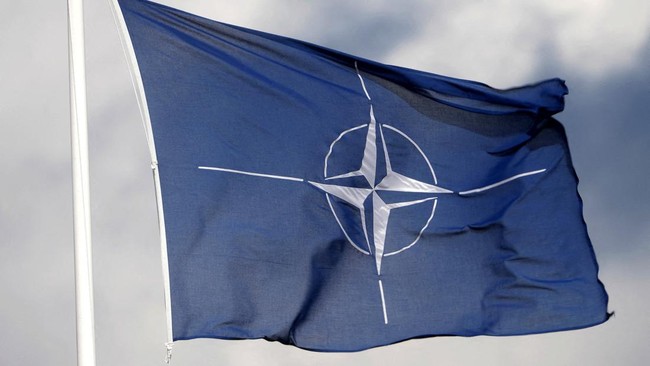
An attack on one nation can drag several others into conflict. This occurs because many countries are bound by mutual defence treaties.
Under these agreements, an attack on one member can be viewed as an attack on the entire group. Allied nations may therefore be called upon to provide assistance, including military support.
According to Visual Capitalist, there are five major multilateral defence alliances still in effect as of 2026. These are the North Atlantic Treaty Organization (NATO), the Rio Pact, the Gulf Cooperation Council (GCC), the Collective Security Treaty Organization (CSTO), and the Mecca Defence Alliance.
This mapping only includes official treaties that possess mutual defence commitments. Military cooperation limited to exercises, arms trade, technology, or information exchange is not included.
NATO Becomes the Largest Alliance
Of the five mapped alliances, NATO has the largest number of members. This organisation comprises 32 nations spread across Europe and North America.
NATO was established in 1949 with 12 founding members. Membership has continued to grow alongside changes in the European security landscape, particularly following the end of the Cold War.
The most recent expansion occurred when Finland officially joined in 2023, followed by Sweden in 2024. The entry of these two nations has extended NATO’s territory into Northern Europe and around the Baltic Sea.
The United States is one of the primary powers within NATO. However, the US is also bound by another defence alliance, namely the Rio Pact. This position makes the US one of three countries in this mapping that falls under the protection of two alliances simultaneously.
The other two countries are Turkey and Saudi Arabia. Turkey is both a member of NATO and the Mecca Defence Alliance, while Saudi Arabia is part of the GCC and the Mecca Defence Alliance.
The Rio Pact is Older than NATO
Although NATO is the largest alliance, it is not the oldest on the list.
That position is held by the Inter-American Treaty of Reciprocal Assistance, better known as the Rio Pact. This treaty was signed in Rio de Janeiro in 1947, two years before NATO was formed.
The Rio Pact was designed as a mutual defence framework for nations in the Americas. Its principle is nearly identical to NATO’s, whereby an attack on one participant nation can be viewed as an attack on all members.
Membership in the Rio Pact has changed significantly. Several countries have chosen to withdraw, while others have maintained their participation, even if the cooperation is not always actively utilised.
The United States remains part of the Rio Pact. At the same time, Washington is also a member of NATO. This connects the security systems of the Americas with a defence alliance centred in the North Atlantic region.
Six Gulf Nations Protecting One Another
In the Gulf region, defence cooperation is conducted through the Gulf Cooperation Council (GCC).
Formed in 1981, this organisation consists of six nations: Saudi Arabia, the United Arab Emirates, Bahrain, Kuwait, Oman, and Qatar. All six share geographical proximity, strong economic ties, and face similar security threats.
The GCC operates beyond just economic and political spheres. The organisation also possesses a mutual defence agreement asserting that the security of Gulf nations is inseparable.
Under this provision, an attack on one member is viewed as a direct attack on all GCC nations. Their cooperation encompasses military coordination, air defence systems, and the development of joint defence capabilities.
Saudi Arabia has subsequently expanded its security network through new agreements with Turkey and Pakistan. This move makes Riyadh a link between Gulf defence cooperation and a new alliance with a broader reach.
A New Alliance is Born in Mecca
A significant shift in the global military alliance landscape occurred in August 2026.
Saudi Arabia, Turkey, and Pakistan signed the Mecca Joint Defence Agreement.
The treaty states that an armed attack against any of the three nations will be considered an attack against all of them.
This alliance brings together three nations with differing capabilities. Turkey is a NATO member and possesses one of the largest military forces within the organisation. Saudi Arabia possesses significant economic power and is a key member of the GCC.
Meanwhile, Pakistan is a nuclear-armed nation that is not part of NATO or the GCC.
The presence of Pakistan makes this alliance particularly noteworthy. The nation serves as the only member previously unconnected to the other two defence blocs.
However, details regarding the specific type of assistance required if a member is attacked have not been fully disclosed. It remains unclear to what extent the agreement can bind the three nations to engage in military action.
CSTO is Losing Active Members
While the Mecca Alliance expands its mutual defence network, the CSTO is moving in the opposite direction.
The Russian-led alliance now has five active members: Russia, Belarus, Kazakhstan, Kyrgyzstan, and Tajikistan. Most of these are former Soviet republics.
Officially, Armenia is still recorded as a member of the CSTO. However, the Armenian government froze its participation in 2024 after relations with the organisation deteriorated.
Armenia no longer participates in various CSTO activities, yet it has not formally submitted its resignation. Consequently, the nation finds itself in an unusual position—legally bound, but no longer active within the organisation.
Source: jawawa.id (https://jawawa.id/newsitem/from-nato-to-the-mecca-alliance-5-military-alliances-that-could-trigger-a-world-war-1790607204)
Originally published by CNBC Indonesia (https://www.cnbcindonesia.com/research/20260928130902-128-771456/nato-aliansi-mekah-ini-5-aliansi-militer-yang-bisa-picu-perang-dunia), translated from Indonesian