
From Multatuli to the PKI
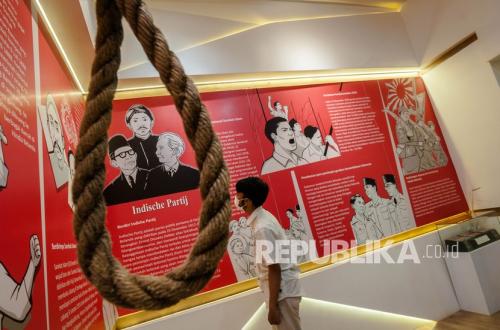
Commemorating the G30S/PKI 1965 inevitably involves remembering the Communist Party of Indonesia. This event remains one of the most decisive political tragedies in Indonesian history.
It is fascinating to understand how communism grew in Indonesia, which requires looking far back before 1965, even before the PKI was established. One can find the roots in the novel written by a Dutchman: Max Havelaar by Multatuli.
Here lies a historical irony. Critiques of Dutch East Indies colonialism did not always originate from the indigenous population; some actually emerged from the Dutch themselves. Multatuli challenged colonial exploitation through literature. Decades later, Henk Sneevliet and Adolf Baars brought that social critique into different arenas: labour movements, socialism, the press, and political organisations.
From there, leftist ideas met indigenous nationalist figures, evolving into political movements, one of which eventually led to the birth of the PKI.
Of course, this was not a straight line. Max Havelaar is not a communist manifesto, Multatuli was not the founder of the PKI, and neither Sneevliet nor Baars founded Indonesia. However, the history of ideas often moves through long chains and does not always follow the will of those who first initiated them.
Multatuli and Max Havelaar
Eduard Douwes Dekker, the real name of Multatuli, arrived in the Dutch East Indies in 1839 as a colonial government official. His experience as an assistant resident in Lebak, Banten, exposed him to the realities of exploitation and the abuse of power within the colonial system.
He later poured these experiences into Max Havelaar, published in 1860.
The novel was not a Marxist political manifesto. Multatuli primarily challenged colonial injustice and the suffering of the indigenous people. He questioned a system that allowed the Netherlands to enjoy prosperity while the people in the colonies bore the burden.
However, the power of Max Havelaar extended beyond literature. The book helped shape a tradition of anti-colonial critique within the Netherlands. For the generation following Multatuli, his work became a moral and intellectual reference point for challenging colonialism.
Later, this anti-colonial critique intersected with various new currents of thought from Europe: socialism, the labour movement, and Marxism—a critique of capitalism. The messenger for this was Henk Sneevliet.
Sneevliet was not a student of Multatuli. Multatuli died in 1887, when Sneevliet was still a toddler. Yet, the connection between them is one of intellectual continuity. Several studies on Dutch socialism indicate that Max Havelaar was part of the reading and colonial critique tradition that subsequently influenced socialist circles, including the environment in which Sneevliet operated.
In other words, Multatuli opened one of the doors to anti-colonial critique; the next generation entered through that door using a different political language.
Sneevliet arrives in the Indies
Henk Sneevliet was born in Rotterdam on 13 May 1883. He worked for a railway company before becoming active in the labour movement and radical socialism. His work introduced him to issues of social inequality, labour exploitation, and the conflict between capital and labour.
In 1913–1914, Sneevliet arrived in the Dutch East Indies. Alongside several Dutch socialists, he founded the Indische Sociaal-Democratische Vereeniging (ISDV) in May 1914. While this organisation initially consisted largely of Europeans, Sneevliet understood that a political movement would not flourish if it remained confined to the Dutch community.
Consequently, he sought to approach the burgeoning indigenous organisations, such as Sarekat Islam. For the first time, socialist and Marxist ideas interacted intensely with a mass indigenous movement that possessed deep social roots. From this environment emerged figures such as Semaoen and Darsono, who became pivotal leaders in the Indonesian left-wing movement.
Sneevliet’s strategy was ‘block within’—entering existing mass organisations to build influence from the inside. This meant the leftist movement in the Indies was not merely a European movement, but was debated and eventually led by indigenous figures.
Adolf Baars and the power of the press
The second figure was Adolf Baars. Born in Amsterdam on 20 April 1892 to a Dutch Jewish family, he arrived in the Dutch East Indies in late 1914 after studying engineering in Delft. He worked for the Staatsspoorwegen and later became a teacher at the Koningin Emmaschool in Surabaya, where he taught Soekarno.
Baars was certainly not the only person to influence Soekarno’s political thinking. However, this encounter was part of an intellectual environment that introduced the younger indigenous generation to socialism and the critique of capitalism and colonialism.
Baars also actively used the press as an instrument of struggle. He was involved in publishing Het Vrije Woord, followed by Soeara Merdika and Soeara Ra’jat. Through these media, issues regarding labour, wages, poverty, capitalism, imperialism, and class unity were introduced to the indigenous population.
While Multatuli used the novel to challenge colonial morality, Sneevliet used political organisations, and Baars utilised education and the press. All three operated in different contexts but shared a common thread: the critique of colonial injustice.
From colonial critique to political movement
Global political developments provided new energy. The 1917 Russian Revolution strengthened the appeal of communism and revolutionary socialism in various countries, including the Dutch East Indies.
Within Sarekat Islam, political orientations became increasingly polarised. The left-wing group and the group oriented towards Islam and nationalism eventually split. The left-wing faction, led by figures such as Semaoen and Darsono, evolved into Sarekat Islam Merah and subsequently Sarekat Rakyat.
In 1920, the Communist Union in the Indies was formed. A few years later…
Source: jawawa.id (https://jawawa.id/newsitem/from-multatuli-to-the-pki-1790852196)
Originally published by Republika (https://news.republika.co.id/berita/tm83l5393/dari-multatuli-ke-pki), translated from Indonesian