
From MBG Kitchens to Kopdes, Government Claims Economy is Moving
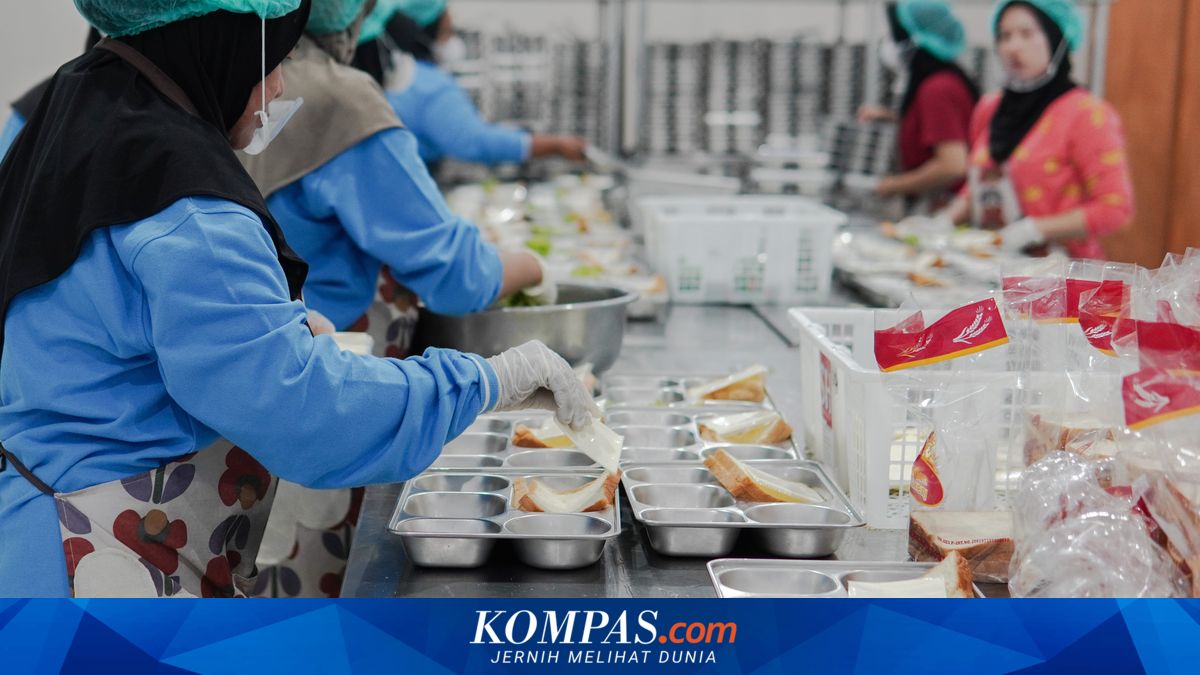
JAKARTA, KOMPAS.com - The Free Nutritious Meals (MBG) programme and the construction of Red and White Village/Urban Ward Cooperatives (KDKMP) are claimed to be starting to impact the national economy, from the construction sector and agriculture to job absorption in various regions.
The Central Statistics Agency (BPS) records that the implementation of these two programmes is supporting Indonesia’s economic growth, which reached 5.61% year-on-year (yoy) in the first quarter of 2026.
“Broadly speaking, this is reviving the economy,” said President Prabowo Subianto during the halal bihalal event for TNI AD retirees and the extended TNI-Polri family in Jakarta on Tuesday (29/4/2026).
According to Prabowo, the presence of the MBG programme means that agricultural produce, which previously often failed to reach the market, is now being purchased by the Nutrition Fulfilment Service Units (SPPG) or MBG kitchens.
He explained that one MBG kitchen employs at least 50 people. If the number of MBG kitchens reaches 30,000 units, the absorbed workforce will reach 1.5 million people.
In addition, the government is currently building 81,000 Red and White Village/Urban Ward Cooperatives in stages.
“Later, each cooperative will absorb 18 workers,” said Prabowo.
“You calculate it yourself, over 1 million something. So, brothers and sisters, not yet including our other programmes, people’s housing,” he emphasised.
Prabowo also said that currently, many countries are coming to Indonesia to study the implementation of the MBG programme.
He assessed that the programme is running on a large scale because it provides meals for millions of beneficiaries, including pregnant women, breastfeeding mothers, and toddlers.
“Perhaps China, but we know China has already taken off ahead of us,” said Prabowo.
BPS Chief Amalia Adininggar Widyasanti said that the construction sector grew 5.49% annually, one of which was driven by the construction of SPPG and KDKMP in various regions.
Data from the National Nutrition Agency shows that there are 27,427 SPPG units operating throughout Indonesia as of 5 May 2026. This number has increased sharply compared to March 2025, which was still around 900 units.
Meanwhile, the government is accelerating the construction of 30,000 KDKMP across Indonesia, targeted to start operating in the middle of this year.
“Construction growth is strengthening in line with the increasing physical infrastructure development activities, driven by the increasing realisation of government capital expenditure budget for the construction sector and private construction activities, one of which is the increase in the number of SPPG and KDKMP which boosts the supply of construction raw materials,” said Amalia in the BPS Release in Jakarta on Tuesday (5/5/2026).
She added that the construction sector is one of the main supports for economic growth from the business field perspective.
In the first quarter of 2026, the construction sector contributed 9.81% to Gross Domestic Product (GDP), making it the fourth largest contributor.
According to Amalia, the agriculture sector grew 4.97% annually and contributed 12.57% to GDP in the first quarter of 2026.
“Agriculture grew by 4.97% driven by increased production and increased domestic demand,” said Amalia.
“Livestock also grew 11.84% in line with the increased demand for broiler meat and eggs, one of which is to meet demand during Ramadan and Eid al-Fitr as well as the MBG programme,” she concluded.
With the expansion of the MBG programme in various regions, the involvement of local businesses is also seen as starting to create new economic effects at the grassroots level. However, amid this expansion, the government still faces challenges in meeting national food safety standards.