
From Maggots to Seedling Houses: Four Student Teams Grapple with Implementing Village Programmes
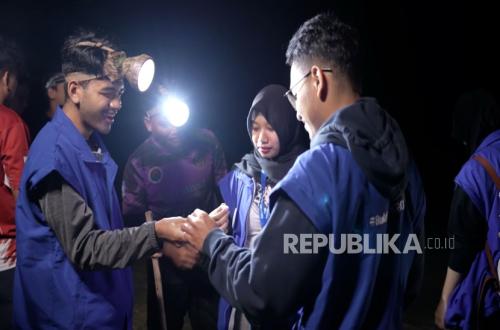
Ideas in proposals generally contain objectives, designed programmes, complete with budgets and activity targets. However, a good idea does not simply end with the proposal. It must be realised, and the journey towards that realisation often changes when it meets reality on the ground.
The experiences of the four finalist teams of Genera-Z Berbakti 2026 serve as evidence. The journey in the tourism villages assisted by Bakti BCA was not solely about proving their ideas. The demands of working as a team amidst differences in individual character, discovering through new experiences, the willingness to listen to residents, and improvising when unexpected things occurred were part of the challenges on the ground that could become lessons for them.
This was felt by the four teams: Laskar Selasik (Universitas Gadjah Mada) in Terong Creative Tourism Village, Belitung Regency; Tim Pelita (Universitas Padjadjaran) in Gunung Padang Site Tourism Village, Cianjur Regency; Tim Amerta Pertiwi (Universitas Airlangga) in Patakbanteng Tourism Village, Wonosobo Regency; and Tim KATALIS (Universitas Indonesia) in Kakaskasen Dua Tourism Village, Tomohon City.
All four arrived bringing ideas to their respective villages. The following are the stories of each team’s experiences.
Tim Pelita UNPAD: When the maggots failed to survive, what then?
Tim Pelita arrived at Gunung Padang Site Tourism Village with a maggot cultivation programme to process organic waste into nutritious animal feed, while also producing organic fertiliser. The programme was designed to introduce the application of a circular economy to the community through independent waste management.
However, their noble intentions were tested on the ground. Most of the five kilogrammes of maggots that had been ordered did not survive the journey to Gunung Padang Site Tourism Village.
On paper, this condition could mean failure. However, on the ground, the team had to immediately find a solution. “After learning that there was a maggot seller around here, we immediately visited the seller and replaced the maggots in the hut with new ones,” said Dika, the person in charge of Tim Pelita’s maggot house programme.
For the students, this problem served as a reminder that the success of a programme is not always determined by how perfect the initial planning is. Sometimes, the ability to read the situation and make quick decisions becomes an important part of the service process.
Tim KATALIS UI: The process of bridging differences
A similar story came from Tim KATALIS in Kakaskasen Dua Tourism Village. Their challenge was not solely related to the programme they brought, but also from within the team itself.
Living together for one month made differences in character and communication styles increasingly apparent. Not infrequently, team members questioned decisions made to enforce rules.
On the other hand, this adaptation process later became one of the keys when Tim KATALIS began running an English language learning programme. The programme, which targeted local children and tour guides, received a positive response. “I was quite surprised because the residents enthusiastically participated in the training we brought. This means they have a great desire and are ready to take part in our activities,” said Sarah.
At that point, the programme was no longer merely about the material that students wanted to give to residents. There was a two-way process: students learned to understand the community’s needs, while the community showed readiness to develop through programmes deemed relevant.
Tim Amerta Pertiwi UNAIR: When plans had to change
In Patakbanteng Tourism Village, Tim Amerta Pertiwi faced a different situation. Their initial plan was to revitalise a seedling house. However, after coordinating with residents and the local community, the idea developed into something bigger: a total reconstruction.
Tim Amerta Pertiwi had to rack their brains, because before listening to the residents’ perspective they had already made detailed budget calculations.
“There was some negotiation so that we could still save on the budget, but the residents were very supportive of us and the presence of the Environmental Lovers Community who helped,” said Adib, a Veterinary Medicine student and member of Tim Amerta Pertiwi.
For Amerta Pertiwi, this experience showed that the community is not merely a programme recipient. They also have knowledge, needs, and considerations that need to be taken into account in the decision-making process.
Tim Laskar Selasik UGM: Understanding the village side in the early hours
Tim Laskar Selasik wanted to pour the culture of Terong Village into a cultural catalogue as part of the Terong Xplore programme. Researching and directly studying the village’s strengths became their way of digging for understanding.
Uniquely, one of the research activities carried out by this team in Terong Village was visiting the sea at 2 a.m. in the early morning. A time when people are generally fast asleep. They conducted research by doing nyuluh, an activity of catching shrimp at night with the help of a flashlight.
For local residents, nyuluh is part of daily life. However, for the members of the Laskar Selasik team, they gained a new perspective on the village’s potential that they might not have found through data alone.
“Nyuluh was a first experience for me. After I went directly with the residents, it felt very different. Terong Village residents could easily get shrimp, while I needed an hour by myself,” said Faruq, one of the Laskar Selasik team members.
This simple experience became more than just a research activity. There was a process of seeing the village through the experiences of the people who live in it. Starting from understanding habits, potential, as well as the way the community utilises their surrounding environment.
Not about perfection
In the end, the village became a learning space for students to re-examine their ideas.