
From Loudspeaker to the Palace’s Listening Ear
If this function works, communication will no longer be solely about explaining decisions that have already been made; it will also become part of the process of understanding problems before decisions are taken.
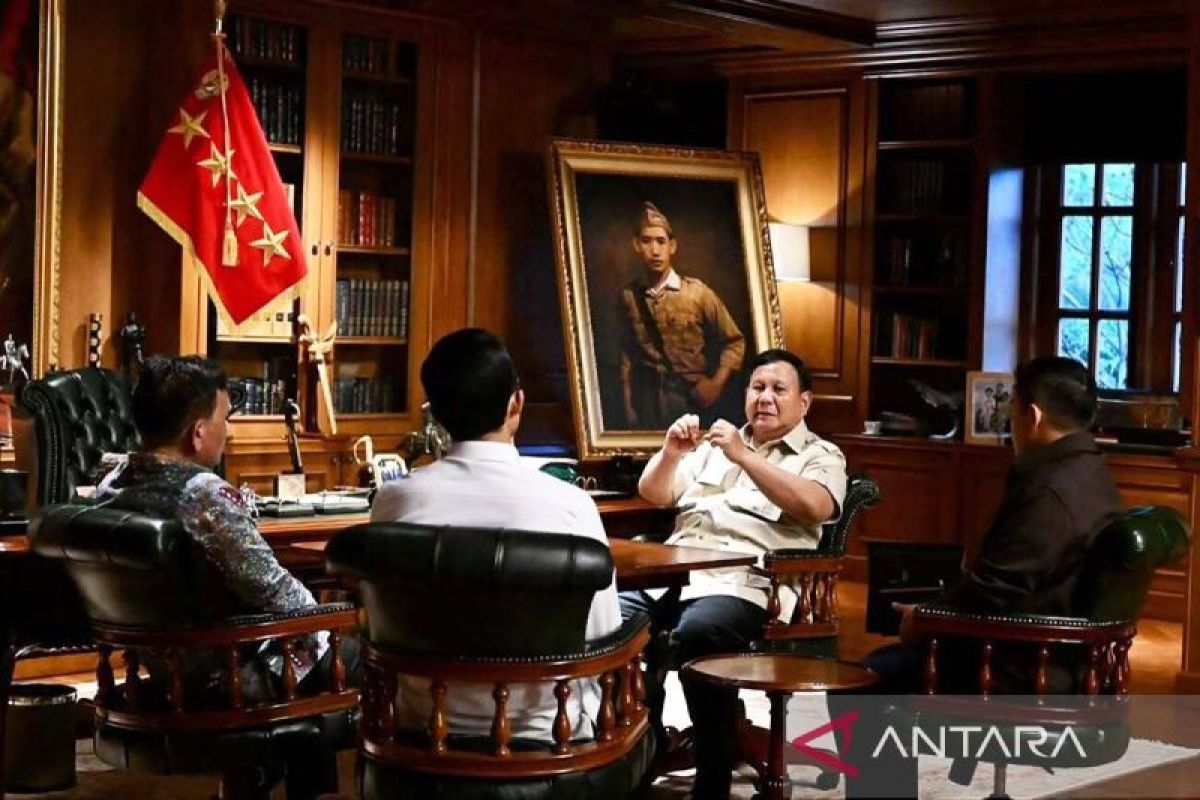
Jakarta (ANTARA) – On Sunday afternoon, 4 October 2026, President Prabowo Subianto summoned Government Communication Agency (Bakom) chief Syahganda Nainggolan and his deputy, Fadli Tri Hartono, to his residence in Hambalang, Bogor.
The President’s meeting with the two officials, who had been appointed two days earlier at the State Palace, focused on the government’s communication strategy, particularly how it speaks and listens to public feedback.
The President asked for government communications to use simple language. They should not stop at reporting what the government is doing, but should also explain the direction and thinking behind each policy.
He also reminded Bakom to listen to public feedback, complaints and criticism, and pass them on to the relevant ministries and agencies, including to the President himself.
Two days later, at the handover ceremony at Bakom’s office, Syahganda put the message more succinctly. The President wants government programmes to be fully understood, including by people at the grassroots. He also wants problems affecting the public, even at the lowest levels, to reach his ears. These two flows, captured in a single statement, distinguish the agency’s mandate this time.
The communications agency at the heart of the Palace has until now been better known as a loudspeaker: a means of amplifying the government’s voice so it can be heard far and wide.
The Presidential Communication Office (PCO) was established to serve that loudspeaker function. When the PCO was transformed into Bakom on 17 September 2025, the emphasis shifted to synchronisation: aligning messages from the central, provincial and local governments so they would not overlap.
Under Muhammad Qodari’s leadership, Bakom developed a main narrative for the government’s first two years, centred on national transformation.
All three stages still flowed in one direction, from the government to the public. The direction from Hambalang adds a reverse flow. The loudspeaker is still needed, but it now has an ear attached.
The change did not come out of nowhere. At the 28th anniversary of the National Awakening Party (PKB) last July, the President stressed that the government was not opposed to criticism, while drawing a clear distinction between criticism and insults or slander. Until now, however, that resolve had been expressed only in speeches from the podium.
The President wants simple language and explanations of the reasoning behind policies so that his messages and thinking reach the public in full. A message that lists only achievements works like an announcement, ending as soon as it is delivered. A message that explains the reasons works like a conversation, inviting a response.
Source: jawawa.id (https://jawawa.id/newsitem/from-loudspeaker-to-the-palaces-listening-ear-1791849124)
Originally published by Antara (Indonesian) (https://www.antaranews.com/berita/5782880/dari-pelantang-ke-telinga-istana), translated from Indonesian