
From Kyoto to Michigan
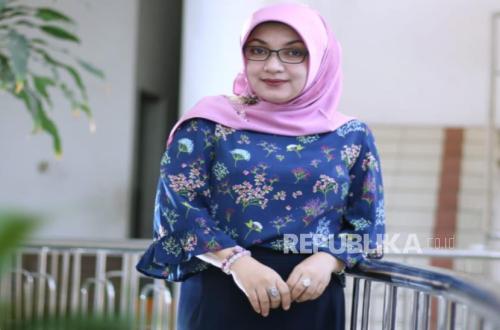
On Tuesday, 10 November 2026, we went to collect our youngest daughter, Neisya Reehanna, who had just returned from Kyoto, Japan. About a fortnight earlier, we had accompanied her there to take part in the Japan Super Science Fair (JSSF) 2026. After spending time with students from various countries at the science event, she was now home again, bringing new experiences and stories from her encounters with the wider world.
This year marked the 24th JSSF, once again hosted by Ritsumeikan Junior & Senior High School in Kyoto. Held from 31 October to 4 November 2026, the event adopted the theme ‘Plunge into the Unknown’, an invitation to venture boldly into what is not yet known. Fifty-seven schools from 17 countries and regions took part, involving nearly 300 students. During the event, they presented their research, held discussions, attended science workshops, exhibited research posters and joined a range of cultural exchange activities.
For us as parents, the value of an event such as JSSF goes beyond the research presented. It is valuable for students to stand before participants from different countries, explain their ideas in English, answer questions and listen to other people’s research. Through these encounters, they learn that an issue studied in one place may also concern people elsewhere in the world. This is where science becomes a universal language that brings people together. Through questions, data, experiments and ideas, students from different cultural, linguistic and educational backgrounds can understand one another, exchange perspectives and learn from each other.
During the same week, news from another part of the world caught my attention and prompted me to reflect again on the relationship between science and service to society. On 3 November 2026, the United States held its midterm elections. One result that drew attention was Abdulrahman Mohamed El-Sayed’s victory in the Michigan Senate election. His win made history: El-Sayed became the first Muslim elected to the United States Senate.
Whatever one’s political views, another aspect of El-Sayed’s background interests me, particularly from the perspective of education and research. He did not begin his career in politics. Before entering the political arena, he had worked as a doctor, epidemiologist, academic and public-health researcher. He had led the Detroit Health Department and taught as an assistant professor of epidemiology at Columbia University. His academic record is also reflected in his research output. According to his Google Scholar profile, accessed in November 2026, his work had received 4,274 citations, with an h-index of 37 and an i10-index of 60. Since 2021 alone, his publications had accumulated 2,163 citations, with an h-index of 26.
These figures show that El-Sayed’s research has attracted attention and become a reference for many other researchers. More striking is the course of his academic career. The knowledge developed through research did not stop at scholarly publications; it also addressed practical issues in public-health services. I see this journey as an illustration of how science can find a way to serve society. A person can begin in the lecture hall, deepen their understanding through laboratory research, set out their findings in scholarly publications, and then bring that knowledge into public services and policymaking.
We often discuss publication counts, citations, h-indexes, i10-indexes and reputable journals as measures of academic productivity. These are important indicators of a research work’s output and influence. But, as with the figures in the Lecturer Workload Report (BKD) that we have previously discussed in this Lentera column, numbers are only representations of work, not the work itself. Behind every figure there should be substance, a scholarly process and a tangible contribution whose benefits people can feel.
Ultimately, research should be judged by the extent to which it helps address real problems. At Universitas Amikom Yogyakarta, I often ask my master’s and doctoral students three questions: “What problem do you want to solve through this research? Who will benefit from its findings? How can the research be developed further to create a wider impact?”
From Kyoto to Michigan, and from the laboratory to the policymaking arena, science can find many paths towards serving society. In the end, science is not only about how much knowledge we possess or how far it advances, but also about how we use it to bring people together and benefit lives. This message is consistent with the words of Allah in verse 13 of Surah Al-Hujurat: “O mankind! Indeed, We created you from a male and a female, and made you peoples and tribes so that you may know one another.”
The verse reminds us that differences of nation and culture are not barriers, but ways for people to know and understand one another. In this process, science can serve as one of the bridges that bring humanity together. May the knowledge we learn, research and develop not remain knowledge alone, but always find a way to benefit others. Wallāhu a’lam.
Source: jawawa.id (https://jawawa.id/newsitem/from-kyoto-to-michigan-1794369122)
Originally published by Republika (https://rejogja.republika.co.id/berita/tobhik291/dari-kyoto-hingga-michigan), translated from Indonesian