
From Koningsplein Stop to Capital's Modern Gateway: Gambir Station Serves 2.60 Million Passengers in Jan–May 2026
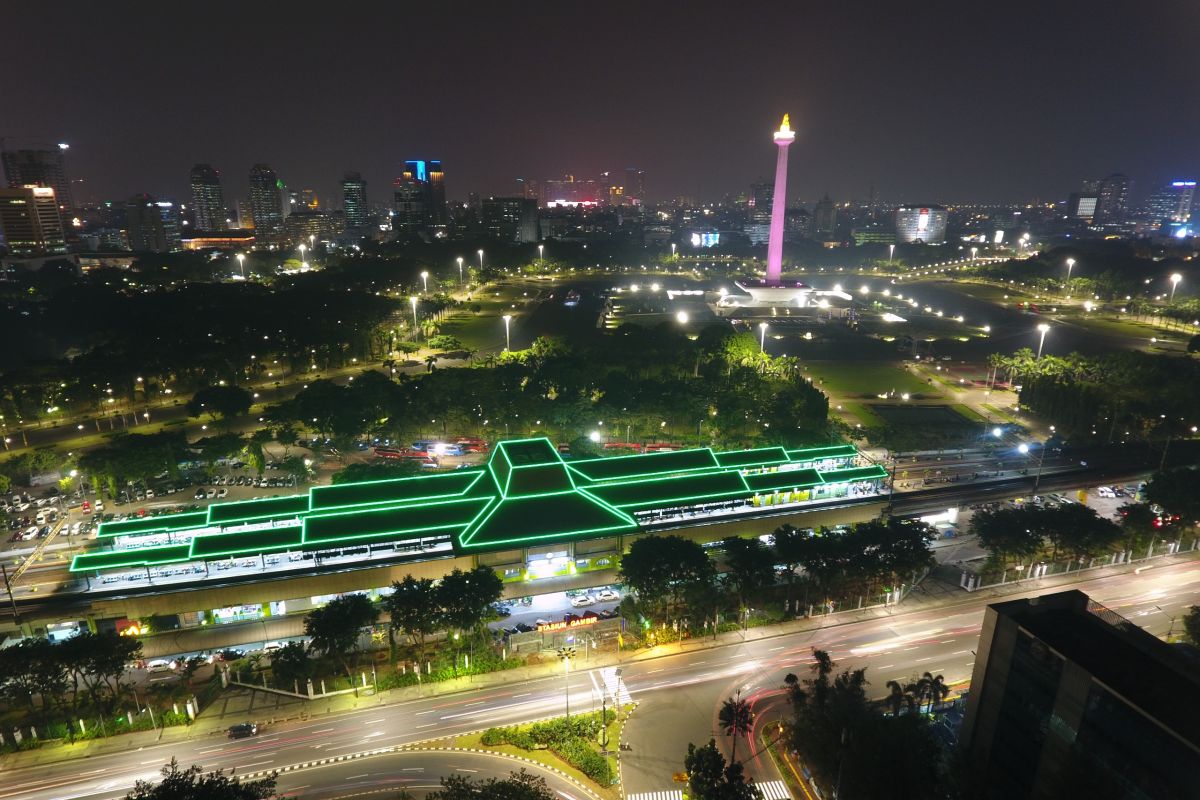
Over 155 years, Gambir has grown from a small stop, a colonial station, and an elevated line into KAI’s showcase for long-distance train services. Jakarta (ANTARA) - Gambir Station has become a key face of Indonesian rail travel. Standing in the heart of the capital, precisely in the strategic area of Central Jakarta and close to the National Monument, the station holds a long journey from the colonial era to the digital service era of Kereta Api Indonesia. Gambir’s development can be read as a grand story of urban change. From a small halt, the station grew into an intercity mobility hub serving passengers travelling to various major cities on Java. It is a point where history, architecture, technology, service, and public mobility meet in one travel space. Based on data, total passenger boardings and alightings at Gambir Station from January to May 2026 reached 2,603,087 passengers. This figure grew by 11.95 percent compared to the same period in 2025, which recorded 2,325,271 passengers. In detail, passengers departing from Gambir Station in January–May 2026 reached 1,342,160, an 11.86 percent increase from 1,199,828 in the same period of 2025. Meanwhile, passengers arriving at Gambir Station reached 1,260,927, a 12.04 percent increase compared to 1,125,443 in the previous year. Throughout 2025, total boardings and alightings at Gambir Station were recorded at 5,990,911 passengers. This figure demonstrates Gambir’s role as a travel gateway for people to and from central Jakarta, encompassing business trips, commerce, government affairs, education, tourism, and family visits. KAI Vice President of Corporate Communication Anne Purba stated that Gambir Station holds special value because it has grown alongside Jakarta’s changes and the development of national rail services. “Gambir Station is a travel space that holds many layers of history. From a small halt in the Koningsplein area, it developed into a large station, then transformed into a modern elevated station that remains one of the main gateways for long-distance train travel today,” Anne said. Gambir’s origins began in 1871 as the Koningsplein Halt. At that time, the train stop in the Weltevreden area was simple and part of the early development of the Batavia railway network. As city activity grew, the halt developed into the more permanent Weltevreden Station in 1884. Entering the 1930s, the station’s appearance changed again. Weltevreden Station was renovated and became known as Batavia Koningsplein, featuring Art Deco architecture. During that period, the area around Gambir was closely associated with public activities, government, urban spaces, and community celebrations that later became part of Jakarta residents’ collective memory. After Indonesia’s independence, the name Gambir became increasingly recognised as the identity of the station in the centre of the capital. The station continued to serve public travel and became part of Jakarta’s ever-evolving life. Gambir became a point of departure, a point of return, and a meeting point for many travel stories. The next major chapter occurred from the late 1980s to the early 1990s with the construction of the Manggarai–Jakarta Kota elevated line. On 5 June 1992, the new Gambir Station building was inaugurated as an elevated station with a joglo-style roof design and distinctive green colour. This transformation brought Gambir into the modern service era, with railway lines positioned above the road surface, making train travel and city traffic more orderly. “Gambir’s transformation shows that a station, besides being a place for passengers to board and alight, is also part of how a city organises mobility. When services become easier, public travel becomes more efficient, economic activity is boosted, and the city centre becomes increasingly connected to various regions,” Anne said. In its development, Gambir Station also experienced changes in service patterns. After a period of serving urban trains, Gambir is now focused as a departure and arrival station for long-distance trains. This position makes Gambir a showcase for KAI’s intercity services, especially for passengers travelling from central Jakarta to West Java, Central Java, the Special Region of Yogyakarta, and East Java. In terms of facilities, Gambir’s appearance has continuously adapted to passenger needs. In its early days, the station functioned as a simple stop. Over time, Gambir has acquired waiting rooms, platforms, commercial areas, an information centre, customer service, toilets, a prayer room, parking areas, drop-off zones, onward transport access, and increasingly complete travel support facilities. In the digital era, passengers can book tickets via Access by KAI and official KAI channels, perform self-check-in, access travel schedule information, and obtain service information more practically. The passenger journey flow has been made increasingly streamlined from the planning stage, arrival at the station, and boarding process, through to entering the platform. Gambir Station also features supporting facilities such as Shower & Locker, Rail Transit Suite, premium waiting lounge services, food and beverage tenants, and commercial areas. These facilities assist passengers who arrive early, are in transit, waiting for departure schedules, freshening up after activities, storing luggage, or taking a short rest before continuing their journey. Anne explained that strengthening these facilities is part of KAI’s effort to present stations that are increasingly passenger-friendly. According to her, every service detail at the station affects passengers’ sense of comfort before boarding the train. “For some, Gambir is the start of a work trip. For others, Gambir is the way home to family. There are also those who come for tourism, to attend important agendas, or to pick up loved ones. Therefore, KAI continues to develop Gambir as a travel space that is not only functional but also humane, modern, and connected to the needs of the times,” Anne concluded.