
From Homo Economicus to Homo Fitrah: Restoring Direction, Perfecting Role
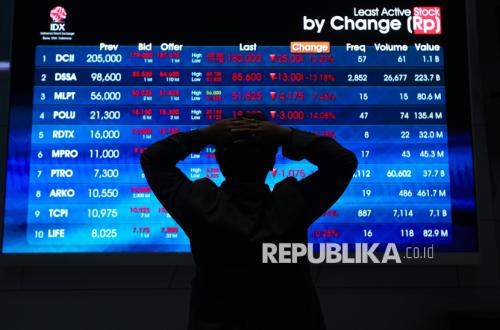
In a gleaming modern market—graphs rising and falling, algorithms pulsing, and humans racing amid numbers—there is one silent question rarely heard: for whom is all this done? We live in an era where efficiency is the mantra, rationality the measure, and profit the goal.
In this landscape, humans are often reduced to one figure: a rational being pursuing maximum satisfaction with limited resources—that is Homo Economicus.
Yet, in the depths of the human soul, there is another voice no less powerful: the impulse to give without expectation, to work without ostentation, and to do good without calculation. This voice comes from fitrah—from the awareness that life is not merely a transaction, but an amanah. This is Homo Fitrah. The question becomes sharp: between Homo Economicus and Homo Fitrah, who can still act with sincerity?
Homo Economicus — Man as a Calculation Machine
The concept of Homo Economicus is not merely a theory; it has become the default setting in many modern systems. Its formal roots can be traced to Lionel Robbins’ definition of economics, which states that economics is the science studying human behaviour as a relationship between ends and scarce means with alternative uses. In this definition, humans are positioned as managers of scarcity—who rationally choose the most profitable options. Later, this thinking was reinforced by neoliberal architects like Milton Friedman, who emphasised market freedom, minimal state intervention, and the belief that individual interests—if unleashed in market mechanisms—would yield collective good. In this paradigm, intention is no longer central; what matters is measurable outcomes: efficiency, productivity, and growth.
In the world of Homo Economicus: Charity is measured in utility, goodness in output, decisions in cost-benefit analysis. There is no room for “without expectation” because every action is assumed to have self-interested motives—even if hidden.
Sincerity — An Immeasurable Energy
In contrast, the teachings of fitrah introduce a concept that radically transcends calculation: ikhlas. It is not merely good intention, but purification of purpose solely for Allah. The Qur’an affirms:
“They are commanded only to worship Allah, being sincere to Him in religion…” (QS. Al-Bayyinah: 5)
Ikhlas is not about results, but orientation. It seeks no recognition, depends not on validation, and yields not to external incentives. Indeed, in many cases, ikhlas grows in silence—when no one is watching.
In this perspective: A small deed can hold great value if sincere. A great deed can be empty if mixed with riya’ (ostentation). Ikhlas is an invisible energy that cannot be measured by graphs, calculated by algorithms, or monetised by markets.
Antithesis to Robbins — From Scarcity to Sufficiency
Lionel Robbins’ definition of economics (professor of economics at the London School of Economics) starts from the basic assumption: scarcity is a permanent human condition. From this emerges the logic of competition, efficiency, and prioritisation.
However, in the Qur’anic view, scarcity is not the only narrative. Allah states:
“And He has created on the earth everything needed by His creatures and determined the measure of their sustenance…” (QS. Fushshilat: 10)
This verse indicates that the earth has been prepared with sufficiency, not merely scarcity. The problem lies not in the lack of resources, but in distribution, greed, and unjust systems. Thus, the antithesis is clear:
Robbins: humans manage scarcity
Qur’an: humans manage the amanah of sufficiency.
In the first paradigm, actions are driven by lack, birthing competition. In the second, actions are driven by amanah, birthing responsibility.
Ikhlas can only grow in the paradigm of amanah, not in constant pressure of scarcity.
Critique of Friedman — Freedom or Illusion?
Milton Friedman speaks of freedom—that free markets allow individuals to pursue their own interests, from which shared prosperity will emerge. Yet, in practice, this freedom often becomes unbounded competition, even if it sacrifices moral values.
In systems driven by incentives: Goodness is done if rewarded, honesty maintained if profitable, care emerges if economically valuable. Here, ikhlas begins to erode. Because: ikhlas awaits no reward, ikhlas depends not on outcomes. When every action must be “economically rational,” then unprofitable actions—though right—will be sidelined.
Unlike Homo Economicus, Islam views humans as khalifah—stewards of the earth entrusted with amanah. This is not merely a functional role, but a spiritual identity.
In QS. Al-Ahzab: 72, it is mentioned that amanah was offered to the heavens, earth, and mountains, but they refused to bear it—then humans accepted it.
This amanah encompasses: moral responsibility, spiritual awareness, and the ability to choose with intention. Homo Fitrah lives not to maximise profit, but to fulfil amanah with ikhlas. In this paradigm: Work is worship, outcomes are bonuses, and intention is the core.
In the modern world, the greatest battle is not merely between good and evil, but between ikhlas and incentives. Incentives work from outside, in forms like bonuses, rewards, recognition.
Whereas ikhlas works from within: awareness, faith, love for Allah.
When systems rely too heavily on incentives, humans gradually lose the ability to act without reward. They become dependent on external validation. This is the tragedy of Homo Economicus: they no longer know how to act without calculation.
Ecology of the Heart — Fitrah Perspective
In