
From Fujian to Kendal: New Traces of the Textile Industry in Java
Fuzhou (ANTARA) - On the outskirts of an industrial town in Central Java Province, Chinese-made spinning machines hum on the factory floor, where Indonesian workers sort fabrics.
In the Kendal Special Economic Zone (SEZ), on the western side of the city, more than 200 local workers are pouring concrete at another construction site alongside engineers from Fujian Province, located over 3,000 kilometres to the north.
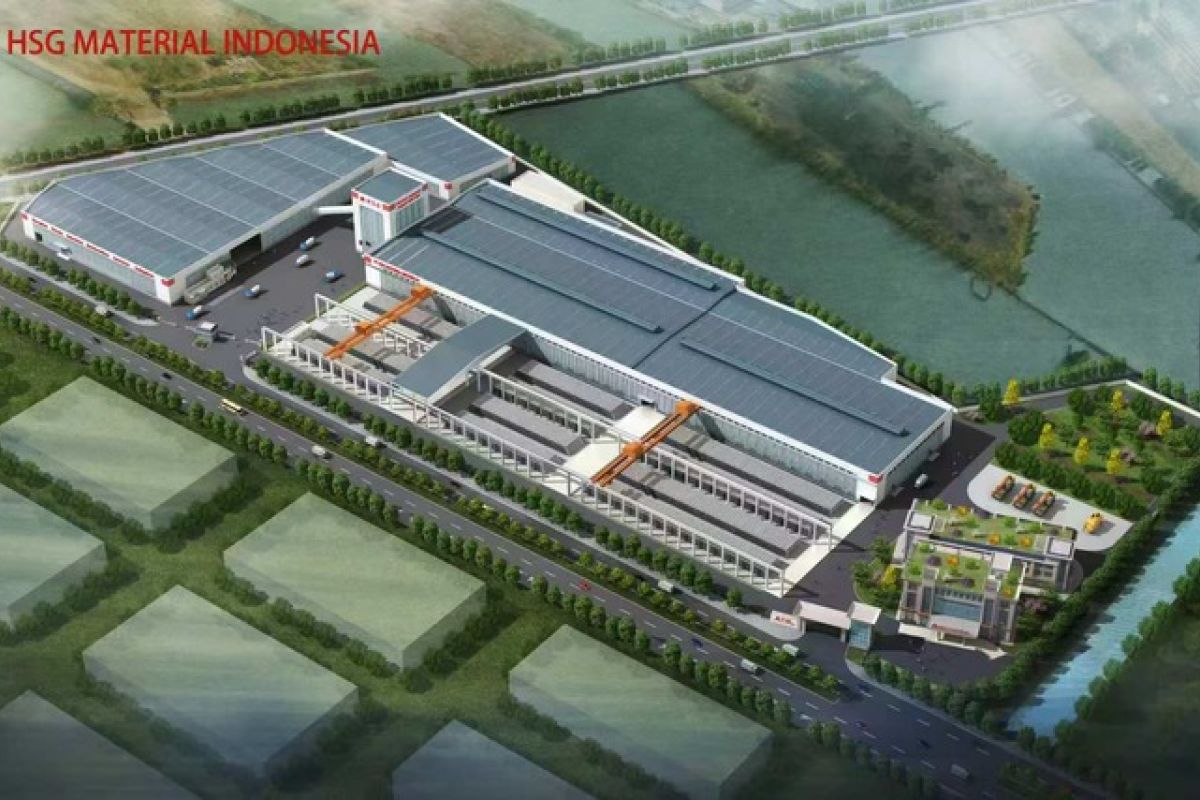
Two companies, Honggang Textile and Hongsheng Materials, are the latest examples of an ambitious experiment in cross-border manufacturing: the China-Indonesia ‘Two Countries, Twin Parks’ (TCTP) initiative, which is now moving at full speed.
This momentum is no coincidence. In 2023, supported by policies from the ‘Two Countries, Twin Parks’ initiative, Fujian Honggang Textile Technology, a subsidiary of Huagang Group, sent a team to explore opportunities in Indonesia and found that the country’s level of economic development and consumption power aligned perfectly with the company’s product positioning.
By the end of that year, the company had purchased land in Semarang, and by August 2025, the factory began production.
A number of companies have travelled great distances across mountains and seas from Fuqing, Fujian Province in southeastern China, to Java, planting roots and beginning to see results.
The companies’ localisation strategy began even before their factories had walls.
While the factory was still in the construction phase, Honggang recruited students from Indonesian universities and brought them to China for training, subsequently sending them back to run the company’s operations in Indonesia as the backbone of management, serving as a human bridge between the two nations.
For the company, the production base in Indonesia provides benefits beyond mere production diversification. The base also helps Honggang retain orders that were threatened by trade frictions and, equally importantly, creates a two-way value stream: Chinese research and development on one side and Indonesian manufacturing capacity on the other, which mutually reinforce each other.
“We provide a halal canteen as a form of respect to our Muslim employees,” said Zhang Qifang, the company’s external affairs manager, as reported by Xinhua.
“All our systems and operational manuals are available in two languages, Mandarin and Indonesian, and staff from both sides attend Mandarin and Indonesian language classes side-by-side.”
According to Zhang, the ultimate goal is to achieve fully localised operations, with employees from both countries increasingly accepting one another through daily interaction.
At the Hongsheng Materials project site in the Kendal SEZ, respect goes both ways. When the company began construction in 2025, its team sought advice from elders in the local Chinese community and learned that in Indonesia, traditional batik cloth is considered more formal than Western-style suits. Now, during various important events, the company’s staff from China attend wearing batik.
“Respecting local customs is the starting point for serving the local market better,” said Tang Ling, Director of Administration and Human Resources at Fujian Hongsheng Material Technology Co.
Behind the willingness of these companies to expand abroad and invest, there is a platform supporting their steps. The Yuanhong Investment Zone in Fuqing, established in 1992 as China’s first development zone built with investment from overseas Chinese, was designated by China’s State Council in 2023 as a pilot area for China-Indonesia economic and trade innovation development, elevating its mission from a conventional industrial area to a showcase for bilateral trade and innovation cooperation.
From land contracts to rows of modern factory buildings, from Indonesian students to transnational management teams, from a piece of batik cloth to dining tables with halal offerings, the vision of ‘Two Countries, Twin Parks’ is slowly transforming from a blueprint into reality, built step by step and realised through action after action.
It appears that the mountains and seas do not separate the two countries as much as once thought.