
From Food and Mining to AI: Assessing Indonesia–US Economic Cooperation
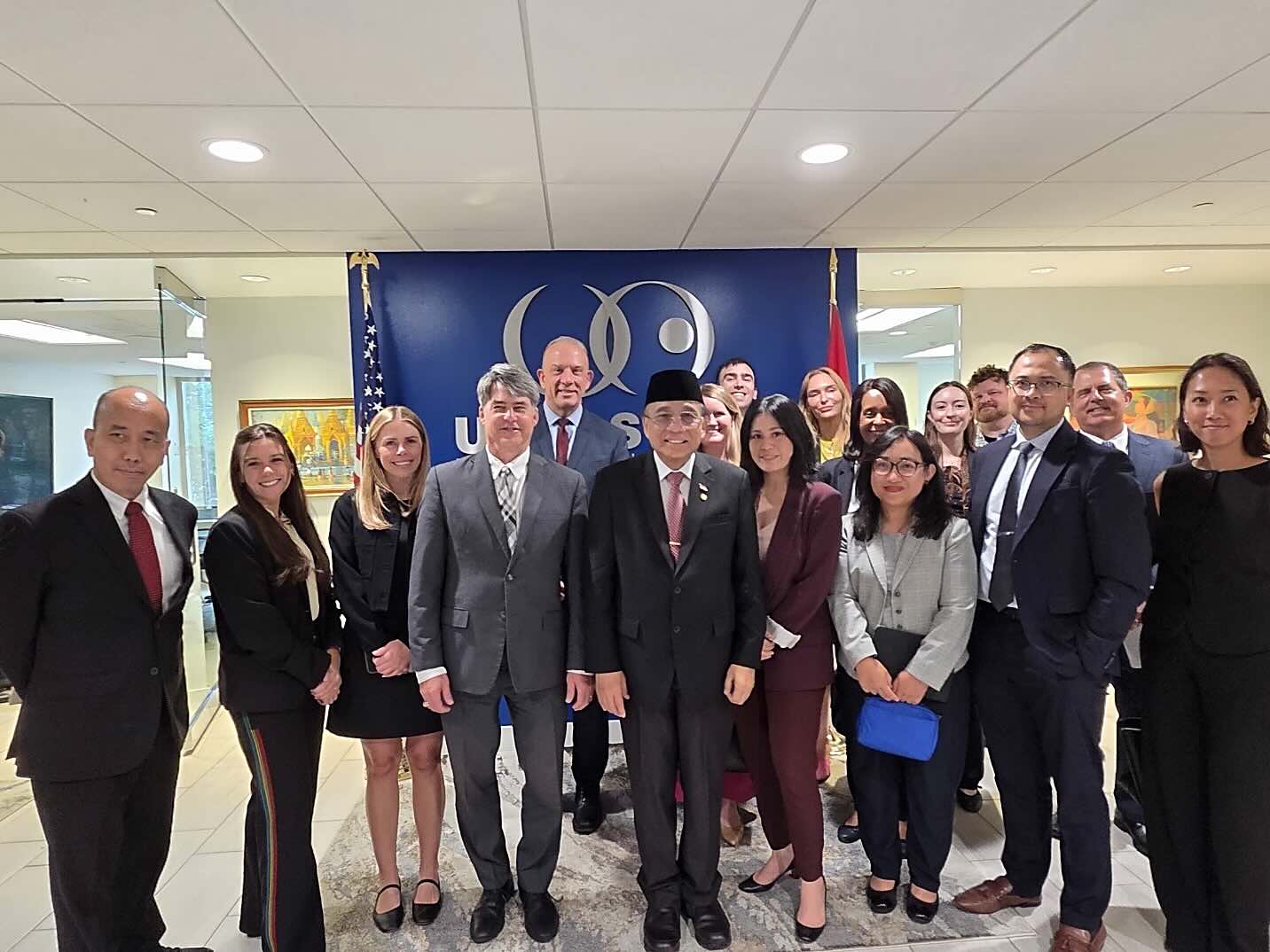
A meeting between US industrialists and the Indonesian Ambassador to the US, Indroyono Soesilo, on 28 July reaffirmed that Indonesia remains one of the most strategic investment destinations in Asia. Hosted by the US-ASEAN Business Council (US-ABC) under the leadership of Chairman Brian McFeeters, the event was attended by major corporations spanning the food, technology, finance, defence, and mining sectors, alongside former US Ambassadors to Jakarta, Joseph Donovan and Robert Blake, who provided historical perspectives on bilateral economic relations.
In the aviation sector, Boeing stood out as a long-term partner for Indonesia, both through the commercial fleets used by national airlines and opportunities to strengthen the domestic aircraft component supply chain. Lockheed Martin represented defence and aerospace cooperation, including support for military modernisation and potential technology transfers to boost local industrial capacity.
In the mining sector, Freeport-McMoRan, through PT Freeport Indonesia, continues to play a vital role in managing mineral resources in Papua, with long-term investments in mining infrastructure and smelters that directly impact state revenue and regional development. Additionally, Bower Group Asia participated as a policy and strategy consultant, helping bridge global businesses with Indonesia’s regulatory dynamics and business climate.
Other participating companies further emphasised the depth of Indonesia–US economic cooperation. Cargill supports food security through the trade of maize, soybeans, and wheat, while Caterpillar has supplied heavy equipment for mining and construction since 1971. PepsiCo highlighted sustainability initiatives, ranging from packaging recycling in Bali to tree planting in West Java. NVIDIA represented the new face of technological investment through Artificial Intelligence (AI) talent development programmes in collaboration with the Ministry of Higher Education, Science, and Technology. The Walmart Foundation demonstrated a commitment to sustainable supply chains and farmer welfare, while Chubb focused on strengthening financial literacy and risk management for the public.
Tessal Maharizky Febrian, Director of the Indonesia Investment Promotion Center (IIPC) in New York, reported that US investment in Indonesia reached USD 1.7 billion in the first half of 2026. In 2025, Indonesian exports to the US reached USD 31 billion, accounting for approximately 11 per cent of Indonesia’s total global exports, with total bilateral trade valued at USD 43.8 billion. Key Indonesian exports to the US in 2025 included electronics (USD 6 billion), textiles (USD 4.9 billion), footwear (USD 2.8 billion), palm oil (USD 2.1 billion), furniture (USD 1.4 billion), and seafood (USD 1.2 billion). Imports from the US included soybeans, cotton, wheat, aircraft and aerospace products, machinery, healthcare products, chemicals, and information and telecommunications technology.
US industrialists agreed that this potential can be further developed. While the licensing reforms through Government Regulation No. 28 of 202<0xC2>5 regarding Risk-Based Licensing were viewed as a positive step, they also highlighted the importance of strengthening copyright and intellectual property protections, ensuring consistency between central and regional regulations, improving logistical efficiency, and enhancing human resource quality. Addressing these inputs with appropriate policies could allow Indonesia to secure more world-class investments—from Boeing and Lockheed Martin to Freeport and tech giants—while boosting export values to the US market in the coming years.