
From Fire-Prone Land to a Livelihood-Generating Pineapple Farm
Previously, during every dry season, residents of Tabarano Village in Luwu Timur, South Sulawesi, lived in fear. The dry hillside land was prone to burning, with real threats to nearby settlements. Now, thousands of pineapple trees grow across the same five-hectare plot, transforming the village’s landscape and offering new economic hope.
Four years ago, Rimal Manuk Allo, head of Tabarano Village in Wasuponda District, Luwu Timur Regency, had to allocate special funds annually to prevent land fires. ‘We did this regularly, but the story is different now,’ he said.
The change began with determination. The name Wasuponda, derived from ‘wosu’ (stone) and ‘ponda’ (pineapple), means ‘pineapple on stone’ in the local language.
Ironically, there were no pineapple plantations for years. The land was critical, rocky, and fire-prone.
Rimal took the plunge. Despite initial scepticism, he believed pineapples could grow as they belong to the cactus family and are drought-resistant. ‘They can grow without watering,’ he said.
His conviction met real support. Since 2022, PT Vale Indonesia’s Community Development Programme (PPM) has been supporting the village. A five-hectare plot at Mount Tabor, about 30 minutes from the Sorowako block, was developed into a pilot project called Pineapple Pathways for Sustainability, or Ponda’ta, derived from ‘ponde’ (pineapple) and ‘ta’malolo’ (to plant and grow together).
PT Vale did not just provide seedlings. They also offered technical training, water assistance, drainage systems, small reservoirs, and a production house. By 2025, the grant funding reached Rp600 million. Now, 25,000 pineapple trees grow on what was once barren land.
Yohanis Gusti, chairman of Tabarano’s Pondata Group, noted four harvests since the first in 2024. From two hectares now productive, this year’s revenue reached Rp40 million. ‘We aim for 25 hectares in the future, per local government commitment,’ Yohanis said.
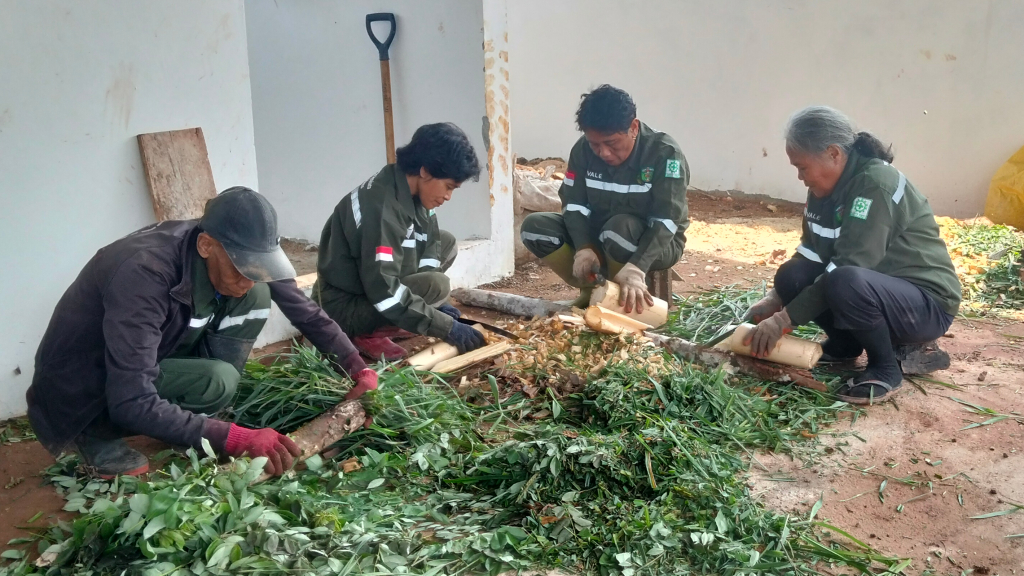
Even weeds and other plants around the pineapple fields are now used to make compost, which in turn fertilises the surrounding crops.
‘Not just compost, we’re also raising maggots for organic fertilizer and establishing nurseries,’ he added.
The most tangible change is felt by residents like Siska Harianti, a single mother of three who previously took odd jobs. Now, she is one of 11 pineapple farm managers actively producing dodol (candied sweets), chips, and pickles at the community women’s production house.
‘This land was dead before. Now, I can harvest up to 1.5 tonnes per hectare each season,’ Siska said.
She processes the harvest into various local products. Beyond income, Siska can now save for her children’s education. ‘This isn’t just about wages—it’s a decent livelihood.’
Five are primary farmers, ten others manage operations. During peak harvest or processing, the village engages single parents, the unemployed, and those who lost their livelihoods.
‘The Village Consultative Body also plants pineapples. If you just watch, you won’t feel ownership,’ Rimal added.
Synergy with the regency government has strengthened. By 2025, total village development funding approaches Rp4.9 billion, including Rp2 billion from Luwu Timur Regency via the Local Potential-Based Special Financial Assistance (BKK). Regent Irwan Bachri Syam officially launched the area as Pondata Tabarano Agrotourism in 2024.
Beyond farming, the village has allocated six hectares for cattle and goats as part of a self-sustaining organic compost cycle.
PT Vale’s waste tyres, rice husks, and leftover materials are used to reinforce terracing, replacing cement. Local SME products are now displayed at PT Vale’s headquarters and explored for export to Japan. PT Vale also provides digital marketing training, halal certification assistance, and BPOM approvals.
Yusri Yunus, Head of External Relations for Sorowako & Outer Area at PT Vale Indonesia, explained that the company’s support is part of eight pillars of community empowerment programmes, from health and education to economic independence.
‘We regularly evaluate with the regency government. This synergy is possible thanks to the Regent’s support as the highest authority in Luwu Timur,’ he said.
Land fires are no longer a threat. Water, once scarce, now flows to the hills. Rimal affirmed, ‘We no longer fear the dry season. Now, it’s harvest spirit, life spirit.’
From critical, rocky land, Tabarano Village has proven that sustainability in mining areas is more than just talk. It grew from collaboration, nurtured by residents, and is now yielding independent, sustainable results. (LN/E-4)