
From Farmer, Yopanda Finds the Meaning of Independence
For Yopanda, the meaning of independence does not stop at the nation’s liberation from colonialism. Independence also means having a more certain life, broader learning opportunities, and room to develop skills and improve one’s standard of living.
The 38-year-old previously lived as a farmer and casual labourer. His income depended heavily on weather and harvest seasons. That situation changed when he became involved in the construction of an industrial facility in Tanggamus, Lampung. During the construction project, Yopanda joined the engineering team. The experience became his gateway to an industrial work environment with rules, schedules, and procedures different from his daily life as a farmer.
From that experience also came a desire to further his education. When he saw his colleagues using computers and laptops in their work, Yopanda was motivated to learn similar skills. At the time, he did not yet have a high school equivalent certificate.
“I saw my friends in engineering using computers and laptops. That moved me; I also wanted to be able to do that. When the Paket C programme was available, I joined because I wanted to get a certificate as well as increase my knowledge,” Yopanda recounted.
The opportunity to join the Paket C programme brought him back to the classroom. He became one of around 20 residents who took part in the programme. Between work shifts, Yopanda attended classes twice a week until he finally obtained a high school equivalent certificate.
Now, after about a decade working in an industrial environment, Yopanda has been entrusted with a supervisory position. He has not only obtained the formal education he previously lacked, but has also become increasingly accustomed to using computers in his work.
The changes he has experienced are not limited to education and employment. Moving from agriculture to industry also introduced Yopanda to time discipline, operational procedures, and the importance of occupational safety.
According to Yopanda, these habits have even carried over into his activities outside work. Safety awareness now remains with him when he returns to work in the fields.
“In the past, when working as a farmer, we were not very familiar with safety rules like in industry. After working here, we have become more aware. Even when on leave and going to the fields, we unconsciously apply those safety habits,” he said.
Another change most felt by Yopanda relates to his economic condition. Whereas previously his income depended on harvest yields and seasons, he now has a more stable and predictable income.
According to him, the presence of industrial activity has also had an impact on other residents in the surrounding area. Economic opportunities have emerged through various jobs related to industrial activity, as well as the growth of small businesses around the area, such as food stalls.
Yopanda’s journey illustrates a life change that began in the agricultural sector, then gained opportunities to develop education and skills. For him, this condition has provided freedom from income uncertainty and educational limitations, while opening opportunities for continued growth.
Similar changes are also being pursued through various activities with the community in Tanggamus. One approach used refers to the local philosophy of Begawi Jejama, which means working together and mutual cooperation.
From 2016 to 2026, more than 11,000 trees have been planted with the community in the upstream area of the Tanggamus Mountains. In addition, around 700 rorak, or water infiltration pits, have been built to help strengthen water catchment areas, reduce erosion potential, and safeguard water resources.
These efforts are also accompanied by assistance for coffee farmers so that their productivity increases through cultivation methods that pay greater attention to environmental sustainability.
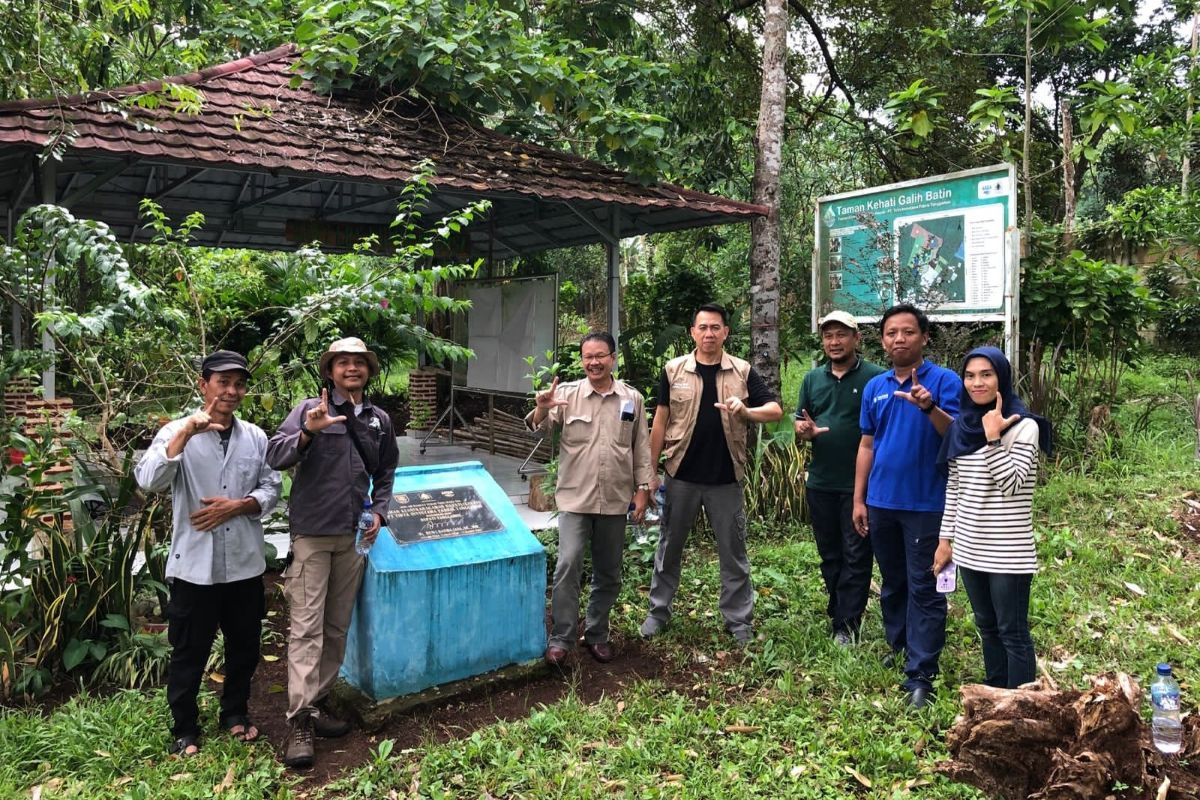
In the downstream area, Taman Kehati Galih Batin has been developed as a green open space as well as a learning facility about the environment. The area covers approximately 3.2 hectares. Research conducted with Lampung University in 2025 recorded a biodiversity index of 3.16, which falls into the high category. At least six endemic plant species and 22 bird species have been found in the area.
Access to clean water and sanitation is also part of community empowerment efforts. Through the Water, Sanitation, and Hygiene (WASH) programme, 1,037 residents have benefited from the provision of 203 clean water connections piped directly to homes.
In addition to providing water access, the activities include education on sanitation and the adoption of clean and healthy living behaviours. The aim is for improved access to basic facilities to go hand in hand with changes in community habits.
Environmental management is also carried out through the Sampahku Tanggung Jawabku programme. By 2026, the programme has handled around 378 tonnes of plastic waste. Other activities include environmental education in schools, mentoring of women farmer groups, and coaching of micro-enterprise actors so that local products gain added value.
Social activities are also carried out with the community through various initiatives, such as providing assistance to orphans, supplying clean water facilities at several places of worship, and education on waste management.
Internally, character development is conducted regularly with local community figures. These activities are directed at creating a productive work environment while maintaining social relations with the surrounding community.
For Teguh Santoso, Plant Manager of Aqua Tanggamus, Yopanda’s journey shows that independence is also related to a person’s ability to obtain opportunities and increase self-reliance. He considers the 81st Independence Day anniversary a reminder that progress is built not only through physical development, but also through communities that have room to grow.
“For us, the spirit of independence today is about opening more opportunities for people to live with better quality and encouraging every individual to become the best version of themselves. Yopanda’s story is one example, and we want Aqua Tanggamus Plant to continue to be part of that journey. Happy 81st Anniversary of the Republic of Indonesia,” Teguh concluded.