
From Factory Worker to Tofu Entrepreneur: Sudarto Builds Business, Buys Home and Car
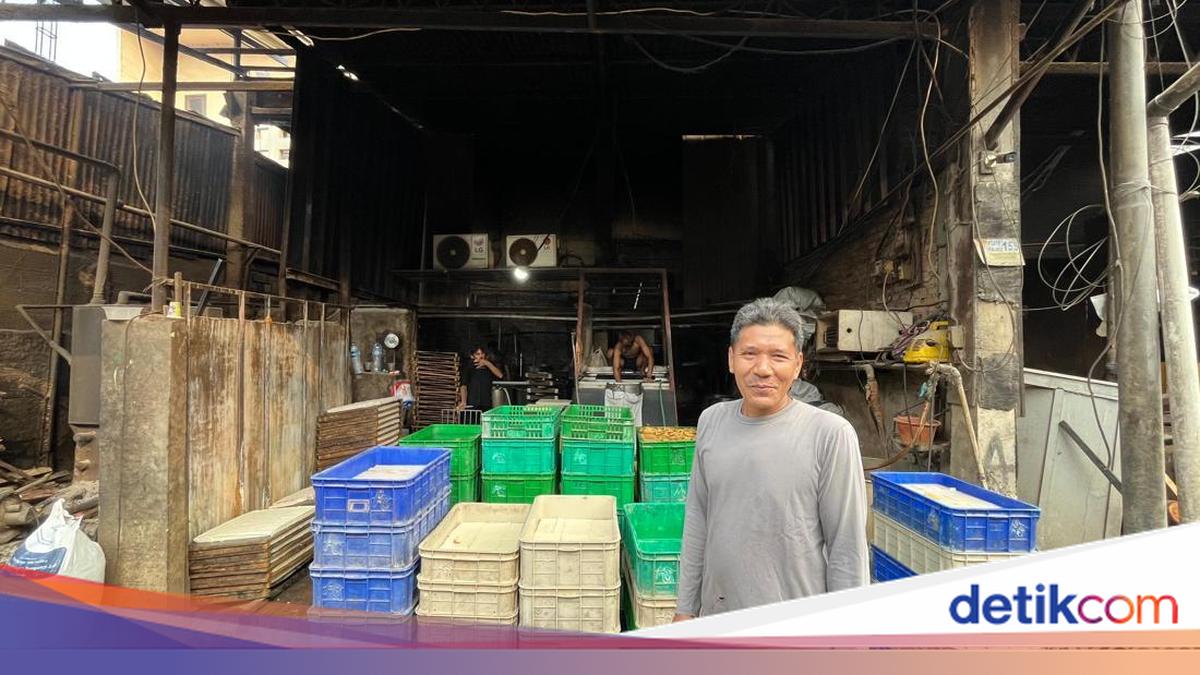
That afternoon, Sudarto sat in front of his tofu factory, monitoring the production activities of his employees, from the soybean processing stage to the final product ready for market.
The tofu production facility he has grown can now produce up to 6 quintals of tofu per day. However, Sudarto’s journey to owning his own business was not easy.
Before becoming a tofu entrepreneur, he worked as a factory worker. Sudarto started from the bottom, learning the intricacies of tofu making until he mastered the skills necessary to launch his own venture.
Originally from Nganjuk, East Java, he migrated to Jakarta in 1995. At that time, Sudarto moved from place to place solely to seek a decent wage to sustain his life in Jakarta.
“I wanted to find a higher salary, so I moved here and there. Eventually, we gained experience from working, and finally, I mastered the process of making tofu,” Sudarto said when met in front of his factory in Pasar Minggu, South Jakarta, recently.
After working for others for over a decade, Sudarto decided to produce his own tofu in 2010. Initially, his production was small-scale, at around 50 kilograms.
Gradually, the business grew, and he was able to purchase his own production site five years later. To build the factory, Sudarto used a loan of approximately Rp 70 million. He also upgraded his production equipment gradually since the beginning of his venture.
“Tofu depends on quality. If our quality is good and our supply is slightly more competitive than others, the growth can be rapid,” Sudarto noted.
Over time, Sudarto’s production capacity has continued to increase. Currently, he can produce about 6 to 7 quintals of tofu per day.
The products are typically marketed from Pasar Minggu to Lenteng Agung, South Jakarta. The current price of the tofu he sells is around Rp 35,000 per slab.
For a single day’s production, Sudarto explained that the required capital is around Rp 10 million. This cost is primarily used to purchase soybeans and cover operational needs.
“Soybean prices alone are currently almost Rp 12,000. If we produce 5 quintals, for example, that is already Rp 6 million. That Rp 6 million is just for the soybeans. Operational costs for 5 quintals are roughly Rp 3.5 million to Rp 4 million. So, it costs over Rp 10 million to produce 5 quintals,” Sudarto explained.
Sudarto explained that the tofu-making process at his factory begins in the morning. The prepared soybeans must undergo several stages, including soaking, grinding, boiling, and extracting the essence.
After that, the soybean essence undergoes a coagulation process using acidic water before finally being moulded into tofu.
“It sounds easy if you just estimate it, but from soaking the soybeans, grinding, and boiling them until cooked, then extracting the essence, followed by the coagulation process using acidic water. After settling, the coagulation takes about an hour. Once coagulated, the water is drained, leaving the tofu to be moulded,” said Sudarto.
For a production of about 5 quintals of tofu, the process begins at 6:00 AM and finishes around 5:00 PM. The products are then dispatched at night.
“After Maghrib, all the tofu is sent out,” he added.
In the distribution process, Sudarto employs three delivery personnel. They are responsible for delivering tofu to customers spread across several areas.
In addition to these three workers, there are six others tasked with the tofu processing. They are paid approximately Rp 3 million per month.
“That is the net amount. It includes meals and two servings of coffee,” said Sudarto.
In his journey to expand the business, Sudarto has applied for BRI’s People’s Business Credit (KUR) since 2020. Initially, he borrowed Rp 100 million, followed by a subsequent loan of Rp 200 million.
Sudarto explained that these funds were used to add production equipment and update operational vehicles.
“Nowadays, the tools are becoming more sophisticated. Previously, we used wooden vats, but now everything is stainless steel. The filtering machines used to be manual, but now they use robotic-like machinery that moves on its own,” he said.
According to Sudarto, the additional capital from the KUR helped maintain his business turnover. This is because some customers do not pay in cash immediately upon receiving the tofu.
“Some have a credit period of one week or three days. In my case, some take a month. They only settle the payment after one month. With this capital, we can purchase soybeans earlier. Before our customers pay, we can already buy more soybeans. It helps with the cash flow; the turnover keeps moving,” he explained.
Nevertheless, Sudarto stated that the profits from this tofu business are highly dependent on market conditions and soybean prices. He noted that tofu prices cannot be raised immediately when soybean prices increase.
“We cannot simply raise the price the next day just because soybeans went up. The price remains the same across the Jabodetabek area. We cannot raise the price on our own. The most we can do is reduce the ingredients, making them thinner,” he said.
Over the last five years, Sudarto’s production has increased to 6 quintals per day. This increase is due to additional customers, including mobile traders and orders for the Free Nutritious Meal (MBG) programme.
For mobile traders, he supplies nearly 1 quintal of tofu per delivery.
As for the MBG programme, he began receiving orders last year. However, orders are not daily, as they must align with the menu provided by the MBG kitchens.
“The kitchen menu does not always include tofu. So, it is usually only two or three times a week,” he concluded.
Source: jawawa.id (https://jawawa.id/newsitem/from-factory-worker-to-tofu-entrepreneur-sudarto-builds-business-buys-home-and-car-1782824069)
Originally published by detikcom (https://news.detik.com/berita/d-8554369/dari-buruh-pabrik-sudarto-bangun-usaha-tahu-hingga-punya-rumah-mobil-sendiri), translated from Indonesian