
From Exile to Hotel Empire: The Sukabumi Native Who Built Aman Resorts
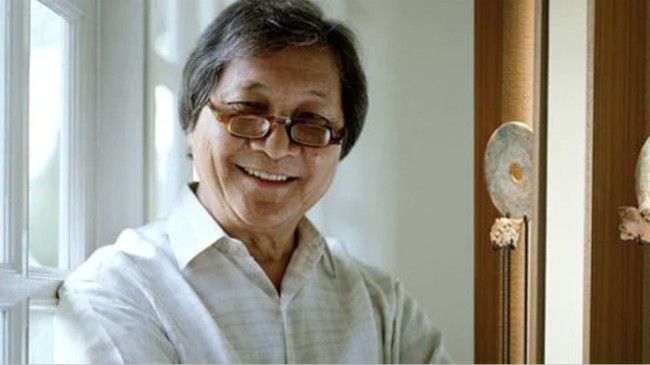
Jakarta, CNBC Indonesia - Adrian Zecha may not be as popular as other Indonesian conglomerates. However, the man born in Sukabumi, West Java, successfully built one of the most prestigious and luxurious hotel chains in the world, Aman Group.
Aman Resort is a luxury hotel network spread across various corners of the globe. Aman Resort is renowned for its strong cultural aesthetics, attracting travellers from many countries. The price of staying at an Aman Resort varies, averaging tens of millions of rupiah per night. In Indonesia, one of Aman Resort’s famous properties is located in Magelang, Central Java. Named ‘Amanjiwo’, it offers a spectacular view of Borobudur.
Currently, the CEO of Aman is a Russian citizen named Vladislav Doronin. However, long before it was controlled by Doronin, Aman Group was founded by Adrian Willem Ban Kwie Lauw-Zecha, known as Adrian Zecha. His life story is quite difficult. He is an entrepreneur who was once expelled from his homeland, yet managed to prove himself by carving out great success in the global hospitality industry.
Adrian first established Aman Resort in 1988, and it now operates in 20 countries. He grew up in a respected and wealthy Chinese-Indonesian family. Mely Tan in ‘The Chinese of Sukabumi’ (1963) notes that his family was known as the ‘upper branch’, referring to rich and successful Chinese-Indonesian families in Indonesia. His father, William Lauw-Zecha, was the first Indonesian to graduate from the University of Iowa in the United States in 1923. Meanwhile, his siblings successfully held high positions in the colonial government. Given these privileges, it is no surprise that Adrian received many advantages. He reportedly studied in Pennsylvania around the 1950s.
However, his family’s esteemed position in Indonesia was destroyed during the period of 1956-1957. At that time, Indonesia’s first president, Soekarno, carried out the nationalisation of private companies in Indonesia. This nationalisation was accompanied by rising sentiment against non-indigenous citizens. As a result, the Zecha family’s businesses were forcibly taken over by the state. The family was also forced to leave and settle in Singapore.
Fortunately, during this event, Adrian was still in the United States as he had continued working as a journalist for Time. Indeed, long before starting his hotel business in 1988, Adrian pursued a career as a travel journalist for various media outlets. Being a travel journalist allowed him to travel the world, from one tourist destination to another. This is what fostered his interest in tourism and hospitality.
Martin Roll in ‘Asian Brand Strategy’ (2015) explains that Adrian’s first involvement with the hotel business occurred in 1972 when he helped build Regent International Hotels before eventually founding his own hotel in 1988. The story behind the founding of his own hotel is quite interesting. It was driven by Adrian’s dislike of the hotel concepts prevalent around the world at the time, which offered large rooms with varying class levels. In his view, this concept required hotels to be built as large structures that obscured the beauty of the tourist location.
As a result, he wanted to build a hotel with a different concept: exclusive and small, with only 50 rooms. This small footprint allowed hotels to be built in remote tourist locations. The tangible realisation of this concept was carried out in Phuket, Thailand. Together with his friend, Anil Thadani, they pooled their funds and built a hotel there at a cost of US$4 million.
In December 1987, the hotel was completed and named Amanpuri. The name ‘Aman’ is taken from Sanskrit, meaning ‘peaceful’. He wanted the hotel he built to provide a sense of peace to its visitors. Based on its founding philosophy, Amanpuri had fewer than 50 rooms to maintain exclusivity for guests. Thus, the fewer rooms available, the more Adrian believed the service provided would be maximised, ultimately pleasing the visitors. This differed from other hotels that paid less attention to service due to the large number of rooms.
Still citing ‘Asian Brand Strategy’ (2015), with this strategy, Adrian and Aman succeeded in offering a different experience to guests, which made it increasingly famous. Apart from that, the success was also due to Aman’s skill in finding locations in remote tourist areas. So, whenever a remote tourist location was identified, Adrian would immediately select it and establish an Aman property.
Today, Aman Hotels has transformed into one of the largest hospitality companies in the world. If you see a hotel with the name prefix ‘Aman’, such as Amanjiwo, Amanpuri, or Amankila, it falls under the umbrella of Aman Group, founded by the man from Sukabumi. Looking at its history, Indonesians can take pride in the fact that the globally renowned Aman Resort brand originated from the brilliant idea of a son of the nation.