
From Emerging to Standalone: Indonesia’s Credibility Test in the Eyes of the World
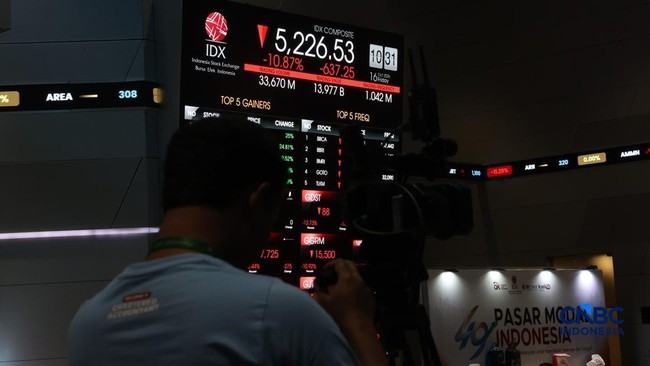
There is something more fundamental at stake than a simple change in market classification as Morgan Stanley Capital International (MSCI) considers Indonesia’s position on the global investment map. The issue is not merely whether Indonesia still merits emerging-market status, but whether its financial markets can genuinely provide investors with certainty, transparency and fairness.
The threat of Indonesia’s capital market being downgraded to standalone-market status should be read as a serious warning. In the investment world, a reputation is built not only on relatively high economic growth, a large population or ambitions to become a high-income country.
Reputation is built on the quality of institutions, the credibility of regulation, the openness of information and the ability to ensure that rules are applied consistently to all market participants.
If a country has promising economic prospects but its market mechanisms are in doubt, investors will face a fundamental question: how much risk must they bear to earn a return there? This should be the central concern of the government, the Financial Services Authority (OJK), the Indonesia Stock Exchange (BEI) and all other stakeholders in Indonesia’s capital market.
More Than a Change of Label
In the global equity-market classification system, MSCI plays an important role because its indices are benchmarks for many international fund managers, both those using passive strategies and those investing actively. A country’s reclassification can affect investment decisions, portfolio allocations and global investors’ perceptions of risk.
In general, emerging-market status places a country among developing markets with a certain level of access to international investment and a certain degree of openness and investability. Standalone-market classification, meanwhile, means that the market is no longer included among either emerging or developed markets in MSCI’s classification.
This is not merely a matter of terminology. When a market is removed from an index group used as a benchmark by global investors, funds tracking that index may adjust their portfolios. The scale of the impact depends on the index provider’s final decision, the market’s weighting and the investment mandates of individual fund managers.
In other words, reclassification can affect capital flows, share liquidity and price formation in the domestic market. However, the impact is not automatically uniform, nor does it necessarily mean that all foreign funds will leave. Active investors may still invest based on fundamentals, while others may face tighter investment restrictions.
This is where credibility becomes important. Indonesia cannot simply rely on its image as a large market. It must ensure that the market is reasonably accessible, accurately measured and trusted by investors in line with international standards. More broadly, the threat of reclassification should not immediately be treated as a verdict that Indonesia’s entire economy is deteriorating.
The stock market and the real economy are connected, but they do not always move in the same direction. The economy can grow positively while the stock market comes under pressure because of governance, valuation, liquidity or perceived-risk concerns. Policy responses should therefore address the root causes, rather than merely seeking to restore sentiment in the short term.
A Large Economy Needs a Credible Capital Market
Indonesia has substantial economic strengths. With a large population, a broad domestic market, a diverse production base and a strategic position in global supply chains, the country remains attractive to long-term investors.
Economic growth sustained at around 5 per cent also provides a relatively strong foundation. However, economic growth does not automatically guarantee a high-quality capital market. Investors consider not only potential growth in gross domestic product (GDP), but also whether that potential can be translated into measurable and accountable investment returns.
The capital market brings together businesses’ funding needs and the public’s investment needs. A healthy market should enable companies to raise capital for expansion, while giving investors adequate information to assess risks and potential returns.
If share-ownership information is not sufficiently transparent, the shares freely available for trading cannot be accurately identified, or certain transactions raise doubts about fair price formation, that function can be impaired.
The risk is not limited to foreign investors losing confidence. Domestic investors may also be harmed by a market that is harder to understand, volatility that does not reflect fundamentals and uncertainty about the quality of available information.
In this context, the threat of a downgrade should be a catalyst for strengthening the foundations of the capital market. Indonesia must not assume that a large market capitalisation alone proves the maturity of its financial institutions.
A large market capitalisation without adequate transparency is like a grand building with foundations that have yet to be tested. It may look strong from the outside, but confidence can weaken when questions arise about the quality of its underlying structure.
Transparency Is the Price of Trust
One fundamental issue requiring attention is the quality of data on share ownership and free float—the proportion of shares available for public trading. For institutional investors, share-ownership information is not merely supplementary reporting.
It is the basis for calculating liquidity, estimating transaction capacity, measuring ownership concentration and deciding whether a share is suitable for an investment portfolio.
When the definition of a public shareholder is not sufficiently clear, or economically connected ownership is difficult to identify, free-float calculations may fail to reflect actual market conditions. Investors may then encounter a gap between the liquidity shown in the data and the liquidity genuinely available when they place large transactions.
In modern capital markets, transparency should be understood as economic infrastructure. Just as roads and ports reduce logistics costs, disclosure reduces the cost of gathering information, limits information asymmetry and helps investors make more rational decisions.
Reform must therefore go beyond issuing technical rules. Indonesia needs a more accurate ownership-disclosure system, oversight of concentrated ownership and reliable verification mechanisms.
Share-ownership data should also be aligned with information on ultimate beneficial owners, in accordance with the applicable legal framework. The aim is not to restrict investment, but to ensure ownership structures can be understood and monitored proportionately.
At the same time, law enforcement must send a clear signal. Breaches of disclosure requirements, price manipulation, insider trading and market practices that harm investors must be dealt with consistently. A credible market is not one in which violations never occur. It is one that can detect, punish and prevent them transparently and without favour.
Capital-flow Risks and Economic Costs
Why should a change in capital-market classification be taken seriously? The answer lies in the relationship between perceived risk, the cost of capital and economic growth.
When a country is deemed riskier, investors may demand higher returns as compensation. In certain circumstances, they may also reduce their exposure to its shares or shift investment to markets they consider more stable.
If selling pressure increases, share prices may weaken and liquidity may deteriorate. This could affect companies’ ability to raise capital through new share issues. Companies may also face higher funding costs if perceptions of risk spread to other financial instruments.
However, it is important to distinguish between potential risks and impacts that have already been demonstrated. An MSCI reclassification does not automatically determine the direction of all capital flows into Indonesia. The impact depends on the final decision, investor responses, global conditions and the fundamentals of individual companies.
Indonesia must also account for external influences. Global interest rates, the policies of major central banks, geopolitical tensions, movements in the US dollar and shifts in international risk appetite can all affect cross-border capital flows.
Even so, external factors must not be used as an excuse to avoid evaluating domestic problems. Countries with strong institutions and transparent markets tend to be better prepared for shifts in global sentiment than those with structural weaknesses.
This makes the connection between capital-market reform and the national economic interest clear. Improving governance is not simply about meeting the expectations of an international index provider; it can also reduce barriers to business financing and strengthen confidence in the financial system.
Do Not Become Preoccupied with Index Politics
Indonesia should be careful not to overreact. MSCI classification matters, but it is not the only measure of national economic quality. Global investment decisions are also shaped by company fundamentals, earnings prospects, the quality of fiscal and monetary policy, and political and legal stability.
The government should therefore not make restoration of index status the ultimate goal of reform. If all efforts are directed solely at ensuring Indonesia once again meets a particular classification, there is a risk that reforms will be administrative and fail to address fundamental problems.
Instead, Indonesia should view MSCI’s assessment as one diagnostic tool for judging whether domestic capital-market standards meet global investors’ expectations.
If the problem lies in ownership transparency, the solution is better data and oversight. If it concerns liquidity, policies should improve trading quality and broaden investor participation. If the issue is regulatory consistency, what is needed is legal certainty and institutional coordination.
This approach is important to ensure reform does not become a race to meet external indicators. Economic sovereignty does not mean rejecting international standards. It is reflected in the ability to build credible institutions, formulate policies in the national interest and engage with global markets without compromising transparency and fairness.
A Reform Agenda: From Reactive to Structural
At least four priorities should be pursued.
First, improve transparency and the quality of market data. OJK and BEI should ensure that information on shareholders, concentrated ownership, free float and trading activity is accurate, consistent and easy to verify. Improvements should have a clear timetable, success indicators and evaluation mechanisms.
Second, strengthen supervision and law enforcement. Technology-based monitoring and transaction analysis should be developed to identify unusual trading patterns, potential price manipulation and concentrations of transactions that could undermine market integrity. Enforcement should be accompanied by adequate public communication so market participants understand that violations have real consequences.
Third, broaden the domestic investor base in a sustainable way. Strengthening the participation of retail investors, pension funds, insurers and domestic institutional investors can help deepen the market. However, wider participation must not be achieved by encouraging people to take risks they do not understand. Financial literacy, investor protection and equal access to information must go hand in hand.
Fourth, improve coordination between institutions and communication with global investors. OJK, BEI, the government and relevant agencies should report on reform using verifiable data, measurable targets and consistent progress updates. It is not enough simply to say that the market remains safe. Investors need evidence that problems have been identified and addressed.
These four priorities must be pursued simultaneously. Reform that improves data without strengthening law enforcement will lack credibility. Likewise, aggressive investment promotion will be ineffective if investors still face uncertainty about the rules and the quality of information.
Indonesia must show that reforms are being made not because of short-term pressure, but because a healthy capital market is essential to long-term development.
Maintaining Trust and Strengthening Fundamentals
Ultimately, Indonesia’s greatest test is not simply whether it can retain the emerging-market label. The real test is whether economic growth can be underpinned by financial institutions that are transparent, efficient and trusted. Indonesia has an opportunity to strengthen its position in the global economy, but it will not realise its full potential if its capital market remains burdened by governance problems and uncertainty about information.
The government and market authorities should therefore treat this moment as an opportunity to accelerate reform. Better data, law enforcement, regulatory certainty and investor protection must be priorities, not merely responses to an external assessment.
International confidence cannot be built overnight. It develops through consistent policies, institutional integrity and clear evidence that every market participant is subject to the same rules. Indonesia need not merely prove that its capital market is large. It must prove that it can be trusted.
In an increasingly competitive global economy, capital can move quickly, but a reputation takes a long time to rebuild. When credibility is at stake, reform is no longer an optional extra. It is a prerequisite for safeguarding Indonesia’s economic competitiveness.
Source: jawawa.id (https://jawawa.id/newsitem/from-emerging-to-standalone-indonesias-credibility-test-in-the-eyes-of-the-world-1792140780)
Originally published by CNBC Indonesia (https://www.cnbcindonesia.com/opini/20261016144722-14-776920/dari-emerging-ke-standalone-ujian-kredibilitas-ri-di-mata-dunia), translated from Indonesian