
From Dunhuang to ASEAN: China and ASEAN Explore New Paths for Cultural Heritage Preservation and Transmission
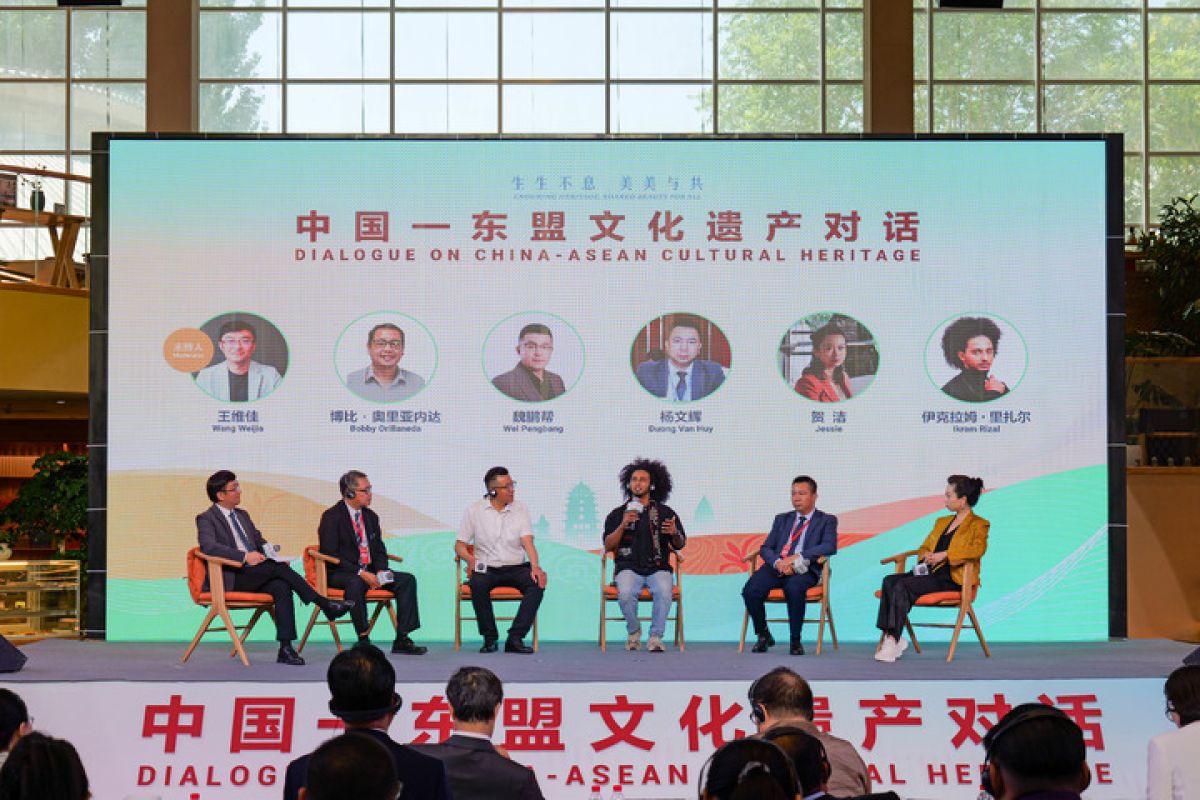
Lanzhou (ANTARA) - Cambodian journalist Keo Piseth felt a sense of joy upon seeing familiar images of Angkor Wat culture displayed at an exhibition in Dunhuang, northwest China’s Gansu Province. Titled ‘A Meeting Between Mogao Caves and Angkor Wat’, the exhibition was held in Dunhuang, home to the UNESCO World Heritage site Mogao Caves, as part of the ongoing China-ASEAN Cultural Heritage Dialogue forum. ‘This is my first time visiting Dunhuang, and I am very happy to see these photos,’ Piseth said. The photography exhibition Piseth visited was not the first encounter between the Mogao Caves and Angkor Wat, both world-renowned cultural heritage sites. Around seven years ago, a documentary themed on a dialogue between the two sites was produced. Additionally, in 2021, a special exhibition on the achievements of Angkor Wat preservation in Cambodia was held in Datong, north China’s Shanxi Province, home to the Yungang Grottoes. That activity aimed to promote archaeological and cultural exchanges between the two countries. The China-ASEAN Cultural Heritage Dialogue opened on Thursday in Gansu under the theme ‘Enduring Heritage, Shared Beauty for All’. The event brought together cultural professionals, think tank academics, youth representatives, and other guests from China and ASEAN countries to discuss cooperation in cultural heritage protection and the utilisation of cultural resources across various parties. This edition of the China-ASEAN Cultural Heritage Dialogue highlighted digitalisation and sustainable development in cultural preservation, along with various innovative outcomes in these efforts. Sokrithy Im, a senior official from Cambodia’s Ministry of Culture and Fine Arts, introduced Cambodia’s practice of utilising acquisition technology and digital twin platforms to implement preventive protection for historical cultural sites. He also called for the establishment of an open platform between China and ASEAN to promote the digital preservation of cultural sites, so that conservation efforts can be carried out more intelligently and accurately. Herry Jogaswara, Head of the Archaeology, Language, and Literature Research Organisation at Indonesia’s National Research and Innovation Agency (BRIN), shared Indonesia’s experience in the field of cultural heritage, particularly examples of transforming research results into creative works. He expressed hope that the exchange of experiences between China and ASEAN could generate more new solutions for cultural heritage preservation and the development of related industries. ‘If we look at the motifs of the paintings and carvings, we can see some similarities between Angkor Wat and the Mogao Caves, even though the forms are different,’ Piseth said. ‘Visits like this allow us to get to know China better and bring communities and cultures closer together,’ he added. A series of youth exchange events will also be held on the sidelines of the dialogue. During this opportunity, youths from ASEAN countries will visit the Mogao Caves and several cultural museums in Gansu. China has amassed extensive experience in the scientific protection of cultural heritage, digital innovation, and the interpretation and presentation of outstanding universal value heritage sites like Dunhuang, which can greatly benefit ASEAN countries. Meanwhile, Southeast Asia has gained valuable experience in conservation practices, living heritage preservation, and the management of diverse cultural landscapes. Both sides can learn from each other and expand cooperation, said Ivan Anthony Henares, chairperson of the Southeast Asian Cultural Heritage Alliance (SEACHA).