
From Downstreaming to Industrial Energisation
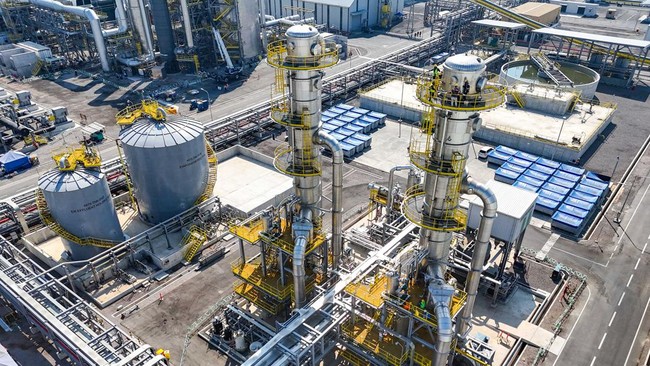
For nearly a decade, downstreaming has been a cornerstone of Indonesia’s economic development. This policy has transformed the way we view natural resources; minerals are no longer merely raw commodities for export, but materials that must be processed domestically to create added value, generate employment, expand the industrial base, and increase state revenue. Nickel, copper, and bauxite smelters, along with the construction of the electric vehicle battery supply chain, have become symbols of this change, ushering Indonesia into a new phase of industrialisation.
However, every success breeds its next challenge. As more processing plants are established, industrial zones expand, and high-tech manufacturing investments arrive, a non-negotiable requirement emerges: energy. No industrial estate can develop without reliable electricity. No smelter can operate without a large and continuous energy supply. Modern data centres, artificial intelligence facilities, battery factories, and petrochemical plants cannot thrive if the energy system is expensive, unstable, or limited. If downstreaming is the foundation of Indonesia’s industrialisation, then energy is the foundation that allows that downstreaming to endure.
Consequently, Indonesia must embrace the next paradigm: industrial energisation. While downstreaming aims to increase the added value of natural resources through processing, industrial energisation aims to ensure the entire manufacturing ecosystem has access to sufficient, affordable, clean, reliable, and competitive energy. In this paradigm, energy is no longer just a production cost to be minimised; it becomes strategic infrastructure that determines whether an industrial zone can attract investment, boost productivity, and compete in the global market.
History provides a consistent lesson: almost every leap in industrialisation has been accompanied by an energy revolution. The first Industrial Revolution was born alongside coal and the steam engine. Subsequent waves developed with electricity, oil, and natural gas. The world is now entering a new phase supported by renewable energy, energy storage systems, grid digitalisation, and artificial intelligence. The simple lesson is that there has never been a leap in industrialisation without a leap in energy capacity.
Indonesia is now at a similar crossroads. The mineral downstreaming agenda has driven a massive demand for electricity. Nickel, copper, and aluminium smelters require a stable 24-hour energy supply. Simultaneously, the government is promoting the electric vehicle ecosystem, battery industry, data centres, semiconductor manufacturing, petrochemicals, and special economic zones. All these sectors share a common trait: high energy consumption with little tolerance for supply disruptions. Therefore, the next stage of Indonesia’s industrialisation cannot rely solely on the availability of raw materials, land, or fiscal incentives. Competitiveness will increasingly be determined by the ability to provide large amounts of energy at competitive prices with high reliability.
However, industrial energisation does not simply mean building more power plants. It is a strategy that integrates energy development with industrial development from the planning stage. Every new industrial zone should be designed with an adequate electricity system, a strong transmission network, energy storage facilities, access to gas or hydrogen as needed, and digital infrastructure capable of supporting modern production processes. With this approach, energy development no longer reactively chases industrial growth; instead, energy is prepared in advance to become an investment magnet.
This way of thinking should also change how the government evaluates energy projects. Power plants are no longer measured solely by the megawatts of capacity added, but also by the amount of economic activity they can generate. Transmission networks are no longer viewed merely as electricity assets, but as connectors between energy sources and industrial growth centres. Energy storage systems not only maintain grid stability but also provide certainty for industries requiring uninterrupted power. Even renewable energy can become a competitive advantage as more global companies seek production locations that can provide low-carbon electricity. Thus, energy investment has a much broader economic effect than simply adding to the power supply.
Industrial energisation can also be an instrument for equitable development. Many resource-rich regions have not yet developed into manufacturing hubs due to energy and network limitations. Yet, areas with hydropower, geothermal, solar, or wind potential could be developed into new industrial clusters if their energy infrastructure is prepared from the outset. This approach opens opportunities for the growth of green industrial centres outside Java. Investment does not always have to follow existing economic centres; instead, energy can be used to create new growth poles. Regions with competitive energy sources can attract industries, form supplier ecosystems, create jobs, and accelerate regional economic development. At the global level, this issue is becoming even more decisive. Multinational corporations are no longer just comparing labour costs, land availability, or tax incentives when choosing production locations.