
From Data Science to BAZNAS RI: UNM Alumni Proves Wide Career Opportunities in the Digital Era
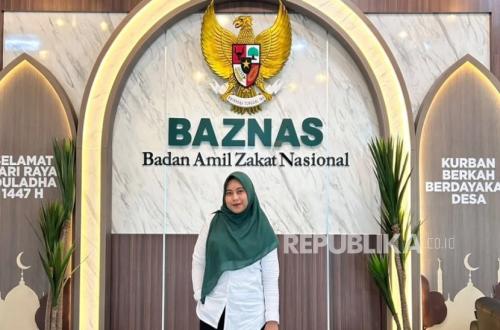
The rapid digital transformation is opening increasingly broad career opportunities for data talent, not only in technology companies but also in social and humanitarian institutions. This is demonstrated by Desi Masdin Dama, an alumna of the Data Science programme at Nusa Mandiri University (UNM), a digital business campus, who now works as a Data Analyst in the Marketing Communication Division of BAZNAS RI. Amid the growing need for data-based decision-making within organisations, Desi plays a key role in helping BAZNAS understand public perception, maintain institutional reputation, and support more effective and measurable communication strategies. According to Desi, the profession of a data analyst is not merely about processing numbers and reports, but about transforming data into information that can be used to make sound decisions. ‘The opportunity to work at BAZNAS RI has become a platform for me to apply data analysis skills in supporting communication strategies and managing the institution’s reputation. Data is not just a collection of figures, but a source of information that can help organisations better understand society,’ she said. In her daily activities, Desi monitors public sentiment across various social media platforms and mass media related to BAZNAS RI. She analyses public conversations to understand perceptions of the programmes run by the institution. Additionally, she is tasked with identifying emerging issues, mapping potential reputational risks, and monitoring trends that require the organisation’s attention. All analysis results are then processed into reports used as a basis for evaluation and strategic decision-making. Desi also manages BAZNAS RI’s social media dashboard to monitor content performance, audience behaviour, and evolving digital trends. This data is utilised to formulate communication strategy recommendations, including determining titles and content that consider Search Engine Optimization (SEO) aspects to reach a wider audience. ‘Data helps us see patterns, understand audience behaviour, and devise more effective communication strategies. With a data-based approach, decisions become more measurable and impactful,’ she stated. The Head of the Data Science Programme at UNM, Tati Mardiana, commended Desi’s career journey as tangible proof of the relevance of Data Science competencies to current industry needs. ‘We want students not only to graduate with good academic grades but also to have experience, competencies, and portfolios relevant to industry demands. Therefore, learning in the Data Science Programme is designed to be practice-based and strengthened through the Internship Experience Programme (IEP) with a scheme of three years of study and one year of internship,’ she explained. She added that during her studies, Desi actively achieved various proud accomplishments, ranging from third place in PEKSIMIDA DKI Jakarta 2022 for the Monologue category, third place in the STIKES RS Husada Essay Competition, first place in the 2025 National Data Week, to successfully publishing her research in a reputable Q1 international journal. ‘Desi’s achievements and career journey show that UNM Data Science students have great opportunities to develop in various fields. Data competence is currently one of the most needed skills, whether in the business, government, or social organisation sectors,’ she said. As a Digital Business Campus, UNM remains committed to producing digital talent ready to face the challenges of the digital transformation era. Through an adaptive curriculum, project-based learning, and an integrated industry internship programme, students are equipped with data analysis, artificial intelligence, machine learning, and business intelligence skills relevant to the demands of the working world. ‘Desi’s success is proof that Data Science graduates not only have wide career opportunities but are also capable of making real contributions to organisations and society through the appropriate use of data,’ Tati concluded.