
From Constantinople to Colonialism: The Impact of the 1453 Conquest on the World
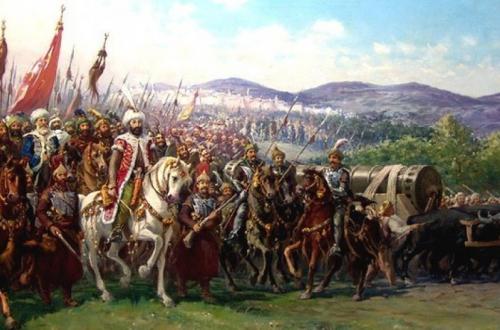
The fall of Constantinople to the Ottoman Caliphate under the leadership of Al-Fatih (Sultan Mehmed II) in May 1453 remains one of the most decisive events in world history. This event not only ended the Byzantine Empire, which had endured for over a millennium, but also triggered profound changes that shaped the direction of modern global civilisation. From this conquest, two interconnected historical processes emerged: the European intellectual resurgence through the Renaissance and the European colonial expansion that gradually reached almost the entire world.
For Christian Europe, the fall of Constantinople was a massive political, economic, and psychological shock. For centuries, the city had served as the primary trade link between Asia and Europe. Under Ottoman control, European access to traditional trade routes became increasingly difficult and expensive. Essential commodities such as spices, silk, and luxury goods from the East experienced price hikes due to tighter control over these routes.
This condition prompted European maritime kingdoms, particularly Portugal and Spain, to seek direct sea routes to Asia. Supported by advancements in navigational technology such as the compass, astrolabe, and caravel ships, the Portuguese began exploring the African coast. In 1488, Bartolomeu Dias reached the Cape of Good Hope, and in 1498, Vasco da Gama successfully arrived in India via sea routes. Meanwhile, the Spanish-funded expedition of Christopher Columbus in 1492 paved the way for the European discovery of the Americas.
Initially, these voyages aimed to facilitate trade. However, the immense profits gained from controlling trade routes and natural resources soon transformed the orientation of these expeditions into territorial conquest projects. The Portuguese established a network of forts and trade monopolies in Africa and Asia, while Spain conquered various kingdoms in South America. In subsequent centuries, England, France, and the Netherlands followed suit, giving rise to modern colonialism that altered the global order.
Ironically, the global expansion partially triggered by the Ottoman success in conquering Constantinople eventually struck the Islamic world itself. After mastering the Americas and oceanic trade routes, European powers gradually extended their colonialism to Muslim territories. From the 18th to the early 20th century, much of the Islamic world—ranging from Algeria, Egypt, Libya, Sudan, Palestine, and Iraq to India and the Nusantara (the Indonesian archipelago)—fell under the influence or rule of British, French, Dutch, Italian, and Russian colonial powers. Thus, Europe’s 15th-century attempt to bypass Ottoman economic dominance ultimately resulted in Western political dominance over much of the Islamic world centuries later.
Simultaneously, the European intellectual resurgence due to the fall of Constantinople unfolded through a specific process: as the city was being conquered and in its aftermath, many Byzantine scholars fled to Italy, bringing with them ancient Greek manuscripts that had been preserved in the libraries of Constantinople for centuries. The works of Plato, Aristotle, Homer, and other classical thinkers were reintroduced to Western Europe.
The presence of these Byzantine scholars and the wealth of knowledge they brought provided a massive impetus for the development of the Renaissance. In cities such as Florence, Venice, and Rome, classical texts were rediscovered and translated into Latin. This process gave birth to the humanist movement, which promoted an anthropocentric worldview—a perspective that placed humans and their intellectual capacities at the centre of social, political, and intellectual life. While Medieval thought was largely dominated by theological approaches, the Renaissance opened wider spaces for science, art, and philosophy.
The influence of the Renaissance subsequently spread across various aspects of life. In science, classical thought aided the birth of the scientific revolution led by figures such as Nicolaus Copernicus. In art and architecture, great works emerged from Leonardo da Vinci, Michelangelo, and Filippo Brunelleschi, reviving Greco-Roman aesthetic principles. In politics and law, the study of Roman heritage helped foster new concepts of the state and more rational legal systems.
These changes also brought profound social transformations. Trading cities flourished, the middle class grew stronger, and education was no longer the sole monopoly of the Church. The invention of the printing press by Johannes Gutenberg accelerated the spread of knowledge and increased literacy rates. Gradually, Europe transformed from a relatively closed feudal society into a dynamic, innovative, and open urban society.
These intellectual and social shifts, along with the invention of the printing press, paved the way for the Protestant Reformation in the 16th century. The movement led by Martin Luther and later developed by figures such as John Calvin not only altered the religious map of Europe but also birthed a new work ethic which Max Weber described as ‘The Protestant Ethic’. In this view, hard work, discipline, frugality, and the accumulation of wealth through legitimate means were seen as a moral responsibility. These values helped drive the development of modern capitalism, particularly in Western Europe.