
From Central Java, Indonesia Ready to Become an International Benchmark for MTQ Judging
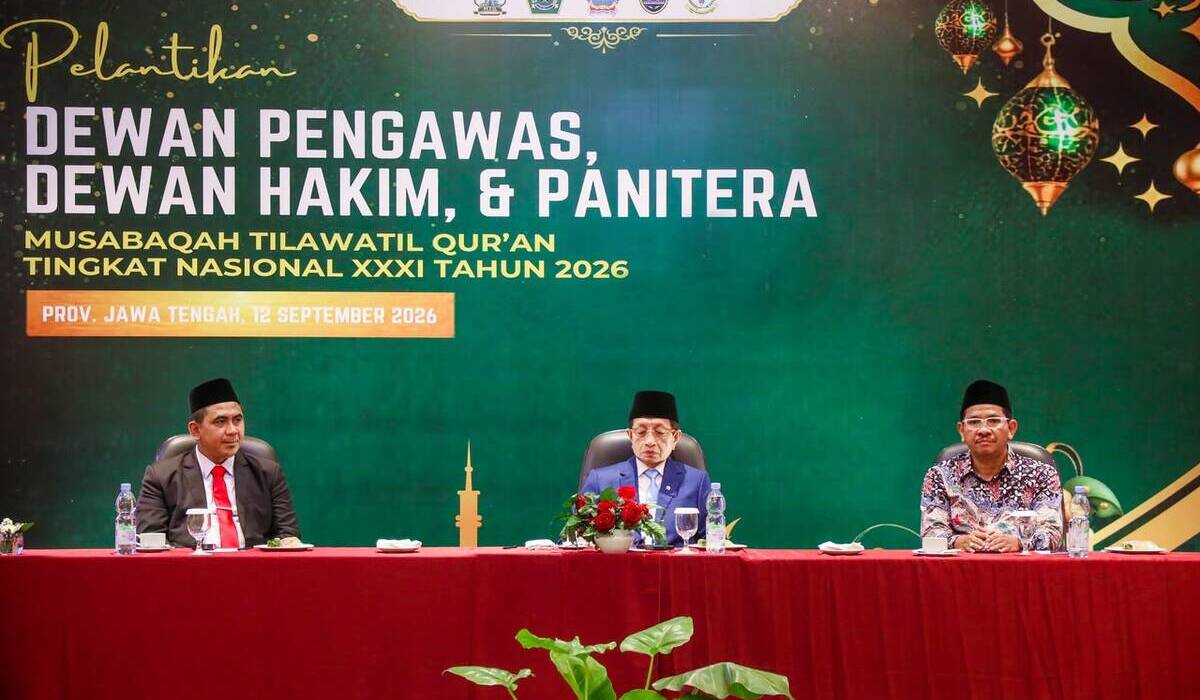
Minister of Religious Affairs Nasarundin Umar is encouraging the continuous strengthening of Musabaqah Tilawatil Qur’an (MTQ) assessment standards in Indonesia to ensure they become a global reference. This push was delivered during the inauguration of the Supervisory Board and Board of Judges for the XXXI National MTQ 2026 in Semarang, Central Java, on Saturday, 12 September 2026.
A total of 162 individuals were inaugurated to carry out duties for the XXXI National MTQ 2026, consisting of seven members of the Supervisory Board, four leaders of the Board of Judges, and 151 members of the Board of Judges.
According to Nasaruddin, the quality of assessment is a primary determinant of the MTQ’s success. He noted that even well-organised events can face issues if the judging process is flawed. Consequently, he seeks improvements in the MTQ assessment system.
“This time, we are entering a new chapter in the world of adjudication within the MTQ,” Nasaruddin stated. He also encouraged continuous training for judges to ensure their quality and capacity continue to develop, even envisioning the formation of an international association of MTQ Judges.
He noted that such an idea is relevant as MTQ is now expanding beyond Muslim-majority countries and is being held in several other nations, including the United States and Russia. Indonesia, he continued, holds a strong position to take on this role, having consistently organised MTQ at local and national levels since 1969.
According to Nasaruddin, there are approximately 25 national-level MTQ events held annually in Indonesia by various institutions and organisations, including Korpri, correctional institutions, the police, the TNI (National Armed Forces), universities, and State-Owned Enterprises (BUMN). The high frequency of these events necessitates increasingly robust assessment standards, especially as Indonesia is frequently requested to send judges for MTQ events abroad.
Therefore, he encouraged the development and regeneration of judges alongside the formulation of assessment standards that can be applied more widely. This idea is expected to serve as a foundation for Indonesia to participate in building MTQ assessment standards at the international level.
Beyond technical ability, Nasaruddin emphasised the importance of integrity and discipline among judges. They were urged to avoid any actions that could arouse suspicion during the assessment process.