
From Business Meetings to Economic Value
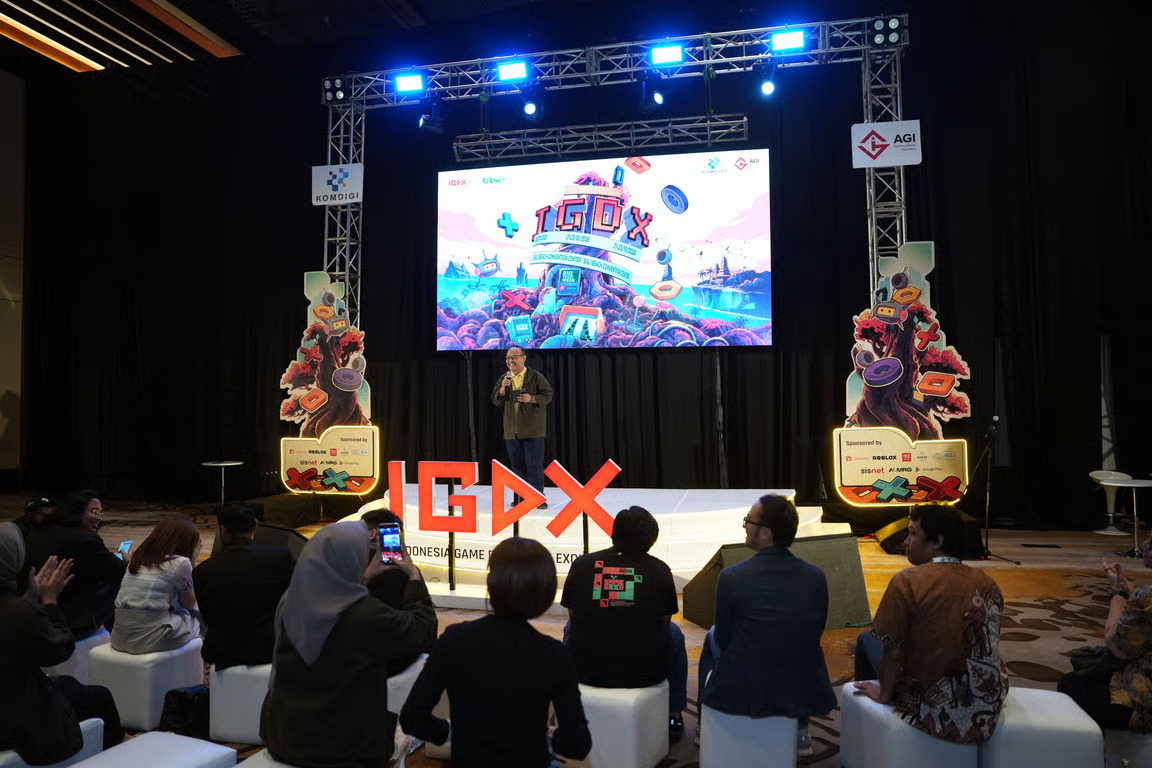
As five days of technology events in Indonesia drew to a close, hundreds of startup meetings, international partnerships in the gaming industry and billion-dollar AI investment opportunities highlighted the next challenge: turning connections into long-term economic value.
Bali Tech Week 2026 ended on Friday (23 October 2026), showcasing the growing international reach of Indonesia’s technology connections. Hundreds of startup business matchmaking meetings and more than 1,000 business interactions in the gaming industry pointed to commercial opportunities emerging from Indonesia’s digital economy.
After five days of government announcements, industry discussions, technology demonstrations and investment networking, the closing report shifted attention from what Indonesia hoped to achieve to the tangible outcomes generated by the event.
The reported results indicated considerable momentum. Indonesian startups had the opportunity to build relationships with international investors and companies, local game developers connected with global publishers, and government officials outlined the scale of Indonesia’s potential AI investment.
However, there is an important distinction between business meetings and completed transactions. Bali Tech Week showed that Indonesia can attract international commercial interest, but the economic value of those connections will depend on what happens after participants leave Bali.
Hundreds of Meetings, Thousands of Opportunities
Edwin Hidayat Abdullah, Director-General of the Digital Ecosystem at the Ministry of Communication and Digital Affairs (Komdigi), highlighted investment, connectivity and regulatory certainty in the government’s assessment of the event’s results.
According to the closing-day report, the HUB.ID business matchmaking programme generated 813 meetings involving 85 selected startups, 40 venture capital firms and 35 international companies. The total reflects activity throughout the week and is one of the clearest indicators of commercial activity at Bali Tech Week.
For Indonesian startups, the value of these meetings lies in more than the prospect of securing venture capital. International companies can provide access to customers, distribution networks, technical expertise and overseas markets, while investors can help finance business expansion.
Meetings with large companies can develop into pilot projects and, potentially, commercial contracts. For a growing technology company, securing its first large-scale corporate customer can be just as important as obtaining a new funding round.
Even so, the number of meetings should not be mistaken for the amount of investment secured. The available closing report does not state the total value of binding financial commitments or commercial agreements completed through HUB.ID.
A more meaningful measure will be how many meetings lead to due diligence, commercial partnerships, investment deals and sustained business growth over the coming months.
Indonesian Game Developers Take the Global Stage
One of the most significant commercial outcomes came through the Indonesia Game Developer Exchange (IGDX), which concluded on 23 October after three days of bringing Indonesian game developers together with international publishers and industry partners.
The closing report said 244 Indonesian game studios and 66 international publishers took part, with more than 1,200 business meetings held. However, a subsequent industry report put the number of participating studios at 339. The difference between the published figures still requires clarification.
Indonesia has a large gaming consumer base and a growing developer community. But building a successful game studio takes more than creativity. Developers need financing, technical capabilities, relationships with international publishers, marketing expertise and distribution networks that can reach global audiences.
Direct engagement with international publishers can help bridge these gaps. Successful Indonesian games can generate export and intellectual property revenue, while creating skilled jobs in software engineering, animation, design, storytelling and digital production.
The industry’s economic benefits can also extend beyond gaming. Skills developed in interactive entertainment production are increasingly relevant to educational technology, simulation, film production, advertising and other creative industries.
For Indonesia’s digital economy, the opportunity is not simply to produce a successful game. More importantly, it is to develop domestic intellectual property and build companies capable of competing in international markets.
AI Investment Potential of up to US$12 Billion
Edwin also outlined the government’s estimate that Indonesia could attract around US$8 billion to US$12 billion in AI-related investment over the 2026–2030 period.
That figure is a projection of potential investment over several years, not funding that was committed or secured during Bali Tech Week. Nevertheless, it illustrates Indonesia’s ambitions as demand grows for computing infrastructure, cloud services, AI applications and specialised technology capabilities.
The government’s priorities—Connect, Grow and Protect—provide a framework for this development. Connectivity enables participation, economic growth creates commercial opportunities, and digital protection builds the trust needed to expand technology adoption.
The quality of investment will be as important as its scale. Data centres and computing infrastructure can attract substantial capital, but their broader economic contribution will depend on the businesses they support, the skills they develop and the applications they enable.
Indonesia will need to ensure that new investment strengthens domestic technological capabilities rather than simply increasing demand for imported hardware, software and services.
The Challenge After Bali Tech Week
The commercial results reported on the final day offer a clear picture of both the achievements and challenges facing Bali Tech Week’s agenda. Indonesia has demonstrated its ability to bring technology companies, investors, government agencies and international partners together to explore opportunities in one of South-east Asia’s largest digital markets.
The next challenge is to turn those connections into measurable economic outcomes.
For startups, that means converting investor introductions into investment and revenue. For game developers, the challenge is turning discussions with publishers into product launches in international markets. The government, meanwhile, needs to ensure that infrastructure investment, talent development and regulatory policy create a competitive environment for Indonesian companies to grow.
Ultimately, Bali Tech Week’s success will not be measured by the number of meetings held or the scale of announced investment projections, but by the companies established, contracts secured, products exported and jobs created.
Bali Tech Week 2026 showed that Indonesia can bring the global technology ecosystem to the country. The next challenge is to ensure Indonesian innovation can seize those opportunities and compete effectively in global markets.
About Bali Tech Week 2026
Bali Tech Week 2026 (BTW 2026) is an initiative of the Ministry of Communication and Digital Affairs of the Republic of Indonesia (Komdigi), managed in partnership with DS Group as an umbrella platform for technology events. It connects government, industry, founders, investors and Indonesian and international technology communities to foster collaboration and create business and partnership opportunities.
The inaugural BTW 2026 was held from 19 to 23 October 2026 at the Bali Beach Convention Centre in Sanur, Bali, under the theme “Archipelago Ascending — Moving Forward Together, Innovating Further”. Bringing 13 major events together in a week-long programme, BTW 2026 covered startups, gaming, artificial intelligence (AI), cybersecurity, digital assets, infrastructure, policy and investment. It aimed to attract more than 4,000 participants, including 1,000 international delegates, with representation from more than 30 countries.