
From Bontang to Brisbane: Building a Closer Food Supply Chain
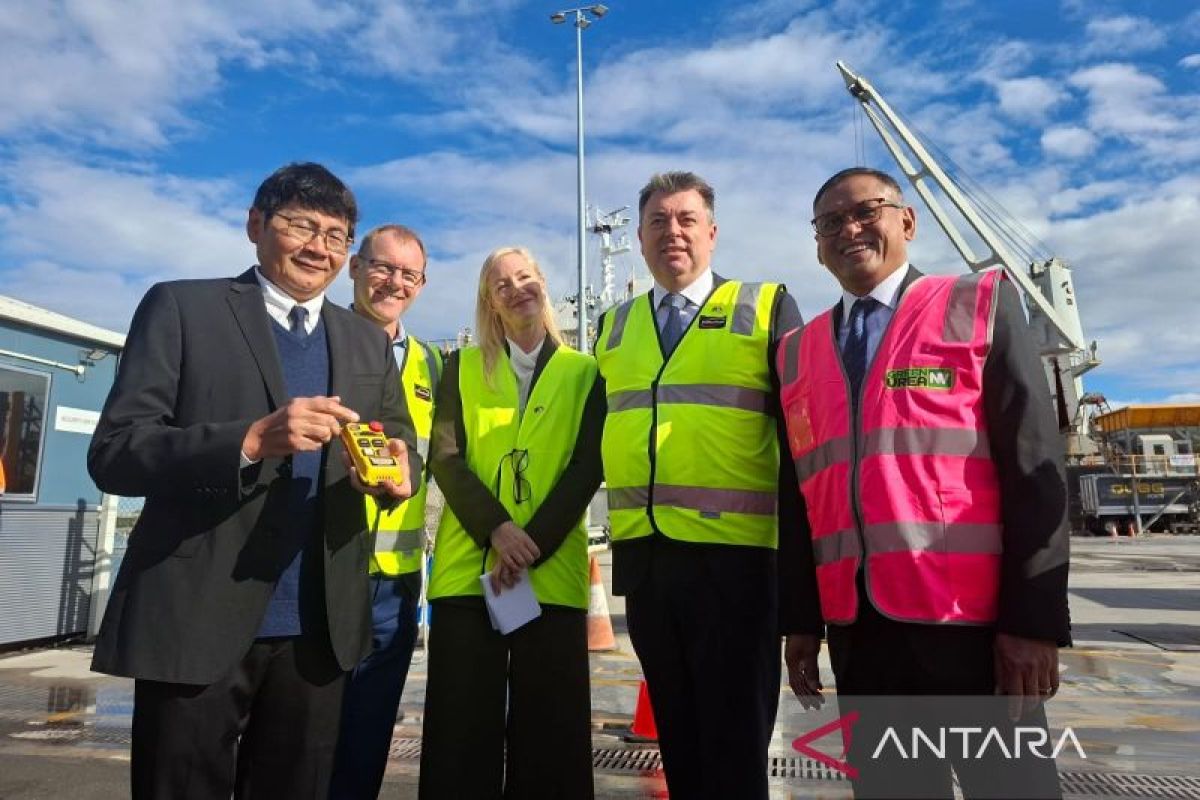
At the Port of Brisbane, the vessel Madiluna docked carrying more than 47,000 tonnes of urea fertiliser from Indonesia. At first glance, the arrival of the ship from Bontang, East Kalimantan, might seem like routine trade activity, but not for Australia. Within the cargo lies one of the essential raw materials that underpins agricultural productivity. Without sufficient fertiliser, farm output can decline, production costs can soar, and food supplies become more vulnerable to shocks. It is no surprise, then, that the arrival of supplies from Indonesia holds particular significance for one of the world’s food bowl nations.
According to data from Australia’s Department of Agriculture, Fisheries and Forestry, 70 percent of Australian agricultural production is shipped to international markets, ranging from wheat, cotton, and beef to horticultural products. The value of Australia’s agricultural exports, according to the Department of Foreign Affairs and Trade (DFAT), also reached more than 71 billion Australian dollars per year in 2023-2024. This demonstrates that stability in the supply of agricultural inputs is a strategic interest for the country’s economy. Yet, behind the strength of its agricultural sector, Australia still requires certainty of supply for specific raw materials from other countries, such as urea fertiliser, amid supply chain pressures like those occurring along Middle Eastern trade routes.
For Amanda Chalmers, First Assistant Secretary of Australia’s Department of Agriculture, Fisheries and Forestry, the shipment is not merely a trade transaction but part of an effort to strengthen food security in the region. A stable fertiliser supply gives farmers the certainty to proceed with the planting season without being haunted by worries about fertiliser availability. Australia has also openly stated it still needs even more urea from Indonesia. This shipment of 47,250 tonnes of urea is the first export delivery under a government-to-government (G-to-G) agreement of 250,000 tonnes between Indonesia and Australia. Australia perceives Indonesia’s significant role as a contribution to Australian food security, Indo-Pacific food security, and efforts to mitigate the impact of geopolitical conflicts on global supply chains.
PT Pupuk Indonesia Persero, the state-owned enterprise that produces and distributes the urea fertiliser, stated that this shipment to Australia is different from typical exports because it is conducted through a G-to-G scheme. Australia is not a new market for Pupuk Indonesia’s urea. The country has long been one of the primary export destinations for national fertiliser. However, the relationship, which had previously been commercial (business-to-business), has now evolved into a closer and more structured partnership. The two countries also complement each other. Indonesia supplies the urea needed by Australia’s agricultural sector, while Australia is an important source of phosphate raw materials for Indonesia’s fertiliser industry. This interconnectedness makes the smooth flow of the supply chain a shared interest.
Behind this export contribution, the fertiliser needs of domestic farmers remain the priority. According to Rahmad Pribadi, President Director of PT Pupuk Indonesia, the government continues to place the fulfilment of domestic needs as the top priority. The volume shipped overseas comes from production capacity that is deliberately designed to exceed national requirements. This means exports are not carried out by diverting the allocation for Indonesian farmers but by utilising the available surplus. The structure of the national fertiliser industry was built from the outset to serve both the domestic and export markets. Based on data from Pupuk Indonesia, the urea export potential from Pupuk Indonesia Holding Company (PIHC) is 1.5 million tonnes in 2026, with the primary commitment remaining on domestic needs. National urea demand is estimated to reach 6.3 million tonnes per year in 2026, while Pupuk Indonesia’s urea production target is 7.8 million tonnes.
Furthermore, this export reflects a change in Indonesia’s role in the international fertiliser market. Indonesia is no longer merely a commodity producer but is beginning to position itself as a strategic supplier that helps maintain the sustainability of supply in the region. In recent years, various strategic commodities, from energy to food and fertiliser, have been repeatedly affected by geopolitical conflicts, logistical disruptions, and protectionist policies. As a result, security of supply has become a consideration as important as price. Besides Australia, Pupuk Indonesia also noted that several other countries, such as India, Bangladesh, and others, are beginning to explore obtaining fertiliser exports from Indonesia.
According to Incitec Pivot Fertilisers, a manufacturing and distribution company in Australia, the urea arriving from Indonesia will be used to support the production of cotton, wheat, fruits, and vegetables in Queensland and the northern region of New South Wales, before a portion is shipped onwards to Geelong. Some of these agricultural products will eventually re-enter the Indonesian market as industrial raw materials or consumer goods. This flow signifies how tightly interconnected the modern food system is. Production in one country often depends on the supply of raw materials from another. When one link in the chain is disrupted, the impact can spread far beyond territorial boundaries. In a world increasingly vulnerable to supply chain disruptions, Indonesia’s ability to provide consistent supply has become a strategic asset. The urea shipment to Australia is a marker that Indonesia’s role in the region continues to grow, from merely a consumer of global commodities to one of the pillars sustaining regional food production. Cooperation between the two countries and the region should continue to grow closer in the future.