
From Battlefields to the Realm of Civilisation: Santri as Indonesia’s Heroes of the Future
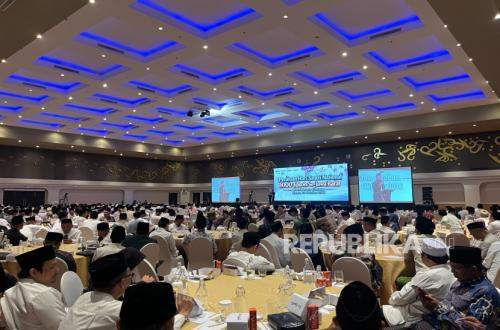
Indonesia’s history is rich in stories of courage and sacrifice. From battlefields to diplomatic arenas, people have fought for independence and the nation’s future. Among the groups with an important place in that history are the santri.
Santri are not merely members of society who study religious knowledge at Islamic boarding schools, or pesantren. They are part of the social, intellectual and cultural forces that have helped shape Indonesia’s development. During the independence struggle, santri took up arms, mobilised communities, built solidarity and defended the country’s sovereignty. But their struggle should not remain a romanticised chapter of history.
Indonesia’s challenges today require a generation of santri able to continue that struggle through knowledge, education, technology, leadership and service to society.
Santri in the nation’s struggle
Long before independence was proclaimed, pesantren served as centres of education, character formation and growing national awareness. At a time when access to education was limited under colonial rule, pesantren gave communities opportunities to gain knowledge, build self-reliance and develop an awareness of resistance to injustice.
In Tradisi Pesantren (2011), Zamakhsyari Dhofier explains that pesantren have a distinctive scholarly tradition and social system. Relationships between kiai (religious teachers), santri and local communities create strong social networks that also underpin character formation and social responsibility.
A key moment in the santri’s involvement in the independence struggle was the Jihad Resolution of 22 October 1945, led by religious scholars, particularly KH Hasyim Asy’ari. The call urged Muslims to defend Indonesia’s independence against the threat of colonialism’s return. Its spirit became intertwined with the people’s struggle during the events of 10 November 1945 in Surabaya.
These events show that nationalism and religious commitment are not in conflict. Defending the homeland is part of a moral and religious responsibility. The state’s designation of 22 October as Santri Day, through Presidential Decree No. 22 of 2015, recognised the historical contribution of the santri.
But history cannot be honoured through ceremonies alone. The spirit of earlier generations must be carried forward through tangible contributions to the nation.
From taking up arms to raising the nation’s standing
Every era has its own battleground. Whereas colonialism was once the nation’s main adversary, Indonesia now faces poverty, educational inequality, low literacy, corruption, intolerance, environmental damage and a lack of competitiveness among its human resources.
In this context, santri must understand that defending independence means more than remembering the courage of their predecessors. Independence must be given substance through human development and the creation of a better civilisation.
Today’s santri need to become teachers, scientists, researchers, entrepreneurs, leaders, technocrats, diplomats and community organisers. They should contribute to the development of knowledge, economic growth, stronger education and solutions to social problems.
Values associated with pesantren—including honesty, discipline, modesty, self-reliance, respect for teachers, a love of learning and concern for others—are important assets in meeting these challenges.
Future santri should therefore be not only well-versed in religious knowledge, but also able to turn what they know into solutions that improve people’s lives.
Pesantren and the challenges of the digital civilisation
The future of santri is inseparable from the ability of pesantren to respond to change. Advances in artificial intelligence, automation and information technology have transformed how people learn, work, communicate and make decisions.
Santri must be more than users of technology. They need digital literacy, critical-thinking skills, creativity and an understanding of the ethics involved in using technology.
The values of pesantren are highly relevant in this regard. The tradition of tabayyun teaches the importance of verifying information. Amanah (trustworthiness) calls for responsible use of technology, while adab (proper conduct) guides communication and interaction in digital spaces.
Pesantren need to strengthen the balance between religious and general education. Foreign languages, science, technology, entrepreneurship and research skills should all be part of santri development.
As Azyumardi Azra noted in 1999, Islamic education needs to preserve continuity with tradition while responding to changing times. Preserving tradition does not mean rejecting progress; equally, openness to science and technology need not erase the identity of pesantren.
Pesantren of the future should become centres that foster a generation capable of creating innovations, producing research, developing businesses and serving society.
Source: jawawa.id (https://jawawa.id/newsitem/from-battlefields-to-the-realm-of-civilisation-santri-as-indonesias-heroes-of-the-future-1794757864)
Originally published by Republika (https://opini.republika.co.id/berita/tojrln451/dari-medan-perjuangan-ke-ruang-peradaban-santri-sebagai-pahlawan-masa-depan-indonesia), translated from Indonesian