
From Batavia Trams to Whoosh: The Long Journey of Indonesia's Electric Rail Over a Century
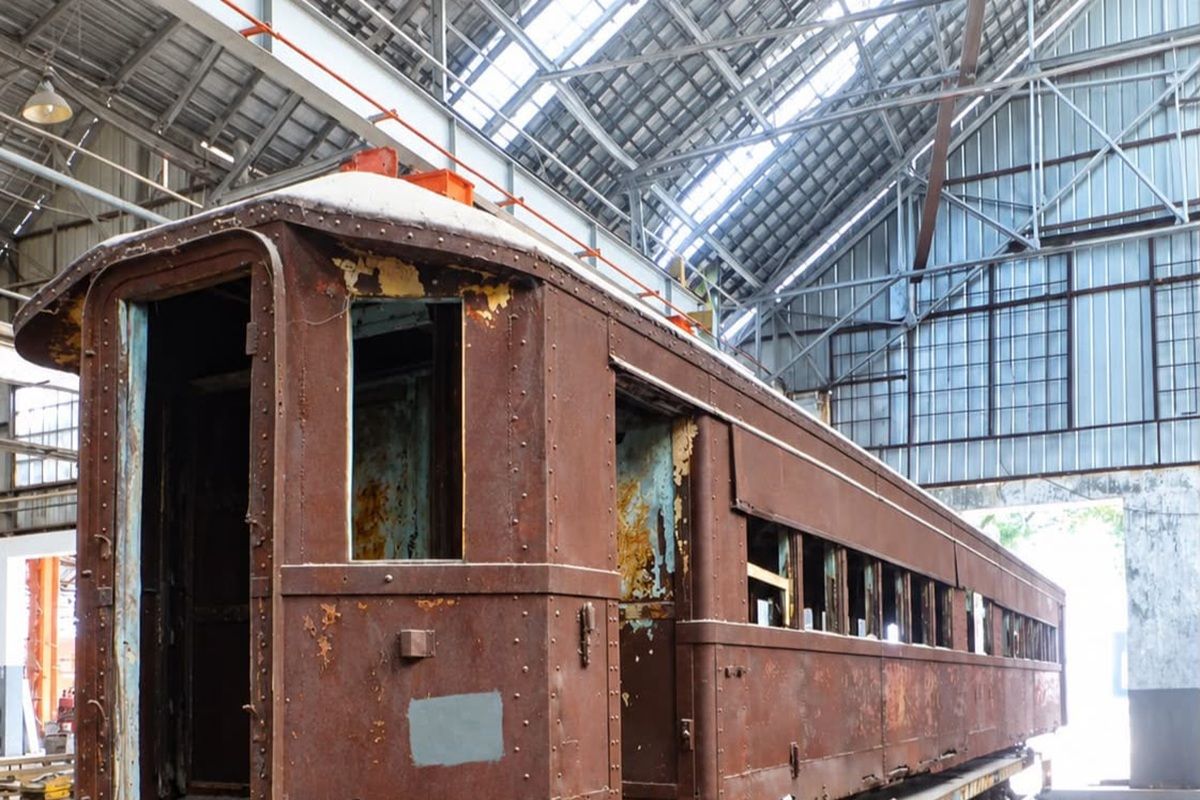
From the electric trams of 1899, to the KRL, LRT Jabodebek, and the Whoosh high-speed rail, rail technology continues to evolve in response to societal needs. More than a century ago, electric technology began appearing in Indonesia’s rail transport. From electric trams in Batavia in 1899, it evolved into the Commuter Line (KRL) for urban mobility, leading to the arrival of the LRT Jabodebek and the Whoosh high-speed train as part of modern railway technological advancement.
As it enters its 81st year, PT Kereta Api Indonesia (Persero) continues to advance railway technology through the expansion of electrification networks and increased service capacity to meet public mobility demands. KAI President Director Bobby Rasyidin stated that electrification development is part of the company’s strategy to enhance electric train service capacity, particularly in the Jabodetabek agglomeration region.
“KAI continues to prepare the development of the KRL network through additional electrification. In the future, the Bekasi KRL line will be extended from Cikarang to Cikampek, while the Bogor line will be extended to Cigombong. This development is being carried out gradually to increase KRL service capacity to two million passengers per day,” said Bobby.
This development is being implemented through the addition of overhead contact lines (OCS) or track electrification. Currently, electrification for the Bekasi line has reached Cikarang Station, while the southern line has reached Bogor Station. The extension of the network is targeted for completion by 2028.
This electrification development is part of the long journey of electric technology in Indonesian railways, which has spanned over a century. KAI Vice President of Corporate Communication, Anne Purba, noted that electric technology has been a vital part of Indonesia’s railway development since the late 19th century. “Electric technology has been part of Indonesia’s railway journey for over a century. Its development shows how rail transport continues to adapt, from serving urban mobility to providing services with modern technology,” said Anne.
The use of electricity in Indonesian rail transport began with the introduction of electric trams in Batavia. On 10 April 1s99, electric trams officially operated as a new mass public transport in Batavia. The electric tram fleet was brought in from the Dyle et Bacalan factory in Belgium and operated by the Batavia Elektrische Tram Maatschappij (BETM).
The inauguration of the electric trams took place behind the Bataviasche Planten En Dierentuin, or the Batavia Zoo, in the Cikini, Menteng area. A BETM tram depot, equipped with workshop facilities and power plant engine rooms, was also built at that location. During its early operational period, the Batavia electric tram network connected several areas such as Harmoni, Tanah Abang, Menteng, Kramat, Pasar Senen, Pintu Besi, and Batavia Station. The presence of electric trams marked an early milestone in the use of electric technology for rail-based transport in Indonesia.
The development of electric technology continued into the railway system. Following the construction of electrification infrastructure, Indonesia’s first electric trains began operating on 6 April 1925 via the Tanjung Priok–Meester Cornelis (Jatinegara) route. The arrival of electric trains became a crucial part of urban mobility development. The electric rail network continued to expand, connecting Jakarta and its surrounding areas. By 1930, electric train services to Batavia–Buitenzorg (Jakarta–Bogor) were in full operation.
After Indonesia’s independence, electric train technology continued to evolve alongside urban growth and public travel needs. The Commuter Line (KRL) subsequently became one of the primary modes of urban transport, particularly in the Jabodetabek area. The role of electric train services has grown significantly in supporting public mobility. As of August 2026, the KAI Group has served 351,602,397 passengers, an increase of 7.09 per cent compared to the same period the previous year. This growth demonstrates the increasing public demand for railway services, including electrification-based services.
The journey of electric rail technology entered a new chapter with the introduction of the LRT Jabodebek in 2023. This service features a 44.43-kilometre track length and utilises Communication Based Train Control (CBTC) signalling technology with a Grade of Automation 3 (GoA3) level, operating without drivers. The LRT Jabodebek is part of the development of modern electric-based urban transport in Indonesia, providing travel options for residents in Jakarta, Bogor, Depok, and Bekasi.
In the same year, Indonesia entered a new era with the operation of Whoosh, the country’s first electric-based high-speed train. Whoosh was inaugurated on 2 October 2023 and began commercial operations on 17 October 2023. This high-speed train uses the CR400AF trainset with operating speeds of up to 350 km/h, making it the first high-speed train in Southeast Asia.
With the presence of the KRL, LRT Jabodebek, and Whoosh, the development of electric technology demonstrates how Indonesian rail transport continues to evolve to meet public needs. From daily commutes via KRL and urban mobility with LRT Jabodebek to intercity travel via the Whoosh high-speed train, electric technology remains an integral part of the development of Indonesia’s railway services. Anne stated that this technological journey illustrates how railway innovation continues to progress from generation to generation.
Source: jawawa.id (https://jawawa.id/newsitem/from-batavia-trams-to-whoosh-the-long-journey-of-indonesias-electric-rail-over-a-century-1790240961)
Originally published by Antara (Indonesian) (https://www.antaranews.com/berita/5756521/dari-trem-batavia-hingga-whoosh-perjalanan-panjang-kereta-listrik-indonesia-selama-lebih-dari-satu-abad), translated from Indonesian