
From Bantargebang to Households, Jakarta Transforms Waste Management Approach
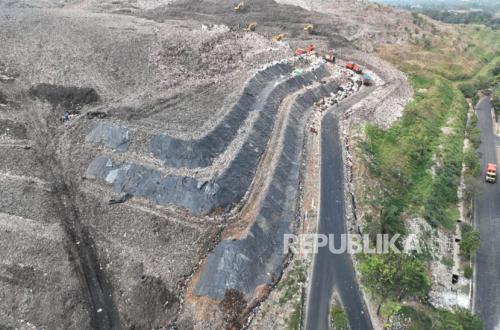
Changes in how Jakarta handles its waste are beginning to show results at the Bantargebang Integrated Waste Treatment Facility. Areas that have been used for disposal are no longer left exposed but are being covered with protective media before geomembranes are installed in stages. The initial step was carried out at the top of Zone 2 on Friday (17/7/2026). The DKI Jakarta Provincial Government will subsequently implement a controlled landfill system in stages starting 1 August 2026 to reduce reliance on open dumping practices. Dudi Gardesi, Head of the DKI Jakarta Environmental Agency, said covering the disposal area is a concrete step to reduce the environmental impact felt by communities around Bantargebang. “The installation of cover media is a real measure to reduce odour, help control gas emissions, and minimise the formation of leachate caused by rainwater entering the waste pile,” Dudi said in Jakarta on Monday (20/7/2026). During the transition period, the dumping point will be changed every seven days. The used area will be covered for seven days, while disposal activities are moved to another prepared location. This arrangement is intended to maintain pile stability while controlling odour, leachate, and the risk of fire and landslides. The next stage will be reinforced with the installation of geomembranes in the disposal area. Unlike open dumping, which allows waste to accumulate in an open space, controlled landfill regulates the placement, compaction, and periodic covering of waste. The system is part of the Jakarta Waste Management Roadmap for 100 Percent Management, developed together with the Ministry of Environment. “The government is responsible for ensuring this change proceeds smoothly, without reducing waste management services to the public,” Dudi said. The overhaul of Bantargebang does not rely solely on the government budget. The DKI Jakarta Provincial Government is opening collaboration with the private sector through creative financing schemes. Several companies have expressed commitment to providing support through corporate social responsibility programmes to meet material needs according to technical standards. “This collaboration allows the acceleration of improvements without depending solely on government financing,” Dudi explained. The system change is being implemented while Bantargebang still bears the brunt of Jakarta’s waste. The capital produces around 9,000 tonnes of waste daily, and the average height of the pile in the area has reached about 60 metres. In the second quarter of 2026, as much as 72.56 percent of waste entering Bantargebang was still handled through open dumping. Waste entering various processing facilities only reached 7.59 percent. The DKI Jakarta Provincial Government targets the open dumping portion to drop to 50.34 percent in the third and fourth quarters of 2026. During the same period, the implementation of controlled landfill is targeted to reach 8.39 percent, while the portion of processed waste increases to 20.28 percent. “We will continue to gradually increase the capacity of processing facilities. By 2027, the portion of processed waste is targeted to reach 45.65 percent,” Dudi revealed. The practice of open dumping is targeted to cease by 2028. Waste that cannot yet be processed will be handled through controlled landfill, which is considered safer and more manageable. To pursue these targets, the DKI Jakarta Provincial Government is improving sanitation systems and leachate treatment plants, managing slope stability, and strengthening mitigation in landslide-prone areas. However, changes at the final processing site will not be sufficient if waste from households, markets, schools, offices, and commercial areas continues to be sent in a mixed state. “The government continues to improve facilities and management systems downstream. However, its success also requires public participation from upstream,” Dudi said. According to him, reducing single-use items, finishing food, separating waste by type, and processing organic waste can reduce the burden on Bantargebang.