
From ASRI to Strengthening Food Security
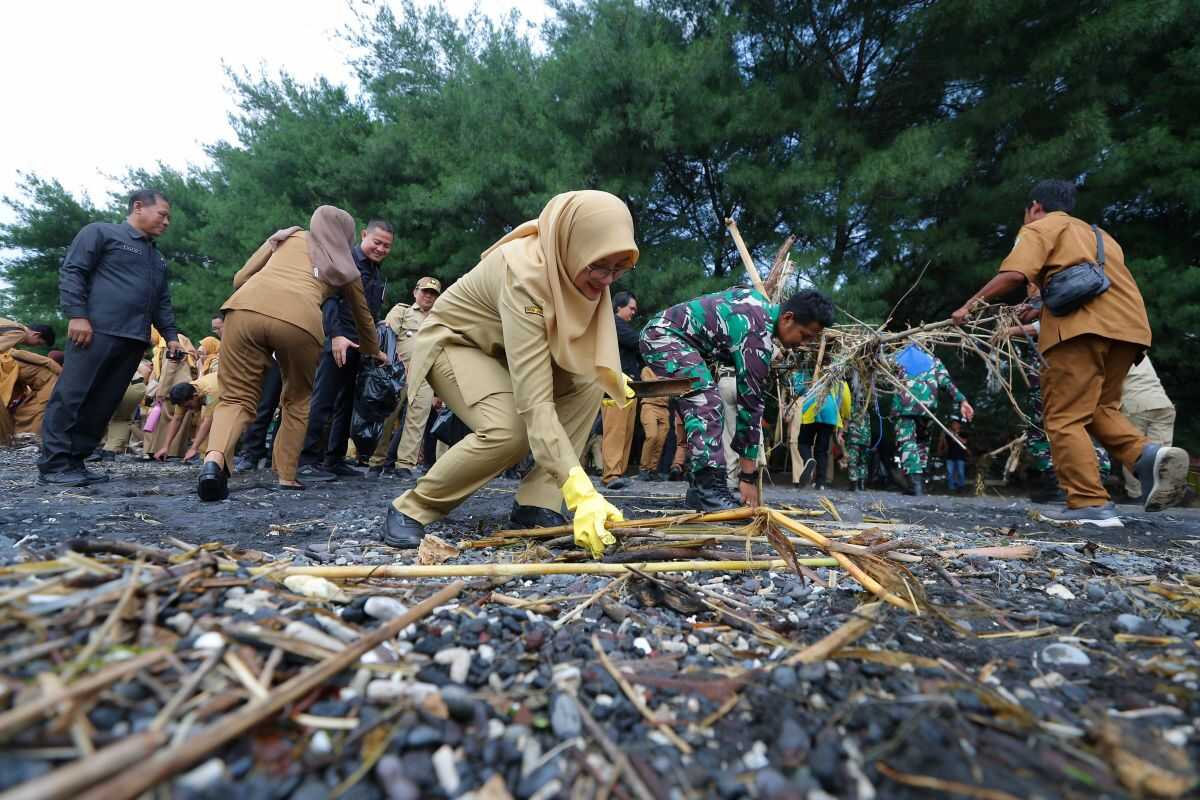
Jakarta (ANTARA) - In his “Indonesia Economic Outlook 2026” address, President Prabowo Subianto emphasised the importance of comprehensive reform, from village cleanliness to the capital city, as well as environmentally friendly technology-based waste management resolved from the grassroots level upward.
At the same time, the ASRI Movement — standing for Aman, Sehat, Resik, Indah (Safe, Healthy, Clean, Beautiful) — was introduced as a direction for cultural change and living space governance. At first glance it appears to be an environmental agenda, but in reality it touches upon the root of broader development challenges.
Amid the climate crisis, rapid urbanisation, and ever-increasing food demand, Indonesia stands at a critical crossroads: whether to continue pursuing production at the risk of depleting the environment, or to build a food system grounded in ecosystem health.
Experience has shown that increasing production without maintaining the carrying capacity of nature instead triggers soil degradation, water crises, and import dependency. Food security cannot stand upon a fragile environmental foundation.
Food always begins with the environment. Clean water, healthy soil, orderly spatial planning, and a culture of non-wastefulness form the foundation of food production and distribution. If translated consistently, ASRI can become the “social infrastructure” connecting citizens’ daily behaviour with the grand agenda of food sovereignty. It is at this juncture that environment and food converge — not as two separate issues, but as one mutually reinforcing ecosystem of life.
The Foundation of Food Security
Indonesia’s latest food data delivers two messages simultaneously: reason for optimism, but also strong reason for vigilance. In 2025, the rice harvest area was recorded at approximately 11.32 million hectares, with production of 60.21 million tonnes of milled dry grain and consumable rice production of 34.69 million tonnes — a rise of more than 13 per cent compared to the previous year.
This increase demonstrates that national production capacity is becoming more robust. However, the country has only just passed through a phase in which rice imports surged to approximately 4.52 million tonnes in 2024, far higher than in 2023.
At the same time, soybean imports remain at around 2.6 million tonnes, whilst maize production of 15.14 million tonnes still faces ever-growing animal feed demand. This means that when weather is disrupted, distribution is hampered, or global prices spike, the country still quickly shifts into emergency mode. Food security is improving, but its foundation must be continually strengthened.
The food challenge today is therefore not merely about production figures, but about systems. Food security is highly dependent on soil quality, water availability, post-harvest efficiency, and the proximity between local production and local markets. Without sound governance, even large harvests can leak away through distribution losses, consumption waste, and dependence on imported raw materials.
It is at this point that the ASRI Movement becomes relevant — not as a cleanliness slogan, but as a framework for building national ecological discipline that supports food from its upstream origins.
ASRI’s values can be translated into concrete collective habits: from sorting and processing organic waste into compost, planting in home gardens, protecting water sources, to reducing food waste.
The experience of the Sustainable Food House Area Programme (KRPL) has shown that productive home gardens can contribute vegetables, fruit, and protein for families, reduce expenditure, and simultaneously improve nutrition. If every home, school, office, and public facility has a simple growing space, the nation builds a cushion of resilience from below. National resilience is ultimately the accumulation of household resilience.
On the other hand, increased production still requires modernisation and strong farmer organisation. Collective programmes such as the Food Brigade demonstrate the importance of technology, land management, and farmer regeneration.
However, modernisation must not disregard ASRI principles — intensification must still maintain soil fertility, water efficiency, and circular waste management. Even in cities, urban agriculture can form part of the solution, revitalising productive green spaces and building ecological awareness among residents.
Thus, ASRI is not merely a clean-up movement, but a strategy uniting a healthy environment and sovereign food production within one sustainable system.
Environment and Food
The ASRI Movement must not stop at being a pleasant-sounding slogan; it also requires measurable policies and consistent cross-sectoral collaboration. The central government must be bold enough to incorporate food-environment indicators into development planning, so that success is not solely measured by economic growth or production surges, but also by soil quality, clean water availability, organic waste reduction, and the expansion of productive growing spaces.
Regional governments can reinforce this through incentives for organic agriculture, urban farming, and community-based waste management. Academics provide applied innovation, the business sector drives green investment and partnerships, whilst communities become the engine of cultural change.
The commitment to environmental reform from villages to the capital must be translated into concrete, sustainable measures. The idea of collective effort by all elements of the nation is only meaningful if it reaches everyday living spaces — from household kitchens, school gardens, government offices, and traditional markets, through to agricultural land.
ASRI is essentially a bridge between the environmental agenda and the food agenda — two matters that are often separated. Food production must not sacrifice ecosystems, and environmental preservation must not neglect the basic needs of the people. When the bureaucracy sets an example in reducing plastic, conserving water, and managing waste with discipline, collective behavioural change becomes possible.
It is here that ASRI can become an engine of behavioural change, rather than merely a ceremonial event. Bappenas estimates that food loss and waste reaches 23 to 48 million tonnes per year. If even a fraction of this waste could be converted into compost and channelled into productive land, the impact on both environmental quality and food availability would be significant.