
From Aid to Dignity
The most successful social assistance isn’t the most frequently distributed, but the kind that gradually enables recipients to no longer need it.
Surabaya (ANTARA) – In many parts of East Java, social assistance arrives like a long-awaited rain.
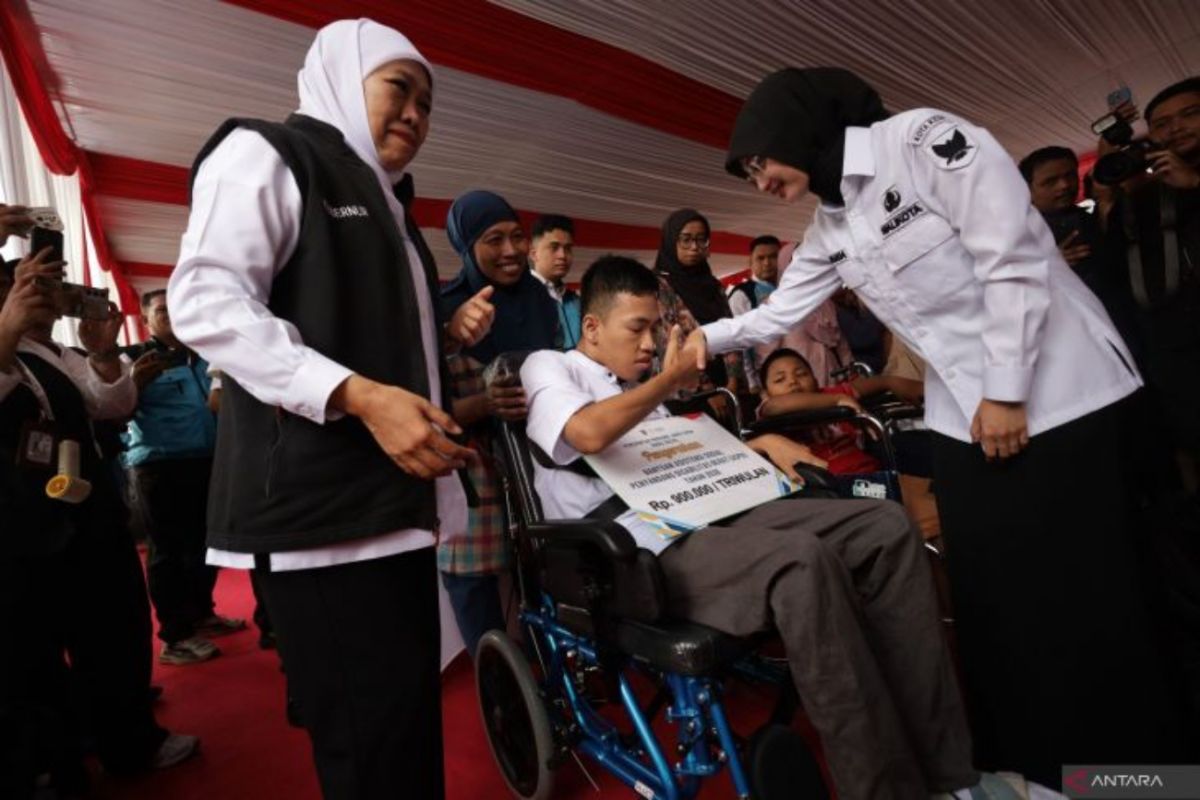
In Kediri, elderly recipients of the PKH Plus programme await disbursement calls with an invitation in hand. In Tuban, cigarette factory workers receive Tobacco Excise Revenue Sharing funds as a buffer against rising living costs. In Magetan, assistive devices for people with disabilities are distributed with the hope of easing their lives.
At its core, social assistance is about the state’s presence. It acts as a cushion when family economies weaken, jobs become uncertain, basic goods prices rise, and social risks strike without warning.
In East Java, social assistance disbursement in 2026 appears massive, with billions of rupiah allocated across almost every region. From Probolinggo to Madiun, Gresik, Lamongan, and Pamekasan, the provincial government has rolled out various social protection packages targeting the elderly, people with disabilities, vulnerable workers, and impoverished villages.
Yet behind the billions of rupiah, a critical question arises: Does social assistance truly break the poverty cycle, or merely prolong the survival of poor families without changing their fate?
The East Java Provincial Government is shifting the social assistance paradigm from mere consumption-based aid to an empowerment tool. This has led to schemes such as PKH Plus, KIP Jawara, productive zakat, BUMDes assistance, and village empowerment programmes.
The narrative is clear: aid is not just for today’s consumption but a foundation for recipients to stand on their own in the future.
This approach is evident in Ramadan 2026 assistance disbursements. In Gresik, Mojokerto, and Tuban, part of the aid is directed towards strengthening small businesses and entrepreneurship. The government is also linking social assistance to village development and local economic empowerment.
This step is crucial because poverty in East Java is no longer merely about income shortfall. Issues include unequal access to education, fragile informal jobs, and vulnerabilities of the elderly and people with disabilities often overlooked by the formal economy.
The Central Statistics Agency (BPS) notes East Java’s poverty rate has declined in recent years. However, the figures do not fully capture underlying vulnerabilities. Many families are just above the poverty line but remain highly vulnerable to falling back into poverty when losing jobs, falling ill, or facing disasters.
In this context, social assistance is a vital instrument for maintaining social resilience.
The issue is that social assistance effectiveness often stops at distribution. Success is frequently measured by the amount disbursed, not by how far recipients move out of poverty permanently.