
From 9,039 Tonnes of Sugar in 1870, KAI Continues to Move Plantation Produce, Reaching 525,000 Tonnes in 2026
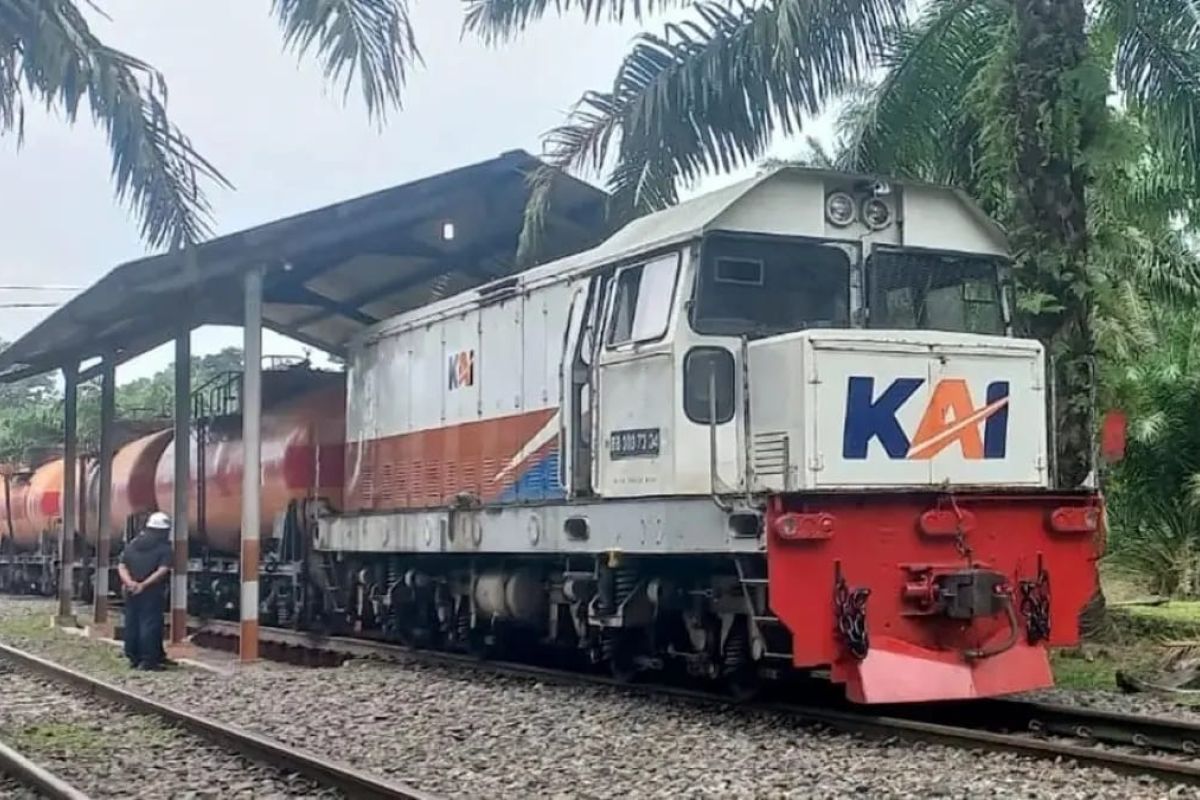
Jakarta (ANTARA) – Indonesia’s railway history is closely linked to the development of trade and plantation produce. In 1870, the Semarang–Surakarta railway network carried 9,039 tonnes of sugar, 3,248 tonnes of coffee, 273 tonnes of tobacco and 83 tonnes of indigo to the trading centre of Semarang. More than a century and a half later, rail continues to play a role in distributing plantation commodities. State-owned railway operator PT Kereta Api Indonesia (Persero), or KAI, recorded plantation freight of 525,348 tonnes between January and October 2026, up 12.09% from 468,704 tonnes in the same period in 2025.
The story began when the Nederlandsch-Indische Spoorweg Maatschappij (NIS) built Indonesia’s first railway line in Kemijen, Semarang, on 17 June 1864. The approximately 25-kilometre Semarang–Tanggung line began operating on 10 August 1867, and was later extended to Kedungjati on 19 July 1868 and Surakarta on 10 February 1870. The line opened up a way to transport plantation produce from Java’s hinterland to Semarang Port, then one of the region’s trading hubs.
KAI Vice President of Corporate Communications Anne Purba said this history illustrates the close relationship between railway development and economic activity in the community.
“Since 1870, railways have helped connect plantation produce with trading centres. That role has continued to evolve in line with Indonesia’s distribution and industrial needs,” Anne said.
In the early years of the railway, sugar and coffee were important freight commodities. The expansion of sugar-cane plantations in and around Surakarta increased the need for transport capable of carrying produce to the port. Railways offered greater freight capacity than the carts and pack animals that had previously been widely used.
In the modern era, the plantation commodities carried by rail have changed. While sugar, coffee and tobacco were among the main trade goods in the nineteenth century, KAI’s plantation freight today largely comprises crude palm oil (CPO) and palm oil derivatives. These commodities are linked to processing industries, demand for raw materials, trade and the development of bio-based energy.
According to KAI’s performance report, plantation freight reached 525,348 tonnes between January and October 2026. That was about 56,644 tonnes more than the 468,704 tonnes recorded in the same period in 2025. The 12.09% increase points to higher volumes of plantation commodities being distributed by rail, in line with demand for large-scale freight and scheduled services.
Overall, KAI transported 54,648,288 tonnes of goods between January and October 2026, comprising 47,130,706 tonnes of coal and 7,517,582 tonnes of non-coal commodities. Plantation freight is part of its non-coal portfolio, alongside containers, fuel, cement and clinker, fertiliser and retail cargo. The range of goods illustrates how the rail network is used to meet diverse national distribution needs.
Anne said plantation freight has different operational requirements from passenger services because it is directly tied to production patterns and industrial activity.
“For industrial customers, certainty of delivery is a key requirement. KAI continues to manage capacity, schedules and service reliability so that commodity distribution can meet their needs,” she said.
The growth also reflects how the railway’s economic role has changed over time. In the nineteenth century, the rail network connected plantations in Java’s interior with port-based trade; today, plantation freight supports the movement of raw materials through more diverse industrial supply chains. Advances in rolling stock, freight facilities and operating systems have also influenced how commodities are distributed.
Through the development of freight services, KAI continues to adapt capacity and service arrangements to the needs of industrial customers. Indonesia’s long railway history, dating back to 1867, is part of the continuing development of national transport in support of production, distribution and trade.
“Rails that once carried sugar and coffee now also serve the needs of modern industry. KAI wants to sustain the railway’s contribution to the movement of Indonesia’s economy,” Anne said.
Source: jawawa.id (https://jawawa.id/newsitem/from-9-039-tonnes-of-sugar-in-1870-kai-continues-to-move-plantation-produce-reaching-525-000-tonnes-in-2026-1794484552)
Originally published by Antara (Indonesian) (https://www.antaranews.com/berita/5849619/dari-9039-ton-gula-pada-1870-kai-terus-menggerakkan-hasil-perkebunan-hingga-525-ribu-ton-pada-2026), translated from Indonesian