
From 5-6 Tonnes to 12.4 Tonnes per Hectare: The New Planting System Claimed by the Agriculture Minister
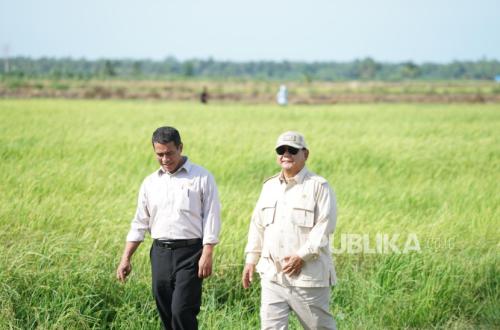
The Ministry of Agriculture is preparing to expand a new farming method, the Modern Agriculture-Advanced Agriculture System (PM-AAS), after field tests claimed rice productivity could jump from an average of 5-6 tonnes to 12.4 tonnes per hectare. This near-tripling of harvest yields is the driving force behind the government’s push for sustainable food self-sufficiency. Minister of Agriculture Andi Amran Sulaiman explained that PM-AAS was developed by combining three main approaches: optimising plant photosynthesis through spacing arrangements using 4:1 and 6:1 planting systems, increasing plant population via continuous planting, and implementing precision agriculture for more efficient use of fertiliser, water, and other production inputs. According to Amran, this approach not only pursues higher yields but also increases farmer profits through cost efficiency. He noted that when farmers experience significant profits, they will plant independently without needing constant encouragement, as the farming business proves itself lucrative. Speaking during a hybrid coordination meeting on the expansion of PM-AAS implementation in Jakarta, Amran stated the model could increase rice productivity from an average of 5-6 tonnes to a minimum of 10 tonnes, with field tests reaching 12.4 tonnes per hectare. He explained the yield increase is driven by a larger plant population. Where previous cultivation patterns saw populations of around 300,000 to 360,000 clumps per hectare, PM-AAS can increase this to approximately 800,000 to one million clumps per hectare. Amran clarified that while the ‘jajar legowo’ system improves photosynthesis, the continuous system increases plant population, making a near-tripling of production logical. Beyond boosting production, Amran assessed that the system can suppress production costs, making fertiliser and water use far more efficient, thereby lowering inputs while increasing harvests and raising farmer profits.