
From 2027, educational units must adjust their curricula
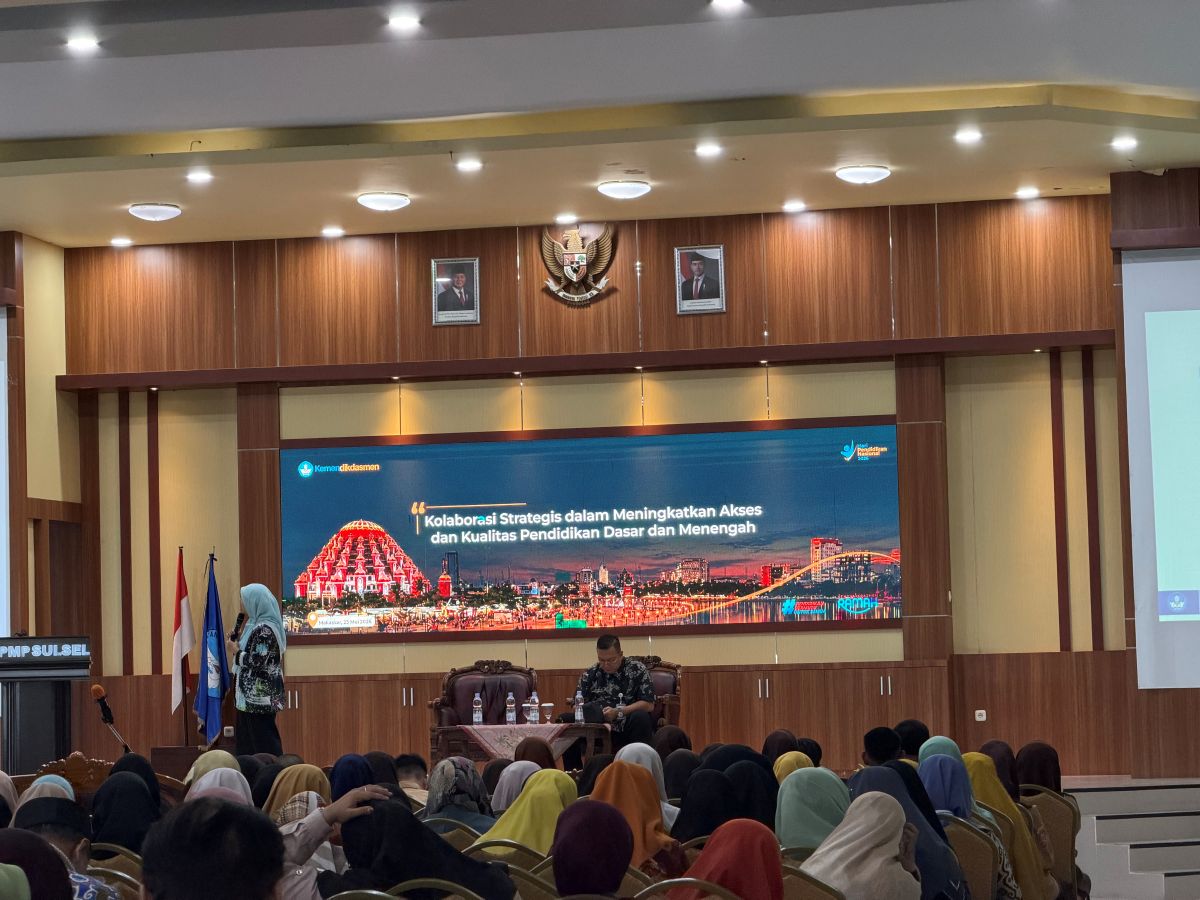
Head of the Curriculum and Learning Centre at the Ministry of Education, Culture, Research and Technology’s Basic and Secondary Education Directorate (Kemendikdasmen), Laksmi Dewi, said that by 2027 Indonesian educational units must adjust their curricula in accordance with the Regulation of the Minister of Education, Culture, Research and Technology No. 12 of 2024 on the Curriculum for Early Childhood Education, Primary Education and Secondary Education. She noted that under Permendikbudristek 12/2024 it has been stated that until the 2026-2027 academic year, Kurikulum 2013 (K13) can still be implemented. Then in 2027 they will proceed with adjusting to the new curriculum, or the Kurikulum Merdeka, which is currently in force. However, for the 3T regions this remains applicable until 2027, with changes expected in 2028.
Dewi added that during the curriculum transition, Kemendikdasmen will strengthen deep learning. The ministry has already conducted many activities, including socialisation and training, though reaching all educational units takes time; training sessions have been held since 2025, with mentoring ongoing and expansion of targets for deep learning.
Yudistira Nugraha, Head of the Public Communications and Relations Bureau, emphasised that public information forums are vital in education to prevent hoaxes about Kemendikdasmen policies. “We use a socialisation–information–mitigation–intervention approach. In terms of socialisation, we strive to express policies in plain language that is easy to understand. We also ensure the public receives a complete explanation, avoiding assumptions. For mitigation, we identify risks before a crisis; and for intervention, the state is present and not only the government, with the community helping to set things right,” he said.
He added that quality education requires not only policy but universal participation. This has long been a feature of Indonesian education, developed with community involvement rather than government action alone.
“Three approaches are promoted. First, physical infrastructure through revitalisation of educational units. Since 2025 we have revitalised more than 16,000 schools; the Indonesia Family Programme (IFP) has also disbursed around 200 thousand. Second, pedagogy infrastructure. Kemendikdasmen is not changing the curriculum but strengthening learning through deep learning, enabling teachers to help students become proficient through in-depth learning. Third, culture infrastructure, recognising that education is not only about technology but also about culture,” he explained.
The forum is part of an effort to build constructive two-way communication and participatory governance. It was attended by teachers, students and parents, and the materials are crucial for students’ learning and for teachers’ instruction. It is hoped that a comprehensive understanding of Kemendikdasmen’s policies will emerge and the public’s input will be obtained.