
Fresh Ideas in the Era of Thinking Machines
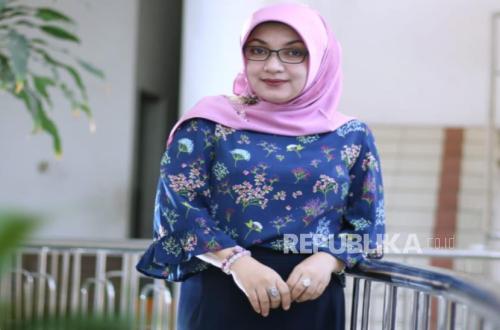
REPUBLIKA.CO.ID, YOGYAKARTA – Yesterday, 5 May 2026, Universitas Amikom Yogyakarta marked another proud academic milestone. Prof Arief Setyanto, S.Si, MT, Ph.D, was officially inaugurated as a professor in the field of Artificial Intelligence and Computer Vision.
In his scientific oration titled ‘Artificial Intelligence in the Digital Transformation of Education and Precision Agriculture’, Prof Arief highlighted how AI-based vision technology is now capable of changing the way farming is done.
In his oration, he also emphasised the importance of digital sovereignty, stating that technology is not just about mastering and utilising it, but also about safeguarding the nation’s independence from dependence on platforms and infrastructure provided by other countries.
This inauguration adds to the academic capacity of Universitas Amikom Yogyakarta and serves as a reminder that an academic’s journey never truly stops.
Prof Arief obtained his doctoral degree from the University of Essex, UK, in 2016, with expertise in Machine Learning, Computer Vision, and Natural Language Processing. He currently serves as Vice Rector IV for Cooperation and Development at Universitas Amikom Yogyakarta.
One particularly interesting aspect is that the field he has pursued for a decade is experiencing extraordinary acceleration. AI is no longer just about recognising images or translating text.
Now, within months, AI capabilities leap into areas that previously only experts could achieve with long hours of work. In the field of Informatics, this progress poses a unique challenge and demands quick, precise, and creative responses from the entire academic community.
One of the most shocking events for the technology community this week was the discovery of a serious security flaw in the Linux kernel that had been hidden for nine years.
The flaw, nicknamed ‘Copy Fail’ and assigned the code CVE-2026-31431, was discovered by security researchers at Theori firm with the help of an AI-based scanner tool named Xint Code.
What is quite surprising is the speed of the flaw’s discovery process. It only took about one hour of scanning by AI to identify the flaw that had evaded the attention of thousands of developers and conventional testing tools for nearly a decade.
This vulnerability stems from a code optimisation added to the Linux kernel in 2017 to speed up data encryption. Unbeknownst to them, that optimisation left a logic flaw allowing ordinary users without privileges to gain full access as system administrators.
This security vulnerability affects almost all Linux distributions with kernels updated since 2017. The United States Cybersecurity and Infrastructure Security Agency (CISA) has even added this flaw to the list of known exploited vulnerabilities.
The discovery of ‘Copy Fail’ delivers an important message that cannot be ignored, especially in the field of Informatics. AI is now capable of performing very in-depth code analysis work at speeds far surpassing human capabilities.
This can certainly be seen as a fundamental shift in the way work is done in this rapidly changing field.
A task that previously took months for manual auditing can now be completed in hours. This means that the biggest barrier in Informatics research is no longer technical implementation capability.
AI can already implement, scan, and debug programme code. One thing AI cannot do at present is to have authentic curiosity, formulate truly new research questions, and spot gaps that no one has seen before.
This is exactly what the Theori researcher did: he had intuition about where potential security flaws might be, and AI handled the combing process. This is the most relevant context for Master’s and PhD students in Informatics at Universitas Amikom Yogyakarta who are currently preparing their theses or dissertations.
In an era where AI can be used to help implement algorithms, synthesise literature, and even generate functional code, the most important question a researcher must answer is no longer ‘how to do it?’ but ‘what has not been asked before?’
The novelty of ideas, true novelty, is becoming increasingly valuable precisely because AI is becoming more adept at executing existing ideas.
Students who can present fresh ideas, who can see problems from hidden angles, and who can then utilise AI to realise those ideas quickly and efficiently are the researchers who will truly be relevant in the coming decade.
Congratulations to Prof Arief Setyanto on his professorship inauguration. May the academic mandate he now holds further encourage the birth of fresh ideas beneficial to society at large, and for all students struggling with their research, in an era when machines can think, the highest value lies in the courage to ask what has never been asked before.
In an era when science and technology move very quickly, choosing the best among what is available, continuously updating knowledge, and not stopping at what is already known, is the true manifestation of a living intellect.
Allah SWT says: ‘Those who listen to the word and follow the best thereof. They are the ones whom Allah has guided, and they are the ones who possess understanding.’ (QS. Az-Zumar: 18). Wallāhu a’lam.