
Freight Vehicle Operations Restricted on Trans-Sumatera Toll Road During Eid Holiday Period
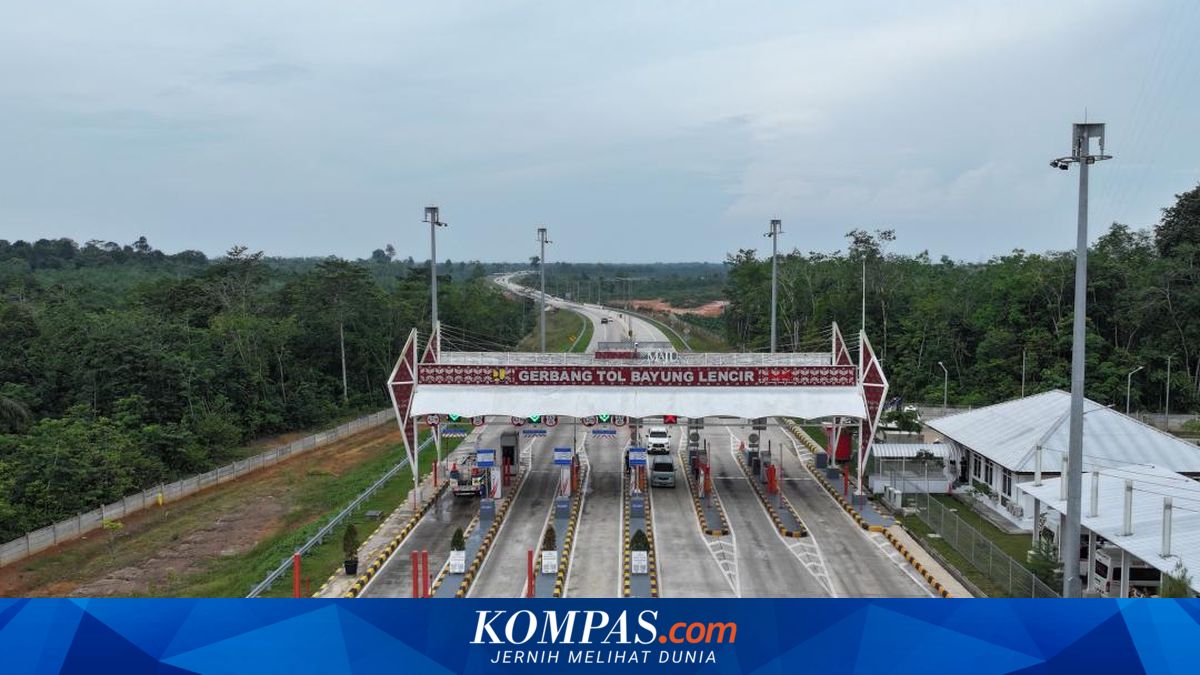
Jakarta – In anticipation of the surge in holiday traffic and return journeys during the Eid 2026 holiday period, freight vehicle operations will be restricted on several sections of the Trans-Sumatera Toll Road.
PT Hutama Karya (Persero) has implemented operational restrictions on freight vehicles across several sections of the Trans-Sumatera Toll Road (JTTS), including the Pekanbaru–Dumai toll road, the Betung–Tempino–Jambi toll road on the Bayung Lencir–Simpang Ness segment, and the Terbanggi Besar–Pematang Panggang–Kayu Agung toll road.
The policy is based on a Joint Ministerial Decision (SKB) issued by the government through the Ministry of Transport, National Police Traffic Corps (Korlantas Polri), and the Ministry of Public Works regarding traffic management and procedures during the Eid 2026 holiday period.
The decision, signed by the Director General of Land Transport Aan Suhanan, the Director General of Marine Transport Muhammad Masyhud, the Director General of Road Infrastructure Roy Rizali Anwar, and the Chief of the Police Traffic Corps Agus Suryonugroho, aims to support government policy in maintaining smooth traffic flow and enhancing road user safety during the holiday period.
The operational restrictions on freight vehicles will be implemented continuously from 13 March 2026 at 12:00 local time until 29 March 2026 at 24:00 local time. These regulations apply on both toll roads and non-toll or arterial roads.
The Director General of Land Transport at the Ministry of Transport, Aan Suhanan, explained that this policy was adopted to anticipate increased public mobility during the Eid holiday period. Similar to previous holiday seasons, a surge in population movement is predicted, necessitating the regulation of logistics vehicles to maintain traffic flow and enhance road safety.
Restricted vehicles include freight trucks with three or more axles, freight trucks with trailers, articulated trailers, and trucks transporting mining products and building materials. Two-axle freight vehicle distribution remains permitted, except for those carrying commodities such as soil, sand, stone, iron, cement, and timber.
Vehicles transporting petroleum or gas, livestock, fertiliser, disaster relief supplies, and essential commodities continue to be permitted to operate, provided they do not exceed vehicle dimension and load limits.