
Freeport to Spend Rp72 Trillion on New Underground Mine
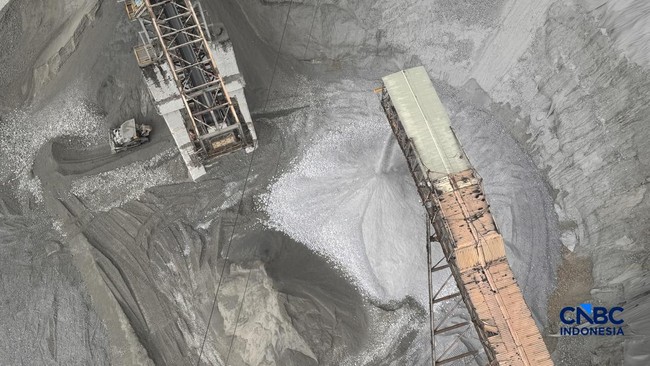
PT Freeport Indonesia (PTFI) is preparing an investment of Rp72 trillion to develop a new underground mine, Kucing Liar, in the Grasberg minerals district, Central Papua. The project is intended to support the company’s long-term operations and maintain the stability of national copper and gold concentrate production.
PTFI President Director Tony Wenas outlined the progress of infrastructure development at the new mine site. He stressed that the company remains committed to increasing investment to build a foundation of sustainability for the mining industry in the country.
“Kucing Liar is currently being developed and we plan to begin mining in 2029. It was originally 2028, but we have postponed it by a year. Total investment there will be approximately Rp72 trillion,” Tony said in Tembagapura, Central Papua, in CNBC Indonesia’s Mining Zone programme.
To date, the company has disbursed Rp25 trillion to prepare various supporting facilities and underground mining access. The Kucing Liar mine is designed to have a massive ore mining capacity to maintain the company’s production over the long term.
“Currently, Rp25 trillion has already been invested, and the Kucing Liar reserves are also very good, possibly around 130,000 to 140,000 tonnes of ore per day,” he added.
The production capacity is projected to yield 7 billion pounds of copper and 7 million ounces of gold over its operational life. The planned total output is intended to remain stable to replace the Grasberg Block Cave (GBC) mine, which will eventually reach the end of its production life.
“It will be able to produce roughly 7 billion pounds of copper metal and approximately 7 million ounces of gold,” he explained.
He emphasised that operational sustainability is expected to guarantee fiscal contributions to the state and safeguard jobs for tens of thousands of workers.
Freeport continues to coordinate with the government regarding certainty over the extension of its operating permit so that development of deeper reserves can be carried out sustainably.