
Freeport Contributes Rp 75 Trillion, Business Climate Certainty in Mining Remains Crucial
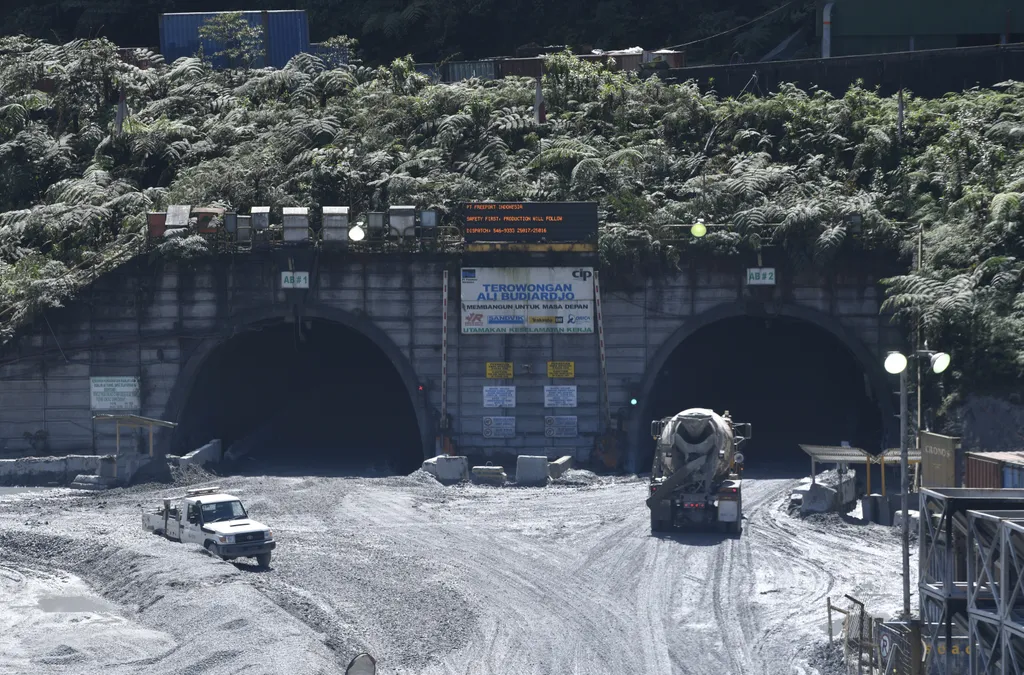
This contribution plays a crucial role in supporting state revenues amid operational recovery and investment climate challenges in mining.
JAKARTA, KOMPAS — PT Freeport Indonesia deposited the company’s 2025 net profit share to the Indonesian Government amounting to Rp 4.8 trillion on Friday (8/5/2026). This amount is an addition to the deposits already paid throughout 2025. Thus, the total deposit reaches Rp 75 trillion. This reflects the strategic role of the mineral and coal mining subsector, particularly in supporting state revenues amid various economic and industrial challenges.
Based on data from PT Freeport Indonesia (PTFI), the total Rp 75 trillion deposit includes dividends to the parent state-owned mining company MIND ID (as the holder of the Indonesian Government’s shares) amounting to Rp 16.9 trillion, as well as the regional government’s share of Rp 13.48 trillion. The regional government’s share consists of Rp 10.6 trillion paid in 2025 and Rp 2.88 trillion, which is the company’s net profit share for 2025.
“The company always prioritises transparency and accountability in fulfilling its obligations to the state and regions. We hope that this deposit can be utilised as much as possible for the interests of the people in their respective regions,” said PTFI President Director Tony Wenas in a press release on Friday.
According to Tony, PTFI’s deposit value to the state can continue to increase along with the still relatively high mineral commodity prices. Moreover, if PTFI’s mining operations have fully recovered following the underground mine incident at Grasberg Block Cave (GBC) in September 2025.
“Currently, PTFI’s operations are still in the recovery phase after the GBC underground mine incident, with production levels only reaching around 40 to 50 percent. The company targets to return to full capacity in early 2028,” said Tony.
He added that PTFI is also continuing to strengthen various social investment programmes in its operational areas. Throughout 2025, the company’s social investment value reached Rp 2 trillion and is planned to continue at around 100 million US dollars or equivalent to Rp 1.7 trillion per year until 2041. According to him, improving the quality of life and welfare of communities around the mining area is one of the main indicators of PTFI’s success.
As a note, before the underground mine incident, PTFI produced around 3.2 million tonnes of copper concentrate per year from the mine in Mimika, Central Papua. That amount can produce around 900,000 tonnes of copper cathodes as well as 50-60 tonnes of gold. In Gresik, East Java, PTFI has two smelters. First, under PT Smelting with Mitsubishi, which began production in the late 1990s. Second, the smelter in Java Integrated Industrial and Ports Estate (JIIPE).
The additional PTFI contribution to the state of Rp 4.8 trillion is a positive development amid various challenges plaguing the national mining industry. In early 2026, several mining companies—particularly coal and nickel—faced production quota adjustments in their work plans and budgets (RKAB) by the government. This policy aims to rebalance the supply and demand of mining commodities.
On the other hand, commodity prices are also being driven by escalating geopolitical tensions in the Middle East involving the United States, Israel, and Iran. Nevertheless, certainty and smooth production are still considered crucial factors in mining operations because they directly affect the optimisation of state revenues. The non-tax state revenue (PNBP) target for the minerals and coal (minerba) subsector in 2026 is Rp 134 trillion.
Mining observer and Alpha Research Database researcher Ferdy Hasiman, when contacted on Friday, stated that the government is currently indeed in need of increased state revenues amid various pressures and ongoing programmes. In this regard, the minerba mining subsector has a strategic role. However, with production adjustments in the RKAB, he doubts that the 2026 minerba PNBP target can be achieved.
“If the government really wants to pursue PNBP from minerba mining, the conduciveness of the domestic mining industry must be addressed. After all, when mining industry operations are disrupted, the impact can spill over to various aspects, including for the community. Moreover, the current community economy is being squeezed,” said Ferdy.
Furthermore, Ferdy assessed that the investment climate in the mineral and coal mining sector needs serious attention in the long term. Frequent regulatory changes are seen to disrupt business certainty and reduce investor confidence. This could potentially encourage business players to choose other countries as investment destinations.
Previously, the Director General of Minerals and Coal at the Ministry of Energy and Mineral Resources (ESDM), Tri Winarno, stated that to support increased PNBP, the potential of minerba mining in Indonesia must be managed well. Because if not, the sustainability of utilising minerba mining commodities will be disrupted.
“Guarding wealth is not just about increasing revenues, but maintaining the state’s sovereignty over natural resources,” said Tri at the Technical Working Meeting of the Corruption Eradication Corps of the National Police 2026 in Jakarta, as quoted from the Directorate General of Minerba website of the Ministry of ESDM, Tuesday (28/4/2026).
Tri added that one effort to optimise state revenues through the minerba mining subsector is through the implementation of the e-PNBP application that has been used since 2018. According to him, in the 2014-2018 period, PNBP in the minerba subsector only reached around Rp 183 trillion. Meanwhile, in the 2019-2025 period, the figure jumped significantly to Rp 789 trillion.
Source: jawawa.id (https://jawawa.id/newsitem/freeport-contributes-rp-75-trillion-business-climate-certainty-in-mining-remains-crucial-1778230588)
Originally published by kompas.id (https://www.kompas.id/artikel/freeport-setor-rp-75-triliun-kepastian-iklim-usaha-tambang-tetap-krusial), translated from Indonesian