
Freeing Modern Slaves: Zakat for Riqab and the Traps of the Global Work System
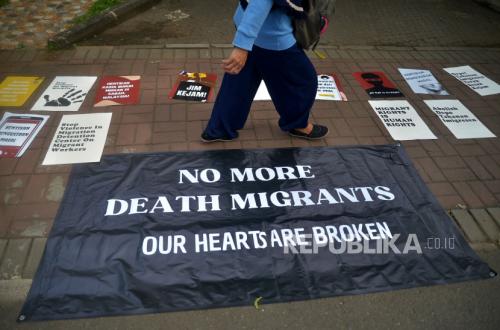
The power of transnational capital creates illegal residents and nameless labourers. The Quran has already provided the instrument — it only takes our courage to reread it.
Labour Day has arrived again. In Indonesia’s major cities, various trade unions will shout demands for fair wages, humane working hours, and protection from layoffs. Yet behind the bustle, there is a quieter, more systemic, and harder-to-see face of slavery: millions of migrant workers whose passports are confiscated, Indonesian migrant workers (TKI) trapped in deceptive contracts, domestic workers without holiday rights, and victims of cross-border forced labour who have no voice.
Ali Shariati, the famous Iranian Islamic sociologist known for his sociological reading of the Quran, once reminded that Islam did not descend to legitimise the status quo. Islam descended precisely to liberate — to free the oppressed from the hands of the oppressors. If today we welcome Labour Day only with speeches without structural action, then we have not read Islam seriously.
Three Towers of Power and the Trapped Worker
Today’s global geopolitical and geo-economic map can be read from three interconnected towers of power: Sovereign Power (state power) worth 81 trillion USD in global GDP, Transcapital Power (transnational capital power) worth 78 trillion USD in assets under management (AUM), and Technology Power worth 6 trillion USD in GPT. At the top of these three towers are the controllers — system integrators, asset managers, and digital platforms. At the bottom? State, capital, and technology data — all of which are employment relations in various forms.
Indonesia falls into the category of ‘Anchor of Resources and Commodities’ worth 9 trillion USD — an economically enticing position but socially very vulnerable. Resource-rich but technology-poor countries tend to become suppliers of cheap labour and raw materials for the global capitalist system. Here lies the root of our employment problems: not just about minimum wages, but about the nation’s structural position in the unfair global value chain.
Riqab: The Quranic Command Still Waiting
In QS. At-Taubah: 60, Allah mentions eight categories of zakat recipients.
One of them is fi ar-riqab — ‘for freeing slaves.’ Classical fiqh scholars define riqab as slaves who wish to redeem their freedom. However, with the abolition of formal slavery, some zakat institutions hesitate to distribute funds for this category. The riqab category is often left empty.
Sheikh Yusuf Al-Qaradawi, a contemporary scholar admired even by Shariati despite differing traditions, asserts that if a category has definitively disappeared, we must seek contemporary equivalents relevant to maqashid shariah — the highest objectives of liberating humanity. This is what then prompted BAZNAS through Chairman’s Decree No. 64 of 2019 to redefine riqab to include victims of human trafficking (TPPO), workers whose freedom is shackled, and those colonised by systems.
Faces of Riqab Today
Through Shariati’s lens — which always asks ‘who is oppressed and who is the oppressor?’ — we can see the faces of riqab in this era more clearly. Migrant workers whose passports are seized by recruitment agents are riqab. Domestic workers locked in employers’ homes without pay and without communication access are riqab. Fishermen bound by debt to middlemen season after season are riqab. Victims of human trafficking from NTT, North Sumatra, and Kalimantan who are sold abroad are riqab.
They are not called slaves. But they cannot freely determine their lives, confined by oppressive parties or systems, and need to be ‘emancipated’ — just like the slaves mentioned in the Quran. Even more broadly: in the global capitalist system, every worker forced to sell their labour far below its true value due to structural powerlessness is experiencing a subtler but no less real form of riqab.
Action Strategy: Zakat as an Instrument of Liberation
So how should riqab zakat work in today’s employment context? At least there are four action strategies that zakat institutions can implement.
First, direct liberation of TPPO and forced labour victims. Riqab zakat funds can be used to finance repatriation, psychological rehabilitation, and social reintegration for human trafficking victims. BAZNAS and LAZ need to actively partner with the Ministry of P2MI, Ministry of Social Affairs, and IOM to reach this population.
Second, economic empowerment to break debt traps. Many workers fall into slavery due to debt traps to loan sharks, unlicensed labour brokers, or illegal agents. Riqab zakat can be designed as an emergency debt repayment scheme accompanied by business mentoring, so that recipients do not return to the same trap.
Third, legal advocacy and labour rights protection. Riqab zakat can fund legal assistance for workers whose rights are violated, including migrant workers treated arbitrarily. This is an interpretation of fi sabilillah that meets riqab — struggling in the way of Allah by defending the weak.
Fourth, strengthening structural bargaining position. Indonesia is in a ‘Highly Dependent Vulnerability’ position on the global power map. Zakat, on a sufficient scale, should be directed towards building domestic technology and industry capacity — shifting the nation’s position from mere labour supplier to value creator. This is the collective liberation desired by the Quran.
From Standing Workers to Free Humans
Shariati wrote that Islam is a religion born in the midst of slave society to emancipate humanity. If today we celebrate May 1st Labour Day only as an annual ritual without a real liberation agenda, then we have betrayed the spirit of Islam itself.
Expanding the meaning of the riqab category is not merely ijtih
Source: jawawa.id (https://jawawa.id/newsitem/freeing-modern-slaves-zakat-for-riqab-and-the-traps-of-the-global-work-system-1777593145)
Originally published by Republika (https://analisis.republika.co.id/berita/teby6q318/membebaskan-budak-modern-zakat-bagi-riqab-dan-jeratan-sistem-kerja-global), translated from Indonesian