
Free University Tuition Could Leave Private Universities Losing Students, UAD Warns
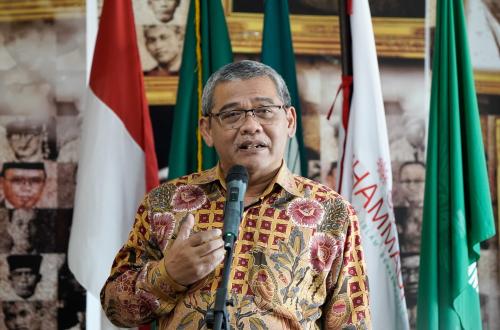
YOGYAKARTA — The government’s plan to introduce a free university tuition programme should be accompanied by a mechanism to ensure that support is distributed fairly among private higher education institutions (PTS), according to an assessment. Without proper arrangements, the policy could further concentrate prospective students at state universities (PTN) and intensify competition for new students at private campuses.
Universitas Ahmad Dahlan (UAD) Yogyakarta rector Muchlas MT said the free-tuition programme proposed by President Prabowo Subianto should not focus solely on widening access to higher education, but should also take account of the sustainability of private universities, which have long helped accommodate students in Indonesia.
“From the perspective of improving public access to education, private universities can also provide many opportunities for people to participate fully in higher education,” Muchlas said on the sidelines of UAD’s new student admissions kick-off event in Yogyakarta on Monday (12 October 2026).
He said the government should regulate the allocation of education assistance so that students from families in need have the opportunity to access higher education at both state and private universities. If the free-tuition programme is concentrated solely on state institutions, private universities could face greater pressure in recruiting new students.
The issue concerns not only the fair distribution of scholarships but also the operational sustainability of campuses, since student numbers are an important factor in funding the provision of education at private universities.
“This must not create a heavy operational burden for certain universities, which could then lead to competition in student recruitment between state universities, particularly state-owned legal-entity universities (PTN-BH), and private institutions,” he said.
Muchlas said the division of responsibilities between state and private universities should also form part of the higher education policy framework. State universities could continue to be encouraged to improve quality and international competitiveness on the path towards becoming world-class universities, while private universities should retain sufficient scope to help raise Indonesia’s gross higher education enrolment ratio.
He also stressed the importance of ensuring that assistance reaches the intended recipients. The government could use household welfare data, divided into deciles, to identify those eligible for free tuition.
He suggested prioritising education assistance for people in deciles 1 to 3 or 4, so the programme genuinely reaches families in need of financial support.
“As long as free tuition scholarships are allocated through a targeted approach, directly to those who need them, I think it can work. We already have a decile map from 1 to 10,” he said.
Muchlas also noted that competition for new students in Yogyakarta is a challenge for universities. The city is no longer competing only with local campuses, but also with high-quality universities in other regions offering competitive courses and educational facilities.