
Free University Education for Whom?
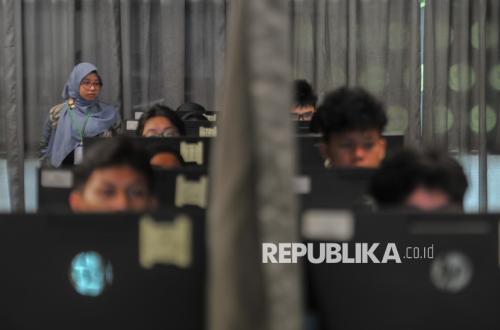
There is an issue of educational justice that we must question: when the state promotes the idea of “free university education”, who is actually being given it for free? At first glance, this may seem like an economic question. On closer reflection, however, it also raises questions of justice: how a nation understands human nature, the dignity of knowledge, the trust placed in wealth, and the mandate of state power.
Debate about free university education tends to focus on fiscal calculations: the amount of the Single Tuition Fee (BKT), how much of the Single Tuition Fee (UKT) the state must cover, how much funding is needed to maintain university standards, and how much fiscal space is available. All of this is important, of course. But should higher education be seen merely as a line of government spending to pay tuition, or as a strategic investment in building human civilisation?
From an Islamic perspective, people are never reduced to a series of figures in a budget. Allah says: “Allah will raise those who have believed among you and those who were given knowledge, by degrees” (Quran, Al-Mujadilah 58:11). This verse offers an important foundation: knowledge is part of the development of human dignity. The Prophet Muhammad said: “Whoever follows a path in pursuit of knowledge, Allah will make easy for them a path to Paradise” (Sahih Muslim).
Higher education, then, must not be confined to a mechanical cycle of paying entrance fees, attending lectures, receiving a degree and then looking for work. It carries a greater value: dignity, and a moral responsibility not to stop at fulfilling individual ambitions, but to serve the public good and raise the standing of others. This is where the question of free university education intersects directly with development economics.
When “Free” Is Not Necessarily Fair
Imagine two students from low-income families. The first is admitted to a public university (PTN) and receives a full tuition-fee waiver from the state. The second attends a private university (PTS) in their region because it is the only institution within geographical reach, affordable for their family and suited to their academic ability.
If state intervention only waives fees at public universities, the two students are not treated equally, despite having the same economic needs. This creates what is known as the regressive subsidy paradox: a policy that appears pro-poor on paper but may, in practice, benefit groups better placed to compete, while the most vulnerable are left outside the very system meant to protect them.
The 2025 Higher Education Statistics show that Indonesia has around 4,303 active universities, of which 3,944 are private institutions. Private universities accommodate the largest share of the country’s 2.16 million new students. Indonesia’s higher education landscape therefore cannot be viewed solely through the lens of public universities. The policy question should not end at, “How much would it cost to make public universities free?” It should also ask, “How can the state ensure that every student qualified for university has access to quality, affordable higher education, wherever they study?”
This means shifting from institution-based subsidies to equity based on students’ rights. The principle of distribution is consistent with the Quranic warning: “So that wealth may not merely circulate among the rich among you” (Al-Hashr 59:7). Although this verse was revealed in the context of distributing spoils of war, not education subsidies, it offers a relevant principle: economic benefits should not be concentrated in the hands of a particular group. When discussing education subsidies, we must therefore ask not only, “How much are we spending?” but also, “Who benefits from it?”
For poor families, tuition is only the tip of the iceberg when it comes to the total cost of education. There are rent, food, transport, internet access, laptops, textbooks and practical equipment, as well as the cost of travelling home. There is also a cost often omitted from fiscal calculations: opportunity cost. When a child of a smallholder farmer, casual labourer, fisher or informal-sector worker goes to university, the family is not only paying for their education; it may also lose a pair of hands that previously helped earn a living.
Free tuition, therefore, does not automatically mean free higher education for poor families. Tuition may be reduced to zero, but living costs can still leave a student at risk of dropping out. The measure of a successful policy is not simply how many poor students enter university, but how many can stay until graduation, find work in productive sectors, start businesses and improve their families’ livelihoods.
Welfare for the Better-Off, Bills for the Poor
Another risk to consider is the potential crowding-out effect. If public universities become free while private universities continue to rely on student fees, everyone will compete for places at public institutions, whose capacity is limited.
In many districts and cities, private universities are the closest educational infrastructure for families, local labour markets and local government, and are well placed to understand local development challenges. A policy that waives fees exclusively at public universities could create a paradox: the state intends to widen access to education but indirectly narrows the ecosystem of education providers.
The answer is not to preserve high tuition fees, but to change how subsidies are distributed by introducing education vouchers attached to students who meet economic and academic eligibility criteria. These vouchers could be used at either public or private universities that are accredited, transparent and meet national quality standards. The state would no longer say, “We pay public universities”; instead, it would say, “We guarantee citizens’ right to education.” Universities would have an incentive to improve academic quality, students would have room to choose, private institutions would not be undermined by subsidies for public universities, and public spending would reach the intended beneficiaries.
A child from a well-off family who wins a place at a public university is certainly entitled to a quality education. But the child of a small-scale farmer or fisher, or a casual worker, who studies at a private university is equally entitled to the same constitutional opportunity. If tuition waivers depend only on the type of institution, rather than the student’s economic vulnerability, this seemingly generous policy risks abandoning those most in need of state support.
We must acknowledge that competition for university places does not take place on a level playing field. Some children have had access from an early age to good schools, adequate nutrition, the internet, a supportive learning environment and expensive extra tutoring. Others have to divide their time between studying and helping their parents earn a living. When they meet in the admissions process, academic ability is indeed being tested, but that ability has grown out of social and economic circumstances that were never equal to begin with.
We must not oversimplify the issue by setting public and private university students against each other in black and white. Not all public university students come from wealthy families, just as not all private university students are poor. The fundamental question is not rivalry between students, but why an institution’s legal status should determine the allocation of public subsidies more than the objective needs of the people studying there.
If the state universally waives tuition at public universities without strict economic eligibility criteria, while students at private universities in remote areas are left to pay their own way, we are effectively creating reversed welfare: public assistance is allocated according to where someone studies, while their economic hardship comes second.
This is where we need to reverse the measure of justice. It is not enough to congratulate ourselves on the number of students whose university bills have been waived. We must ask who is still struggling with bills, who has been forced to drop out, and whose access to education was shut off by poverty from the outset. Public assistance that misses its target is not merely a matter of budget efficiency; it can become institutionalised injustice.
Putting the Right to Education at the Centre
Ultimately, the debate over free university education is not simply about how much funding can be allocated or how effectively the government can calculate financing needs. More fundamentally, it is about how the state understands justice amid limited resources.
If the aim of policy is to widen educational opportunity, support must take account of students’ economic circumstances, not only the status of their university. Tuition assistance that can be used at public or private institutions meeting quality and accountability standards deserves consideration. The amount could be adjusted to need, while living-cost support could be provided to students facing the greatest hardship.
At the same time, the state remains responsible for funding laboratory facilities, research and the strategic mandates of public universities. Justice does not require every institution to receive the same budget. It requires each category of spending to have a clear purpose and each form of assistance to reach the group it is intended to help.
With this approach, we need not be trapped in a narrow public-versus-private dichotomy. We can maintain the quality of universities while ensuring that children from poor families do not lose their opportunity simply because they attend a private institution in a remote area.
It is time to stop measuring the success of education policy solely by the number of bills cancelled. A more important measure is whether more children constrained by poverty can enter university, remain until graduation and use their knowledge to improve their families’ quality of life.
We may remember Lintang, the gifted coastal child in the film Laskar Pelangi, who had to leave his bicycle at an old workshop and bury his dream while his friend went off to study in Europe. Lintang’s tragedy is a rebuke to the conscience of this Republic if “free university education” embraces only those fortunate enough to get into a public university. In effect, we would be allowing poverty to become a death sentence for thousands of bright children in remote villages, whose hopes are extinguished before they can even dream.
There is nothing wrong with aspiring to make university education free. The mistake is to assume that free automatically means fair.