
"Free Palestine", from Gontor to Macklevan
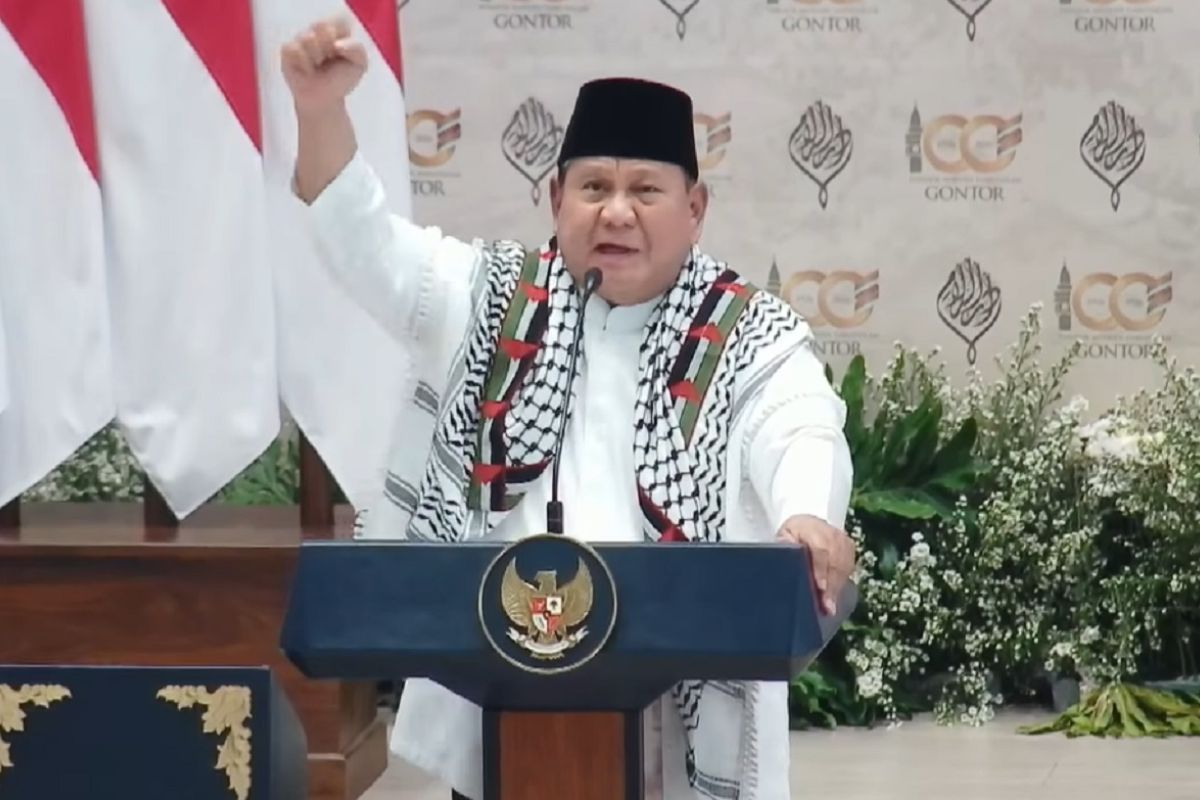
At the Pondok Modern Darussalam Gontor in Ponorogo, East Java, on 19 September, President Prabowo Subianto stood before thousands of students, alumni, state officials, and diplomats. When greeting the Palestinian Ambassador to Indonesia, Abdulfattah AK Al-Sattari, Prabowo clenched his fist and shouted “Free Palestine” three times.
The call was immediately met with loud cheers from the audience.
Shortly after, Ambassador Abdulfattah approached the stage and draped a keffiyeh—a Palestinian-patterned scarf—around Prabowo’s neck. The two shared an embrace.
Prabowo wore the gifted keffiyeh throughout his speech and was seen wiping his eyes with the cloth. The President later remarked that the gift of the keffiyeh reminded him of his brothers in Palestine.
The scene was particularly poignant, taking place within a space steeped in symbols of brotherhood, religion, history, and diplomacy at the 100-year-old Pondok Modern Darussalam Gontor.
For Indonesia, the Palestinian issue is not something that has suddenly emerged from a single speech. Support for Palestinian independence has been a long-standing component of Indonesia’s foreign policy for a very long time.
Therefore, when the President stood with the keffiyeh on his shoulders and shouted “Free Palestine”, the cry found its place within the history of Indonesia’s stance towards the Palestinian people.
The shout is worthy of appreciation. There was firmness in it. A message was conveyed regarding a clear position presented before the public.
However, after that voice echoed, there remains a broader space for the next question: What can be done after a nation shouts “Free Palestine”?