
Free Nutritious Meals Programme Reaches Schools and Toddlers on Indonesia-Malaysia Border
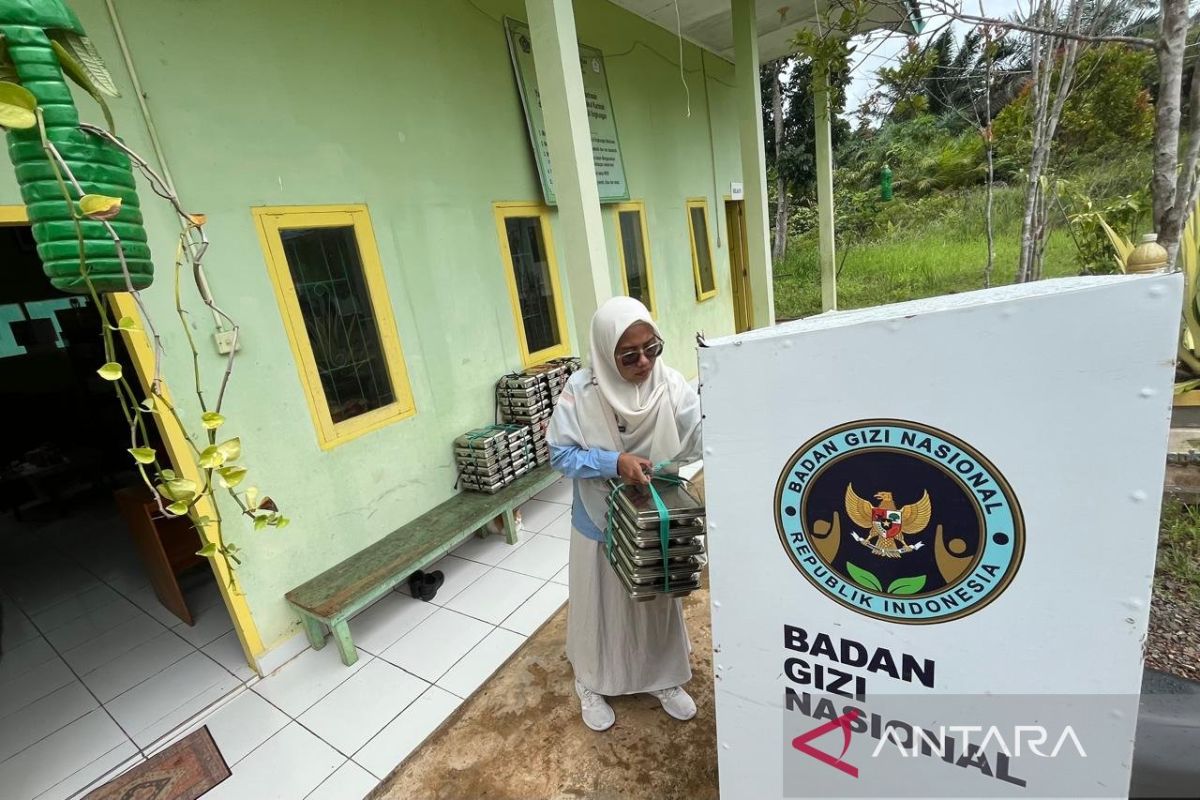
The Free Nutritious Meal (MBG) programme in the Indonesia–Malaysia border area, specifically in Sebatik Tengah District, Nunukan Regency, North Kalimantan, has reached schools as well as toddlers at integrated health posts located along the national border line.
“The Sebatik Tengah SPPG has been operating since the start of this year. We currently cover 13 schools and 10 integrated health posts, with a total of around 1,700 beneficiaries,” said Partiwi Hariati, Head of the Nutrition Fulfilment Service Unit (SPPG) for Sebatik Tengah, on Wednesday.
Pratiwi said MBG deliveries are made to schools along the edge of the national border, whilst meals for toddlers are distributed through the nearest integrated health posts.
According to her, based on parents’ accounts, the presence of MBG in the border region has brought significant benefits to local communities, particularly families who mostly work as labourers on oil palm plantations.
The community profile in Sebatik Tengah falls within deciles 1–4 (extremely poor and vulnerable to poverty). This differs from communities in the Sebatik Timur area.
Beyond meeting the nutritional needs of schoolchildren and toddlers, the implementation of MBG in the border region is also aimed at stimulating the local economy through the use of local food ingredients.
“We encourage residents to grow crops and raise broiler and laying chickens, so they can improve their economic situation,” said Pratiwi.
The benefits of MBG have been felt at Madrasah Ibtidaiyah Darul Furqan, known as the Border School. The head of the madrasah, Adnan Lolo, expressed gratitude that MBG could reach his school.
The school is located within an oil palm forest area that is difficult to access by four-wheeled vehicles, and sits only a few hundred metres from the Indonesia–Malaysia border line.
Improving the governance of MBG in disadvantaged, frontier and outermost (3T) regions is one of the government’s agendas. This includes the mechanism and targeting of beneficiaries.
Standardisation is also being carried out across all SPPGs to ensure they meet established standards, from equipment completeness to health and operational safety aspects.
Coordinating Minister for Community Empowerment Abdul Muhaimin Iskandar emphasised that MBG beneficiaries must be accurately targeted and deliver real impact on grassroots economic empowerment, especially in 3T regions.
“In the improvement of MBG management run by BGN, I remind all parties to refer to Presidential Instruction No. 4 of 2025 on the National Socioeconomic Single Data (DTSEN), whereby disadvantaged regions, extreme poverty and poverty are the priorities that must come first,” said Minister Muhaimin.
According to him, through the DTSEN data, the government has a solid foundation to ensure that the community groups most in need become priority beneficiaries of the programme.