
Free Nutritious Meal Programme Implementation Should Leverage Local Wisdom, Says Dayak Council Deputy: Could Boost Community Economy
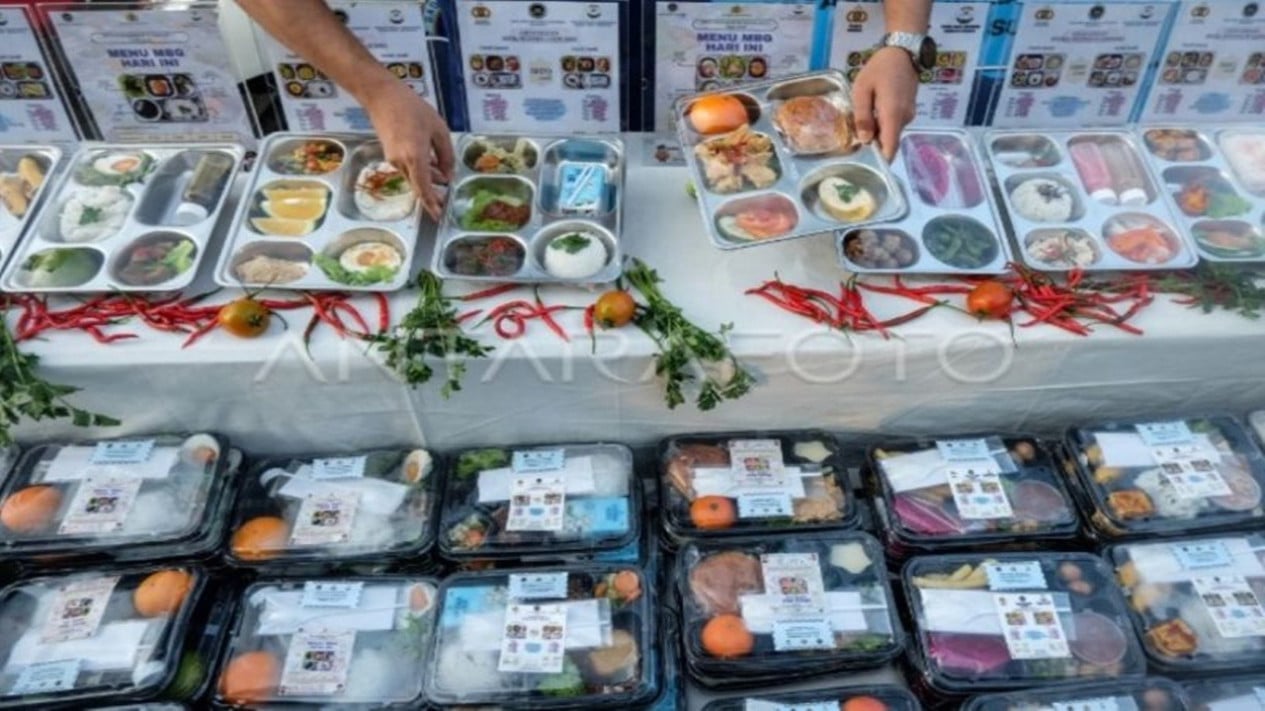
The Free Nutritious Meal (MBG) programme remains a hot topic of public discussion, given the various issues surrounding it. President Prabowo’s flagship programme must be managed properly and be well-targeted.
Deputy Chairman of the National Dayak Customary Council (MADN), Rahmat Nasution Hamka, stressed that there is nothing wrong with the essence of the MBG programme. According to him, it is a grand and excellent idea to address nutritional problems and stunting. However, the root of the problem lies in the on-the-ground implementation pattern, which is deemed not yet effective or efficient.
Rahmat criticised the tendency of the management, in this case the National Nutrition Agency (BGN), to often standardise the programme’s implementation formula across all regions of Indonesia without considering regional characteristics.
“For me, we must understand more deeply that the issue is not the MBG programme itself, but rather its implementation, which is ineffective and inefficient. The MBG programme is actually very good and very helpful; it is just a matter of how it is executed,” Rahmat Nasution Hamka said in a statement on Friday, 12 June 2026.
Rahmat stated that managers need to modify the execution pattern of the MBG programme so that its impact not only targets improving children’s nutrition but also stimulates the economic wheels of the lower classes. He suggested that its implementation involve the existing local ecosystems in villages.
“The implementation pattern can be modified in ways that might better boost the community’s economy. Perhaps by activating school canteens, then also activating the education of PKK women’s groups, youth organisations in villages, and so on,” he said.
He added that uniform regulations from the centre often complicate matters for regions with different characteristics. “This is what we think sometimes happens: the managers implement the programme uniformly across the whole of Indonesia. Yet in the regions, there are many local aspects that could be adapted to existing conditions,” he said.
Furthermore, Rahmat, who is also the Chairman of KADIN Central Kalimantan, explained that each village has different food potentials. Imposing a single national standard for raw materials will only make implementation costs expensive and inefficient.