
Free Nutritious Meal Programme Budget Slashed by Rp30 Trillion for Next Year
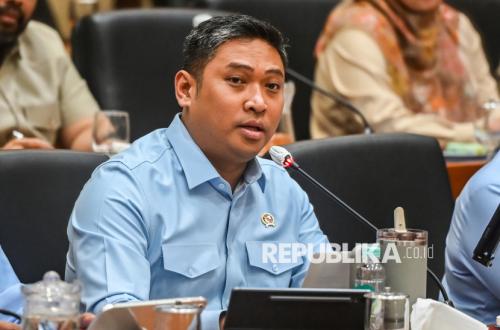
The National Nutrition Agency (BGN) has submitted a 2027 Work Plan and Budget of Rp240.20 trillion to ensure the sustainability and optimisation of the Free Nutritious Meal (MBG) programme.
BGN Head Sudaryono announced this during a Hearing Session with Commission IX of the Indonesian House of Representatives (DPR RI) in Jakarta on Thursday (3/9). During the discussion regarding the 2027 Work Plan and Budget for State Ministries/Agencies (RKA-K/L), Sudaryono explained that the BGN budget preparation involves two stages of determination: the Indicative Ceiling and the Budget Ceiling.
“The Indicative Ceiling, based on the Joint Letter for Indicative Ceiling, is Rp270.20 trillion, whereas the Budget Ceiling, based on the Joint Letter for Budget Ceiling, is Rp240.20 trillion. This figure of Rp240.20 trillion serves as the basis for the Work Plan and Budget we are presenting today (a reduction of Rp30 trillion),” Sudaryono stated on Thursday.
Sudaryono explained that this budget ceiling serves as the foundation for the BGN to continue the implementation of the National Nutrition Fulfilment Programme in 2027. Out of the total Rp240.20 trillion, Rp232.88 trillion (96.95 per cent) is allocated to the National Nutrition Fulfilment Programme, while Rp7.33 trillion (3.05 per cent) is allocated to the Management Support Programme.
Within the National Nutrition Fulfilment Programme, the allocation for the MBG programme reaches Rp232.50 trillion, or 99.84 per cent. This budget covers the provision of nutritious meals for students, teachers, and educational staff, as well as pregnant women, breastfeeding mothers, and toddlers.
Sudaryono emphasised that the BGN budget preparation is not only intended to support the provision of nutritious food but also to strengthen various components that underpin the overall implementation of the programme.
“It also includes support for information systems, promotion and education, cooperation and partnerships, community empowerment, monitoring and supervision, as well as governance strengthening,” said Sudaryono.
According to him, this approach is part of the BGN’s efforts to build a sustainable nutrition fulfilment system. Thus, the implementation of the MBG programme is not merely oriented towards providing food for beneficiaries but is also supported by a system that ensures the quality and continuity of the programme.
In 2027, the BGN aims for the MBG programme to reach 72,464,886 beneficiaries. This target consists of 60,599,777 students across various educational levels, as well as 11,865,109 pregnant women, breastfeeding mothers, and toddlers. This figure exceeds the 2027 National Medium-Term Development Plan (RPJMN) target, which set the number of beneficiaries at 64.94 million people.
With the proposed budget support, the BGN strives to ensure that the implementation of the MBT programme can continue optimally while strengthening various supporting aspects of national nutrition fulfilment.
“This strengthening includes information systems, education, partnerships, community empowerment, monitoring, supervision, and programme governance,” concluded Sudaryono.